 ultimate-guide
Rekeying Locks for Rental Property Turnover: 2026 Guide
Table of Contents
- Why Rekeying Locks for Rental Property Turnover Is Non-Negotiable
- Landlord Lock Change Laws: What Connecticut Property Managers Must Know
- Rekeying vs Replacing Locks Cost: Which Makes Sense for Your Turnover?
- Best Smart Locks for Rental Properties: Access Control That Scales
- Step-by-Step: How to Rekey Locks for Rental Property Turnover
- Security Audit Checklist for Every Turnover
- Conclusion
- Frequently Asked Questions
Last Updated: September 28, 2026
Why Rekeying Locks for Rental Property Turnover Is Non-Negotiable
Rekeying locks for rental property turnover changes a lock's internal pin configuration so old keys stop working, the first thing smart landlords do at move-out. Skipping it means inheriting someone else's keys, access, and liability.
Landlord Lock Change Laws: What Connecticut Property Managers Must Know
Every state requires landlords to keep locks and security devices in good working order, but details, who may change a lock, whether a tenant can rekey, notice requirements, and old-key handling, vary. Below: Connecticut's rules, then the patterns across states where most rental housing sits.
The Connecticut baseline
Connecticut law gives tenants a clear right to a secure unit and gives landlords a matching obligation to maintain one. Under Connecticut General Statutes Chapter 830, a landlord must keep all locks and other security devices in good working order, and a tenant may not change, add, or rekey a lock without the landlord's written agreement.
How the rules differ across the states where most rentals sit
Most guides stop at "check your state law." Here's the pattern that matters.
| State | Tenant may rekey without landlord consent? | Landlord must rekey between tenants? | Notice required before landlord entry |
|---|---|---|---|
| California | No, unless the lease allows it | Not by statute, but required to maintain working locks | Reasonable notice, typically 24 hours |
| Texas | No | Not by statute; lease terms control | Reasonable notice; lease usually sets it |
| Florida | No | Not by statute; landlord must maintain working locks | Reasonable notice, commonly 12-24 hours |
| New York | No | Not by statute; landlord must maintain working locks | Reasonable notice; NYC rent-stabilized units have extra rules |
| Illinois | No | Not by statute; landlord must maintain working locks | Reasonable notice |
| Washington | No | Not by statute; landlord must maintain working locks | At least 2 days' notice for entry |
| Connecticut | No, without written agreement | Not by statute; landlord must maintain working locks | Reasonable notice |
What to put in the lease
The safest approach is a written key policy covering four things: how many keys are issued, who holds them, move-out handling, and whether the tenant may rekey. A signed clause saying "all keys must be returned and the unit rekeyed before a new lease begins" is far easier to enforce than a move-out reminder.
Where the legal risk actually sits
The legal exposure is rarely the rekey itself, it's the gap between move-out and move-in, when the unit still accepts a key someone else may hold. That gap is the highest-liability window in the turnover cycle, and the fix is procedural: rekey the day the unit is confirmed vacant, not the day the new lease starts.
Rekeying vs Replacing Locks Cost: Which Makes Sense for Your Turnover?
Rekeying is almost always cheaper than replacing a lock and solves the same problem: it makes old keys useless. A rekey changes the pins inside the existing cylinder so only the new key works; a replacement swaps the whole lock body, costing more in parts and labor and usually unnecessary unless the hardware is damaged.
| Factor | Rekeying | Full Replacement |
|---|---|---|
| What changes | Internal pins only | Entire lock body |
| Cost profile | Lower, labor-focused | Higher, parts plus labor |
| Best for | Working hardware, key control | Worn, damaged, or upgraded locks |
| Downtime | Minutes per cylinder | Longer, may need door prep |
| Smart-lock path | Rekey existing, or upgrade | Direct upgrade to smart hardware |
Best Smart Locks for Rental Properties: Access Control That Scales
Smart locks remove the physical key from turnover: instead of collecting keys and rekeying, you revoke an access code and issue a new one. That's a real saving for high-turnover properties, but only if the hardware survives rental abuse and the software talks to your property management system.
The three hardware categories worth knowing
- Keypad deadbolts. The simplest upgrade, best for single units and tenants who don't want an app. No cloud dependency, no Wi-Fi battery drain, no tenant account. Trade-off: codes are managed on the device, not remotely.
- App-connected smart locks. Remote code management, audit logs, and time-limited access, ideal for property management at scale, and where the integration question actually matters.
- Smart lock integration with property management software. The real win for multi-family residential, tying access codes to lease dates and maintenance schedules automatically.
What "integration" actually means
A smart lock integrates with property management software in one of three ways, and the difference determines your manual work at turnover.
- Native integration. The vendor publishes a direct connector to a specific PMS. Authorize once, and the PMS pushes codes when a lease is created and revokes them when it ends. Lowest effort, but locks you into the vendor's supported PMS list.
- API integration. The lock exposes a documented API your PMS or middleware calls. Most flexible, and best for portfolios running more than one PMS, but requires someone to build and maintain the connection.
- Manual or scheduled codes. No integration, you create codes by hand or on a schedule in the lock's app. Fine for a few units, a liability at scale, because a missed revocation is a security gap.
The durability question most guides skip
Rental smart locks take more abuse than homeowner locks, slammed doors, forced deadbolts, dead batteries. Three specs matter more than the feature list:
- ANSI/BHMA grade. Look for Grade 1 or 2. Grade 3, common in consumer smart locks, isn't built for a rental door's cycle count.
- Battery life and warning. A lock with an app low-battery warning and a physical-key backup beats one with a longer rated life and no fallback.
- Finish and cylinder material. A worn finish is cosmetic; a worn cylinder is a security failure. Check at every turnover and replace the cylinder, not just the pins, when the plug turns roughly.
Rekeying versus upgrading: the turnover decision
If the deadbolt cylinder turns smoothly and the hardware isn't damaged, rekey it. If it's sticking, the finish is failing, or you're moving to access codes, replace it. The upgrade path is where the smart-lock decision belongs, not emergency repair.
A turnover workflow that uses the integration
Once the lock and PMS are connected, turnover changes. On move-out, the PMS revokes and logs the departing tenant's code. On the day the unit is confirmed vacant, maintenance runs the security audit and rekeys or replaces the cylinder if the hardware isn't smart. At lease signing, the PMS issues a code tied to the lease start date, plus a time-limited code for the cleaning crew. No physical key exists to collect or lose.
Step-by-Step: How to Rekey Locks for Rental Property Turnover
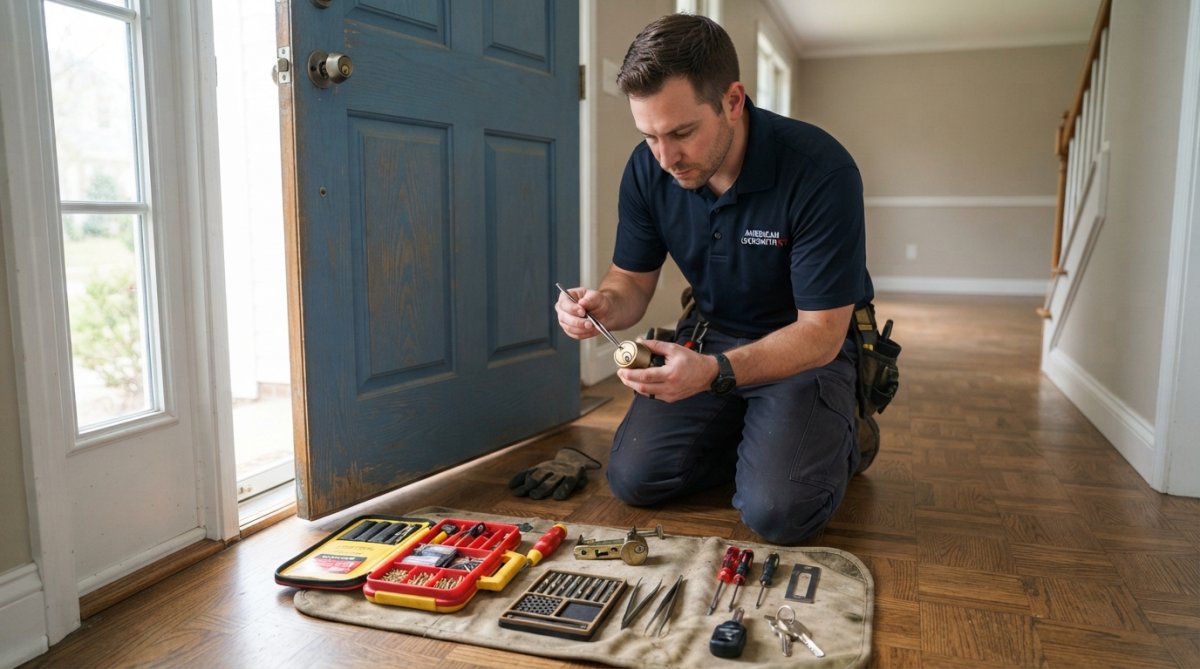
What You'll Need
- A rekeying kit matched to your lock brand
- New pin tumbler sets for the new key
- A plug follower and cylinder removal tool
- The new tenant's keys, cut to the new pin configuration
- A screwdriver set for the lock body
Step 1: Remove the Cylinder [Time: 5 minutes]
Unscrew the lock body and pull the deadbolt cylinder free. On most residential locks, two screws hold the interior plate.
Expected Result: The cylinder is in your hand and the door hardware is set aside safely.
Step 2: Extract the Plug and Old Pins [Time: 5 minutes]
Insert the plug follower to hold the driver pins, then slide the plug out. Dump the old pin stack, never reuse old pins.
Step 3: Load the New Pins [Time: 5 minutes]
Match the new key's bitting to a fresh pin set, then load the bottom pins into the plug chambers.
Expected Result: The new key turns the plug smoothly with the cylinder out of the door.
Step 4: Reassemble and Test [Time: 5 minutes]
Slide the plug back in behind the follower, reseat the cylinder, and test the new key several times before closing the door.
Step 5: Document and Issue Keys [Time: 5 minutes]
Log the rekey date, new key count, and who received each key, your key control record if a dispute arises.
If your property runs a master key system, don't rekey cylinders by hand. One mispinned cylinder can break the master key hierarchy for the whole building, that's a locksmith's job.
Security Audit Checklist for Every Turnover
A rekey alone doesn't secure a unit. Run this audit at every move-out, before the next move-in:
- Rekey or replace every exterior lock cylinder
- Verify all keys from the previous tenant are returned
- Test the deadbolt, knob lock, and any sliding-door hardware
- Check door frames and strike plates for damage or loosening
- Confirm window locks engage fully
- Review any smart lock access codes and revoke old ones
- Update the key control log with new key holders
- Inspect hardware for wear and schedule preventative maintenance
Conclusion
Turnover season exposes every gap in your property management process, and lock security is where gaps cost the most. Whether you're rekeying a single unit or managing a master key system across a multi-family residential building, it has to be done right the first time.
Frequently Asked Questions
Is it legally required to rekey locks between tenants?
It depends on your state and local laws. Many states require landlords to rekey or change locks when a tenant vacates or when keys are lost. Connecticut law allows tenants to change locks under certain conditions, but landlords typically need to rekey to maintain key control. Always check your specific jurisdiction and consult a local attorney. Rekeying locks for rental property turnover is considered a best practice even when not strictly mandated.
Is it cheaper to rekey locks or replace them?
Rekeying generally costs less than full lock replacement because you keep the existing hardware and only change the internal pins. The cost difference depends on lock type, number of units, and whether you hire a locksmith. Rekeying also takes less time per door. However, if the hardware is old, damaged, or you want smart lock integration, replacement may offer better long-term value. Get a quote for both options based on your property.
Can I use smart locks to manage rental turnover?
Yes. Smart locks let you issue temporary access codes to tenants, contractors, and cleaning crews, then revoke them remotely at move-out. This eliminates key duplication and lost key risks. Look for models with audit trails, auto-lock schedules, and integration with property management software. For high-turnover properties, smart locks reduce the need for physical rekeying between every tenant, though you still need a backup mechanical key for emergencies.
Who is responsible for the cost of rekeying a rental unit?
Typically the landlord covers rekeying between tenants as part of turnover costs. Some leases specify that tenants pay if they lose keys or request a lock change during their tenancy. Review your lease agreement and state landlord-tenant law. For multi-family residential properties, budgeting rekeying as a standard turnover expense simplifies accounting and ensures security liability is managed consistently.