 blog
blog
Emergency Lockout Service Pricing Transparency
Table of Contents
- Emergency Lockout Service Cost Breakdown
- Factors Influencing Lockout Pricing
- Residential vs. Automotive Lockout Costs
- Daytime vs. After-Hours Service Rates
- What to Ask a Locksmith Over the Phone
- How to Avoid Locksmith Scams
- Insurance and Roadside Assistance Coverage
- Average Cost of Residential Lockout
- Frequently Asked Questions
Last Updated: September 25, 2026
Emergency Lockout Service Cost Breakdown
Understanding what you'll actually pay separates legitimate emergency lockout service pricing from inflated bills that arrive after a technician is already working on your lock.
Emergency lockout service pricing breaks down into four components: the service call fee (dispatch and arrival), labor costs (time to assess and gain entry), specialized tools or techniques required, and after-hours surcharges. Non-damaging techniques preserve your lock but cost more than destructive methods. After-hours rates add a premium because technicians respond outside standard business hours.
A straightforward residential lockout during business hours costs substantially less than an automotive lockout at 2 AM requiring specialized key extraction equipment. American Locksmith CT provides upfront pricing so you know what to expect before work begins.
Factors Influencing Lockout Pricing
Lock type is the first major factor, residential deadbolts are simpler than commercial-grade or automotive locks with electronic components. Lock condition matters too: old, corroded locks require more time and care than newer ones.
Location affects pricing, urban locksmiths with short response times charge differently than rural providers with longer travel distances. Time of day is critical: a noon lockout costs less than midnight, when after-hours surcharges can double or triple the base fee.
Non-damaging techniques preserve your lock but take longer; destructive methods are faster and cheaper. Lock accessibility, security obstacles, and specialized tool requirements directly influence labor time and cost.
Residential vs. Automotive Lockout Costs
Residential lockouts typically involve deadbolts and are faster to address than car locks, which often include electronic components, alarm systems, or anti-theft devices.
Automotive lockouts often require specialized tools to manipulate electronic locks and immobilizers without triggering security systems. This specialization commands higher rates.
Residential lockouts fall into a predictable range because most homes use similar locks. Automotive lockouts vary more widely, basic key lockouts cost less than key extraction or damaged locks. Luxury vehicles with advanced security systems cost more to open safely.
Daytime vs. After-Hours Service Rates
Standard business hours (8 AM to 5 PM, Monday-Friday) represent the lowest pricing tier because locksmiths operate at full capacity with predictable response times.
After-hours service carries premiums because technicians respond outside regular schedules. Night and weekend rates can be 50% to 100% higher than daytime rates.
Holiday lockouts often incur additional premiums. Some locksmiths increase all fees on holidays; others add a flat holiday surcharge.
What to Ask a Locksmith Over the Phone
Before a technician arrives, ask for the service call fee, labor rate (hourly or per-lock), and an estimate for your specific situation based on lock type and entry method preference.
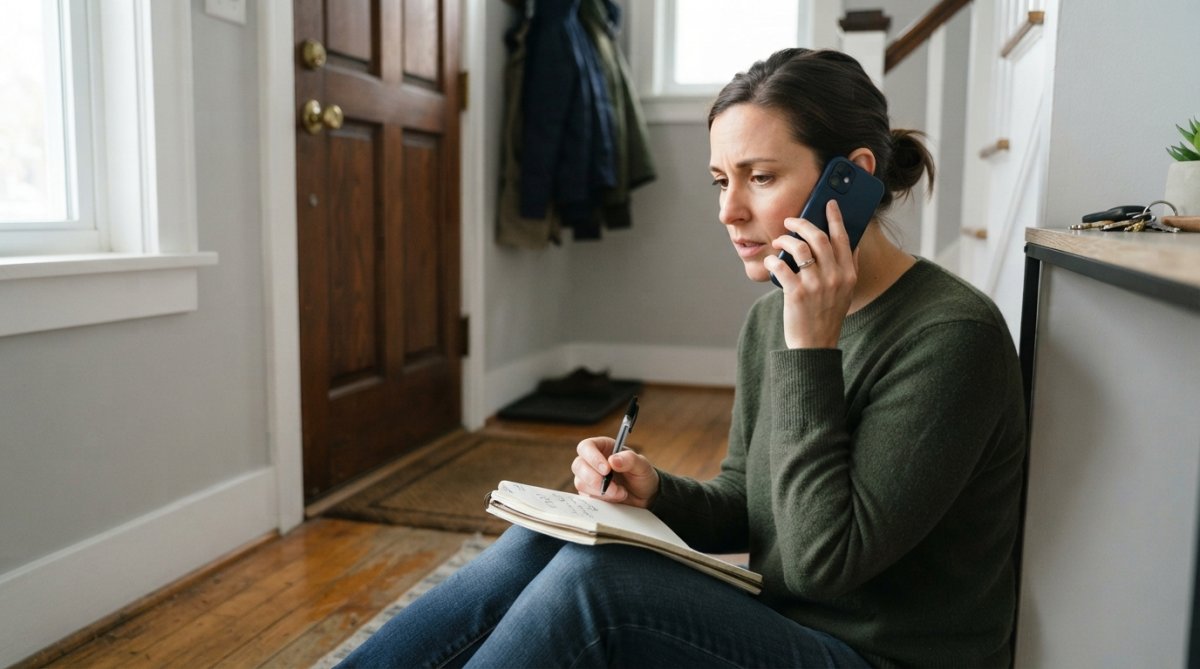
Ask whether the quote includes all charges, specifically after-hours surcharges, dispatch fees, and travel charges. Request clarity on what happens if the lockout is more complex than described and whether they'll call for approval before proceeding.
Ask whether technicians are background-checked and insured. Insurance protects you if something goes wrong during entry.
Ask if they provide upfront pricing in writing or via text. If a locksmith refuses clear pricing information, find another provider.
How to Avoid Locksmith Scams
The locksmith industry has a reputation for scams because locked-out customers are stressed and willing to pay inflated rates. Knowing common tactics and how to verify legitimacy protects you.
Pricing Scams: Bait-and-Switch and Hidden Fees
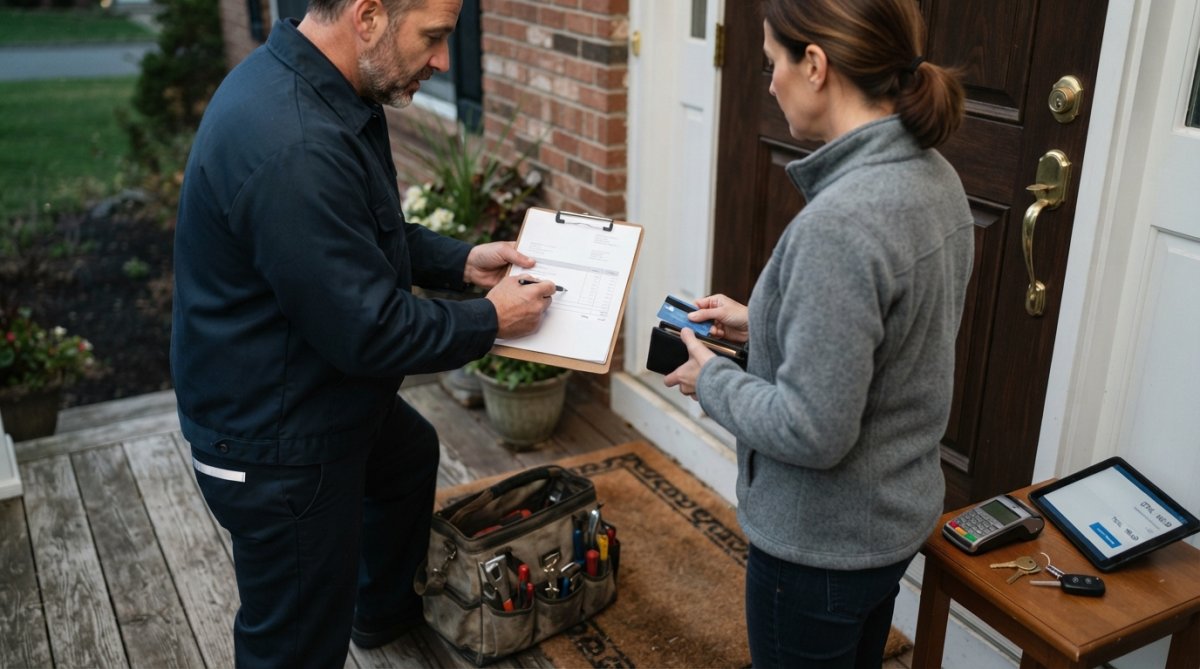
The most frequent scam is bait-and-switch: a low phone quote ($50-$100) becomes $300-$500 on-site. Protect yourself by getting quotes in writing or via text. Ask the locksmith to describe your specific lock type and confirm they understand your situation before accepting.
Another common tactic is unnecessary service upsells. Get a separate quote for any additional work before agreeing. Do not let urgency push you into services you don't need.
Ask explicitly about dispatch fees, travel charges, minimum service charges, and after-hours surcharges. Request a complete price breakdown before work begins. Legitimate locksmiths provide written estimates and honor them.
Credential Verification: The Trust Factor
Check for State and Local Licensing
Before hiring a locksmith, search your state's licensing board website (usually under the Secretary of State or Department of Consumer Affairs) for the locksmith's name and verify their license is current. If your state has no state-level licensing, check your city or county's business licensing database. If a locksmith cannot provide a license number in a state that requires licensing, do not hire them.
Verify Insurance and Bonding
A reputable locksmith carries liability insurance and is bonded. Before the technician arrives, ask for the insurance company name and policy number, and the bonding company name and bond amount. You can verify these directly with the companies. Legitimate locksmiths are happy to provide this information; if a locksmith hesitates or refuses, this is a red flag.
Background Checks and Company Reputation
Ask whether the company conducts background checks on technicians. Check online reviews on Google, Yelp, and the Better Business Bureau for patterns in complaints. Multiple complaints about bait-and-switch pricing, damage, or unprofessional behavior are warning signs. Pay attention to how the company responds to complaints.
Red Flags During the Call and On-Site
Cash-only demands are a red flag, legitimate businesses accept credit cards and provide receipts. Refusal to provide identification is another warning sign. Pressure to authorize additional services immediately is a scammer tactic; ask for a written quote and take time to consider.
What to Do If You Suspect a Scam
If a locksmith overcharges you or damages your property, document everything: keep receipts and communications, take photos of damage, and file a complaint with your state's Attorney General or city's consumer protection agency. Report the company to the Better Business Bureau. If you paid by credit card, dispute the charge with your card issuer.
Insurance and Roadside Assistance Coverage
Before paying out of pocket, verify whether your insurance or roadside assistance plan covers lockouts. Coverage varies widely, so ask specific questions about your plan.
Auto Insurance Roadside Assistance
Many auto insurance policies include roadside assistance with lockout coverage up to a stated limit (commonly $50-$200 per incident). Before calling a locksmith, contact your insurer to confirm coverage limits, exclusions, provider requirements, and claim procedures. Using an in-network provider may eliminate your out-of-pocket cost.
AAA and Roadside Membership Plans
AAA and similar roadside assistance services frequently include lockout coverage with set reimbursement rates and limits. Before your emergency, confirm your membership level's coverage, reimbursement amount, provider restrictions, and claim procedures.
Homeowners Insurance
Homeowners insurance typically does not cover lockouts because they are not considered damage, theft, or loss. A lockout is a service call, not an insurable event. However, some homeowners policies include emergency service coverage or home emergency repair coverage that may apply.
Rental Car Lockouts
- Ask the locksmith if they can work within your coverage limit. Some locksmiths will adjust their service (for example, using a faster destructive method instead of a slower non-damaging technique) to fit your budget.
- Request an itemized quote before work begins. If the quote exceeds your coverage, ask whether the locksmith can reduce the scope of work or offer a discount.
- Pay the difference out of pocket. If the locksmith's rate is fair and you have no other options, paying the overage may be necessary. Get a receipt and submit it to your insurance or roadside plan for partial reimbursement.
If You Don't Have Coverage
Average Cost of Residential Lockout
A typical residential lockout during business hours falls within a predictable range, though actual costs vary by location and specific circumstances. The service call fee alone usually ranges from $50 to $150. Labor time for a straightforward residential lockout typically adds another $75 to $200, depending on how quickly the technician gains entry.
Frequently Asked Questions
How much should an emergency lockout service cost?
Emergency lockout service pricing depends on several factors including the type of lock, time of day, location, and whether damage-free entry is possible. Residential lockouts typically cost less than automotive or commercial jobs. After-hours service carries a surcharge. To get an accurate estimate, call a professional locksmith and describe your situation, including the lock type and any access restrictions. Always ask for an upfront quote before service begins to avoid hidden fees.
What questions should I ask a locksmith over the phone to ensure pricing transparency?
Ask about the service call fee, labor costs, and whether they charge a minimum fee. Request their rates for your specific lock type. Confirm whether after-hours surcharges apply and what time frame qualifies as emergency hours. Ask if they offer damage-free entry or if you should expect lock damage. Request their pricing policy in writing or ask them to email a quote. Finally, verify they're licensed and insured, and ask about their cancellation policy.
How can I avoid locksmith scams?
Verify the locksmith is properly licensed and insured before allowing them entry. Get an upfront quote and never agree to vague pricing like 'we'll see what it costs.' Avoid locksmiths who quote unusually low rates or demand cash-only payment. Check reviews from multiple sources and confirm the business has a physical address and phone number. Be wary of bait-and-switch tactics where the quoted price jumps significantly after arrival. Ask about their technician credentials and how long they've been in business.
Does the time of day affect emergency lockout service rates?
Yes, significantly. After-hours service, typically evenings, nights, weekends, and holidays, carries a surcharge on top of the standard service fee. Night and weekend rates can be 50-100% higher than daytime rates. The surcharge covers the cost of having technicians available outside standard business hours and compensates for inconvenience. Always clarify what times are considered standard business hours versus emergency hours when requesting a quote, as definitions vary between providers.