 blog
Rekeying vs Changing Locks for Home Security: Which to Choose
Quick Summary
Rekeying keeps your existing lock hardware and changes which key opens it, making old keys useless, while changing locks replaces the hardware itself. Rekeying is usually cheaper and fits lost keys or a move, but replacement is the better choice when the lock is worn, damaged, or needs a higher security grade. Rekeying vs changing locks comes down to whether the problem is key control or the hardware.
- Rekeying swaps pin stacks inside the cylinder and keeps the same lock body, handle, and finish.
- Changing a lock installs new hardware, which lets you upgrade brand, grade, or keyway.
- Rekey after a lost key, breakup, or move; replace after a forced entry or when the lock sticks or feels loose.
- Confirm that a new cylinder uses a fresh keyway, since matching keyways can leave old keys working.
- Rekeying does not improve a weak strike plate or short deadbolt throw, so reinforce the door as well.
Table of Contents
- What Rekeying and Changing Locks Actually Mean
- How Each Option Affects Your Old Keys
- Rekeying vs Changing Locks Cost: An Itemized Comparison
- Can You Rekey a Lock Without Replacing It?
- Security Beyond the Key Change: Compatibility and Lock Grade
- When to Replace Door Locks Instead of Rekeying
- Rekey Locks After Moving Into a New Home: Your Next Step
- Frequently Asked Questions
What Rekeying and Changing Locks Actually Mean
Last Updated: November 4, 2026
Most homeowners who lose a key or move into a new house face the same question: when weighing rekeying vs changing locks, should they rekey the locks or replace them outright? Compare when repair versus replacement makes sense for your situation. Rekeying changes which key operates the existing lock cylinder. Replacing a lock installs new hardware, often with a different keyway and mechanism. The two options can look similar from the outside, but they differ in cost, security, and how much work is involved.
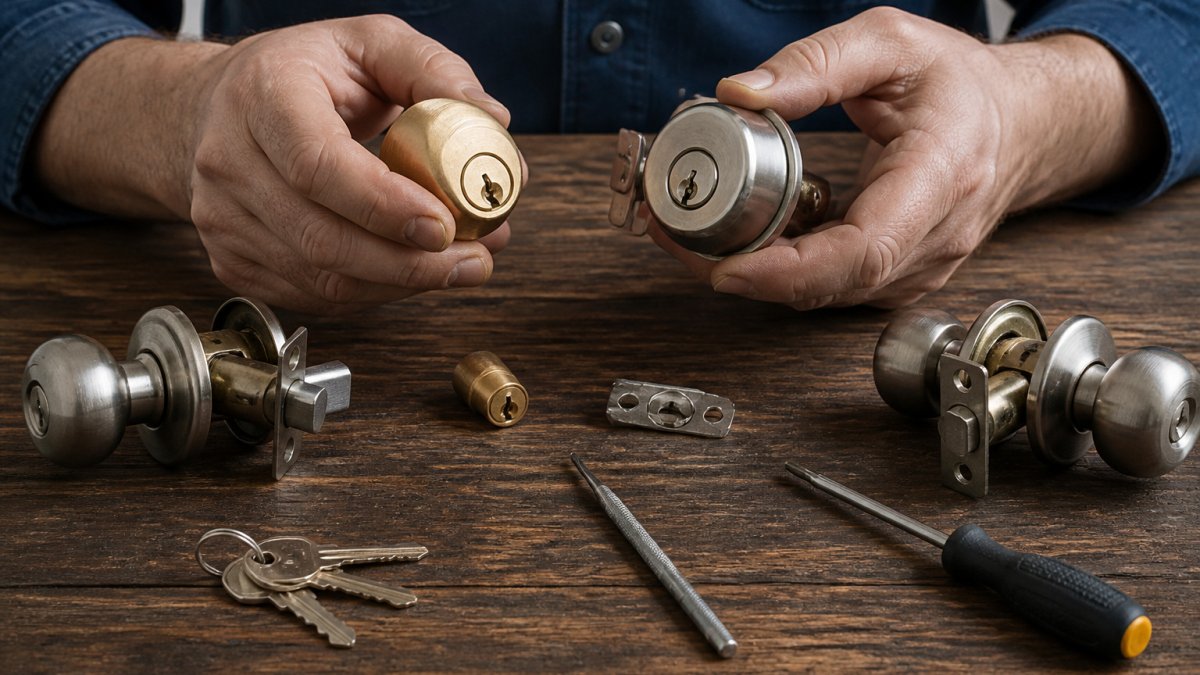
A rekey keeps the lock body and cylinder housing in place. A locksmith removes the pin stacks inside the cylinder and swaps in new pins, or uses a different set of pin heights, so that a new key lifts them to the shear line. Old keys stop working, and the lock keeps its hardware.
Changing a lock means removing the entire unit and installing a new one. That can mean a new cylinder, a new deadbolt, or a full lockset with handles. The new hardware can carry a different brand, grade, or keyway, which gives you more control over security features.
Think of rekeying as updating the key and changing the lock as updating the hardware. Both give you a fresh start on key control, but only replacement lets you upgrade the lock itself.
How Each Option Affects Your Old Keys
Rekeying makes previous keys useless. A new key set is cut so that only it operates the cylinder. This matters most after a move, a lost key, or a breakup, because anyone holding an old key loses access.
Changing the lock also invalidates old keys, but only if the new lock uses a different keyway or cylinder. If the replacement cylinder is keyed to match the old one, previous keys might still work. Always ask for confirmation that the new lock uses a fresh keyway when your goal is to block former occupants.
A common mistake is assuming that a new lock automatically means new keys. Check the paperwork or ask the installer to verify that old keys no longer fit.
Rekeying vs Changing Locks Cost: An Itemized Comparison
Most cost comparisons stop at "rekeying is cheaper." That is true in the typical case, but the number a homeowner actually pays depends on how many cylinders are involved, the lock grade, whether the door needs adjustment, and whether the call is scheduled or emergency. The useful move is to build the estimate line by line so you can see where the money goes.
Rates can differ for after-hours, weekend, and emergency calls, so ask for current pricing before you book.
Ask for an itemized quote so you can compare bids fairly.
The article breaks down what drives the final price, so here is a quick look at the main factors:
| Factor | Effect on cost | Note |
|---|---|---|
| Number of cylinders | Each one adds to the total | Build the estimate line by line |
| Lock grade | Higher grade can raise price | Check grade before comparing bids |
| Door adjustment | Extra work if the door needs it | Ask whether it is included |
| Scheduled vs emergency call | Emergency calls can cost more | Ask for current pricing before booking |
| Itemized quote | Makes bids comparable | Request one from each provider |
Can You Rekey a Lock Without Replacing It?
Yes, in most cases. Standard pin tumbler cylinders can be rekeyed as long as the lock body is in good condition. The locksmith removes the cylinder, changes the pins, and reinstalls it. You keep the same handle, deadbolt body, and finish.
Some locks cannot be rekeyed. Certain high-security cylinders, electronic locks, and older models with unusual mechanisms may require replacement. Locks with broken internal parts or heavy wear may also need a new cylinder even if the pins can technically be changed.
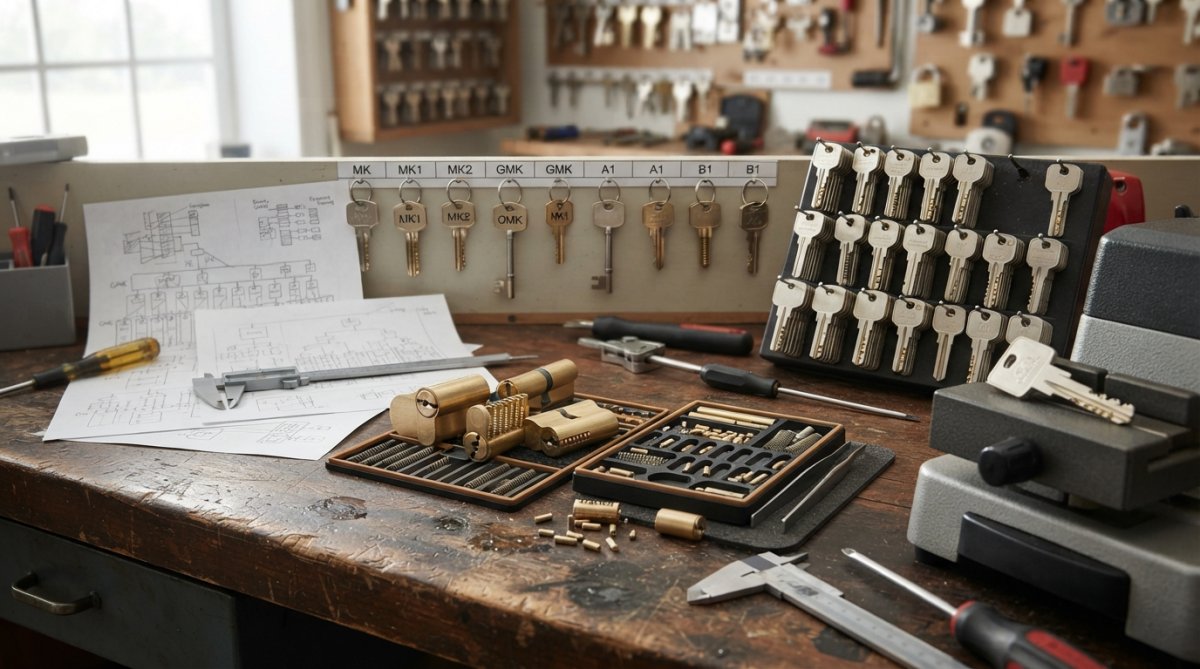
Keyed-alike systems allow one key to open several locks. Rekeying can match an entire set of doors to a new key, which helps property managers and homeowners with multiple entry points.
Security Beyond the Key Change: Compatibility and Lock Grade
Rekeying fixes key access, but it does not improve the lock itself. If your current deadbolt is a low-grade model with a weak strike plate or a short throw, a new key set will not stop a forced entry. Lock grade, measured under the ANSI/BHMA standards, indicates the durability and resistance of the hardware.
Compatibility also limits your options. Not every new cylinder fits every door preparation. Thickness, backset, and cam type all affect what will work.
Consider these security steps alongside the key change:
- Replace short screws in the strike plate with 3-inch screws that reach the framing
- Add a reinforcement plate on the door frame
- Upgrade to a deadbolt with a one-inch throw or longer
These measures matter because a determined intruder is more likely to kick the door than pick the lock.
When to Replace Door Locks Instead of Rekeying
The honest answer is that the decision usually turns on two questions: is the existing hardware sound, and does it meet the security you want? Check the warning signs of a failing lock to see whether the hardware itself is the problem. Rekeying solves a key-control problem. Replacement solves a hardware problem. When both are true, replace; when only key control is at issue, rekey.
A practical way to sort it is by scenario:
- You lost a key or suspect a copy is out. Rekey. The lock is fine; the key set is the problem. Rekeying invalidates every old key immediately.
- You just moved in. Rekey first, before unpacking. You cannot know how many copies the previous occupants made. If the hardware is also old or low-grade, price a replacement at the same visit.
- A break-in occurred or the door was forced. Replace. Forced entry often bends the strike, distorts the cylinder, or damages the frame. Rekeying a damaged lock leaves the weakness in place. Prioritize the door, frame, and strike plate, then the lock.
- The lock sticks, feels loose, or the key turns without engaging. Replace. Internal wear or a failing mechanism is a hardware problem a rekey will not fix.
- You want a higher security grade, restricted keyway, or electronic access. Replace. Rekeying reuses the existing cylinder and cannot add grade, keyway control, or smart features.
- You are a tenant or share access with a landlord. Coordinate before changing anything. Many leases require landlord approval for hardware changes, and rekeying is often the simpler, reversible option.
- Contractors or former household members still hold keys. Rekey. It is the fastest way to cut off access without touching the hardware.
Age is a rough signal rather than a rule. A lock that has been in service for more than 10 to 15 years is a reasonable candidate for replacement, especially if parts are hard to source or the finish is failing. But a well-made Grade 1 deadbolt that still operates smoothly can be rekeyed indefinitely.
Watch out: a new lock does not automatically mean old keys stop working. If the replacement cylinder is keyed to match the old keyway, previous keys may still fit. Confirm with the installer that the new unit uses a fresh keyway when blocking former occupants is the goal.
If you are unsure, ask a locksmith to assess each lock and quote both a rekey and a replacement. The comparison usually makes the choice obvious once the hardware condition and security grade are on the table.
Rekey Locks After Moving Into a New Home: Your Next Step
After moving in, rekey the exterior locks before you unpack. Follow the step-by-step process for rekeying house locks after moving. You cannot know how many copies the previous owner or tenants made, and a single unknown key can give someone access to your home.
Start by listing every exterior door, including garage doors with keyed entry and any sliding door locks. Decide whether you want all locks keyed alike for convenience or separate keys for different household members. Property managers handling multiple units can find guidance on rekeying across properties. A locksmith can rekey them together so one key works everywhere.
Once you have confirmed the scope, contact American Locksmith CT to discuss rekeying the locks or replacing hardware if needed. Book your rekeying service directly.
Frequently Asked Questions
Is it better to change locks or rekey?
Rekeying is usually the better choice when the existing hardware is in good condition and only the keys need to be controlled, such as after a move or a lost key. Changing or replacing the lock makes more sense when the hardware is worn, damaged, or outdated, or when you want a higher lock grade or a different mechanism. Rekeying keeps the same cylinder and changes the pins so new keys operate it, which is faster and typically less expensive. Replacement installs new hardware and gives you a fresh start on both the mechanism and the keys. Get a quote from American Locksmith CT on the website to compare both options for your specific doors.
Does rekeying a lock mean replacing it?
No. Rekeying does not replace the lock. A technician removes the lock cylinder, changes the internal pin stacks so a new key matches, and reinstalls the same cylinder with new keys. The hardware, handle, and deadbolt body stay in place. Because the existing cylinder is reused, rekeying is generally faster and less expensive than a full replacement. Not every lock can be rekeyed, however, so confirm the lock type and condition before assuming this option is available for a given door.
Can you rekey a lock without replacing it?
In most cases, yes. Most standard pin tumbler cylinders can be rekeyed without installing a new lock. The technician changes the pins to match a new key code and leaves the rest of the hardware untouched. Some specialty, electronic, or heavily worn locks cannot be rekeyed reliably and may need replacement. Keyway compatibility also matters: if the lock brand or keyway is no longer available, replacement may be the only route. American Locksmith CT can assess your locks and tell you whether rekeying is practical.
Should you rekey your locks after moving into a new home?
Yes, rekeying is a sensible first step after a move. You cannot know how many copies of each key exist, whether former occupants, contractors, or property managers kept them, or whether they were duplicated. Rekeying makes all old keys obsolete at once, which is faster and typically less expensive than replacing every lock. Also check the exterior doors, garage, and any side or back entrances, and consider the security of the entire key system rather than just the front door.