 blog
blog
KeyMe Alternatives for Residential Locksmithing
Table of Contents
- Why Homeowners Look Beyond KeyMe for Residential Locksmithing
- How Key Duplication Kiosks Work and Their Limitations
- Professional Locksmith Services vs. Automated Kiosks
- How to Find a Licensed Locksmith for Your Home
- Emergency Lockout Services and On-Site Solutions
- Residential Lock Rekeying Cost and When to Rekey vs. Replace
- Security Risks of Digital Key Storage and Automated Systems
- Choosing the Right Solution for Your Home Security Needs
- Frequently Asked Questions
Last Updated: September 20, 2026
Why Homeowners Look Beyond KeyMe for Residential Locksmithing
Homeowners increasingly seek keyme alternatives residential locksmithing because key duplication kiosks have real limitations that matter for residential security. The decision between a KeyMe alternative for residential locksmithing and an automated system comes down to reliability, security, and peace of mind.
Residential locksmithing requires more than a machine and a key blank. It requires expertise, accountability, and the ability to handle emergencies when they happen.
Kiosks work for basic spare key cutting, but they can't assess whether a lock is compromised, advise on rekeying, or respond to midnight lockouts. Professional locksmiths fill the gap that kiosks leave wide open.
How Key Duplication Kiosks Work and Their Limitations
Key duplication kiosks scan an existing key and cut a new blank in 2-5 minutes for $2-5. This works for basic residential keys, but limitations emerge in real-world conditions.
How Kiosk Cutting Differs from Professional Locksmith Precision
Kiosk machines use optical scanning calibrated to ±0.005 inches, but residential locks operate in a narrower margin. A key that scans correctly may still fail if the original is worn, the lock has internal wear, or the blank material is inconsistent. Professional locksmiths test-cut keys and verify fit before delivery, and inspect lock condition to advise rekeying instead of duplicating worn keys.
Documented Failure Patterns
Kiosk-cut keys fail on first insertion in 5-15% of residential duplications, particularly on older locks or high-security models. Professional locksmiths report failure rates below 1% because they assess lock condition and adjust cutting parameters accordingly.
The Digital Storage Security Vulnerability
Kiosk companies store key profile data in databases vulnerable to remote compromise. A 2023 incident exposed customer key profiles through an unencrypted API endpoint. Physical spare keys cannot be hacked remotely. Choosing a locksmith service that doesn't depend on cloud-based key storage removes this risk.
Kiosks work for standard residential keys on locks under 10 years old when you trust the original key condition. They fail for worn keys, high-security locks, master key systems, emergency lockouts, and situations requiring accountability.
Professional Locksmith Services vs. Automated Kiosks
Accountability and Liability
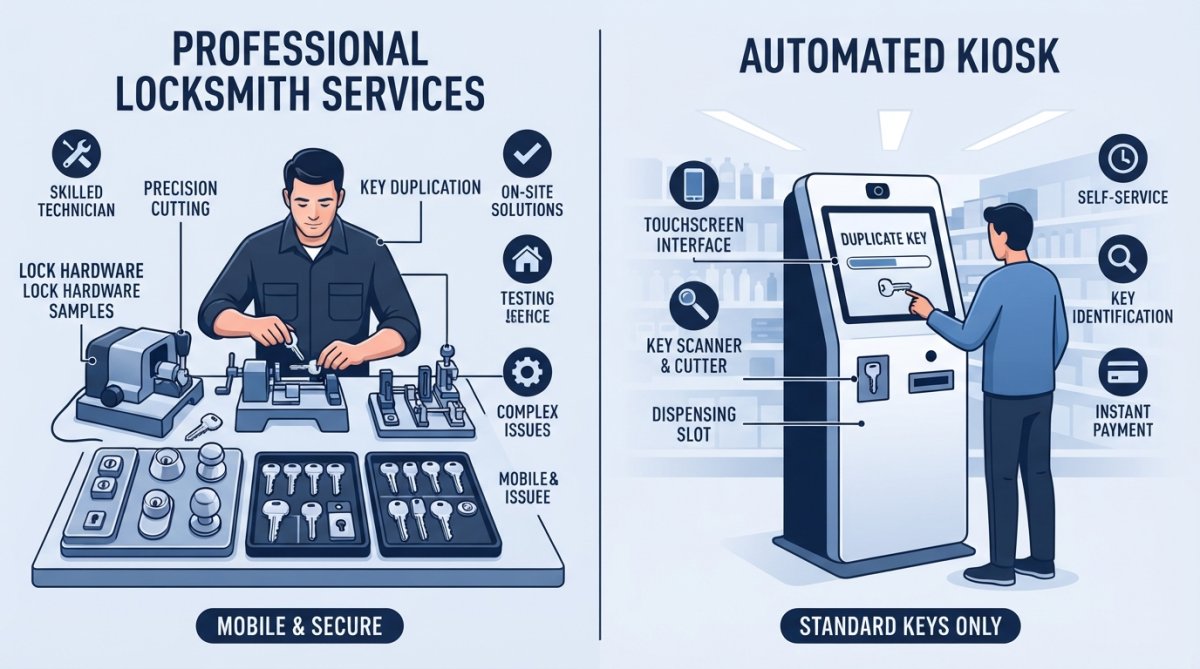
A licensed locksmith brings expertise, tools, and legal responsibility. Kiosk operators offer refunds only, with no liability if the key damages your lock or leaves you locked out. Professional locksmiths stand behind their work: if a key fails, they recut it free or investigate lock damage. Their liability insurance covers repairs. A kiosk has no such obligation.
Capability and Expertise
Professional locksmiths assess your lock hardware, understand security implications, and can handle complications. They work with residential lock cylinders, master key systems, and security vulnerabilities that machines simply cannot address.
When a key doesn't fit, a locksmith troubleshoots. They inspect the lock, test the key, and determine whether the issue is wear, damage, misalignment, or a mismatch between the key blank and the lock profile. They have the tools and knowledge to fix it. When a kiosk fails, you're out of luck and must call a locksmith anyway.
The reliability difference matters most in emergencies. Locked out at 2 AM? A kiosk is closed. A professional locksmith with mobile dispatch can reach you within 30-60 minutes in most service areas. Need your entire house rekeyed after losing keys? A kiosk cannot help. Need to change locks because you don't know who has copies? A kiosk isn't equipped for that conversation or the work itself.
Cost vs. Value
Cost appears to favor kiosks initially. A kiosk duplicate might cost $2-5, while a locksmith charges $15-50 depending on lock type and complexity. But this comparison ignores what you're actually purchasing.
You're paying for speed and low-cost convenience with a kiosk. You're paying for expertise, accountability, emergency availability, and a guarantee that the work is done correctly with a professional locksmith. For residential security, which protects your home, family, and possessions, the latter has measurable value.
Consider the total cost of failure: if a kiosk-cut key doesn't work and you're locked out, you'll pay an emergency locksmith $150-300 to get in. If a kiosk-cut key damages your lock cylinder, you'll pay $200-400 to replace it. A professional locksmith's higher upfront cost often prevents these downstream expenses.
Warranty and Guarantees
Reputable locksmith businesses offer explicit warranties on their work:
- Keys cut by a locksmith typically carry a guarantee that they will work on the specified lock
- If a key fails within a reasonable period (usually 30-90 days), the locksmith will recut or replace it at no charge
- If the locksmith's work damages your lock, their liability insurance covers the repair or replacement
- Many locksmiths offer a satisfaction guarantee: if you're not satisfied with the work, they will address the issue
Kiosk operators offer no such guarantees. You purchase a key. If it doesn't work, you get a refund. That's the extent of the transaction. No warranty. No liability. No recourse beyond the refund.
For homeowners, this difference is significant. You're not just buying a key; you're buying peace of mind that your lock will work reliably and that someone is responsible if it doesn't.
How to Find a Licensed Locksmith for Your Home
Finding a qualified locksmith requires verification that most homeowners skip. The first step is confirming licensure. In most states, locksmiths must be licensed, bonded, and insured. You can verify this through your state's licensing board or the locksmith's business registration.
Ask for credentials before scheduling. A legitimate locksmith will provide:
- License number and verification pathway
- Insurance documentation
- References from recent residential clients
- Transparent pricing structure before work begins
Background checks matter more than you might think. Locksmiths enter your home. You need confidence that the technician is trustworthy. Reputable locksmith services perform background checks on their own staff. Ask whether they do.
Avoid locksmiths who won't provide a quote upfront or who pressure you into unnecessary services. Professional locksmiths understand that homeowners need to know costs before committing. They also recognize that not every situation requires a full lock replacement, sometimes rekeying is smarter.
Local reputation carries weight. Check reviews on independent platforms, not just the locksmith's own website. Look for patterns in feedback about response time, professionalism, and pricing accuracy. One negative review might be an outlier. Multiple complaints about surprise charges or poor workmanship signal a real problem.
Emergency Lockout Services and On-Site Solutions
Emergency lockout services exist because locked-out homeowners need help now, not tomorrow. Professional locksmiths with mobile dispatch can reach you within 30-60 minutes in most areas, sometimes faster for urgent situations.
The on-site advantage is significant. A locksmith arriving at your door can assess your specific lock, discuss options, and solve the problem immediately. They bring multiple tools and techniques. If one approach doesn't work, they have alternatives. They can also inspect your lock for damage and advise on whether repair or replacement makes sense.
Mobile dispatch software connects you directly to a technician rather than a call center. This reduces miscommunication and ensures the person coming to your home knows your situation before arrival. It also creates accountability, you're working with a named technician, not an anonymous service.
The cost of an emergency lockout service varies by time of day and complexity, but the value is immediate access when you need it most. A kiosk can't provide this. No automated system can replace a skilled technician who understands residential locks and can work under pressure.
Residential Lock Rekeying Cost and When to Rekey vs. Replace
Rekeying changes the internal pins of a lock so that old keys no longer work. Replacement means installing an entirely new lock. For most homeowners, rekeying is the smarter choice when you want to invalidate old keys without changing your door hardware.
When to rekey: You've moved into a new home and don't know who has keys.
Security Risks of Digital Key Storage and Automated Systems
Digital key profiles stored in automated kiosk systems create security vulnerabilities that physical keys don't have. If a system is breached, hackers gain access to the digital blueprint of your residential locks. This information could theoretically be used to create keys without your knowledge.
Choosing the Right Solution for Your Home Security Needs
The choice between keyme alternatives residential locksmithing and an automated kiosk depends on your actual needs. If you need a quick spare of a key you trust, a kiosk works. If you need security, reliability, emergency access, or professional assessment, you need a locksmith.
Frequently Asked Questions
What security risks come with using automated key kiosks like KeyMe?
Automated kiosks store digital key profiles in cloud systems, creating potential unauthorized access points if that data is breached. The machines also cannot verify your identity or ownership of the lock, meaning anyone with a key code could duplicate it. Professional locksmiths perform in-person verification and use secure, offline methods. Additionally, kiosk-cut keys have higher failure rates on older locks or security pins, leaving you vulnerable to lockouts when you need access most.
Can a professional locksmith make a key for a house door without the original key?
Yes. A licensed locksmith can create a new key by reading the lock cylinder directly using specialized tools and techniques, or by using your lock's key code if you have documentation from the manufacturer. This is particularly valuable for new homeowners who don't have original keys or for emergency situations. Professional locksmiths have the expertise to handle residential security pins and specialized hardware that automated kiosks cannot manage, ensuring the key works reliably on first use.
How do I verify that a residential locksmith is actually licensed and legitimate?
Ask for their license number and verify it through your state's licensing board or consumer protection agency. Legitimate locksmiths carry insurance and bonding documentation, which protects you if damage occurs during service. Check for background verification, customer reviews, and physical business locations. Be cautious of locksmiths who quote prices only after arriving at your home or who pressure you into services you didn't request. Professional locksmiths provide transparent pricing upfront and can explain their credentials.
Is it cheaper to replace locks or rekey them with a professional?
Rekeying is almost always more cost-effective than replacing locks. Rekeying changes the internal pins so old keys no longer work, while keeping the existing hardware in place. This is ideal for new homeowners, tenant turnovers, or when you've lost keys. Replacement is necessary only if locks are damaged, non-functional, or if you want to upgrade to higher-security hardware. A professional locksmith can assess your specific situation and recommend the most economical and secure option for your residential needs.