 comparison
Lock Repair vs Replacement: When to Fix or Replace
Table of Contents
- Repair vs Replacement: Quick Comparison
- Common Lock Problems and When They Signal Repair or Replacement
- Signs a Door Lock Needs Replacing
- How to Fix a Door Lock That Is Hard to Turn
- Rekey vs Replace House Locks: Which Protects You Better
- Residential Lock Repair Cost vs Replacement Cost
- Security Implications: Repair, Replacement, and Break-In Recovery
- Frequently Asked Questions
Last Updated: October 5, 2026
Repair vs Replacement: Quick Comparison
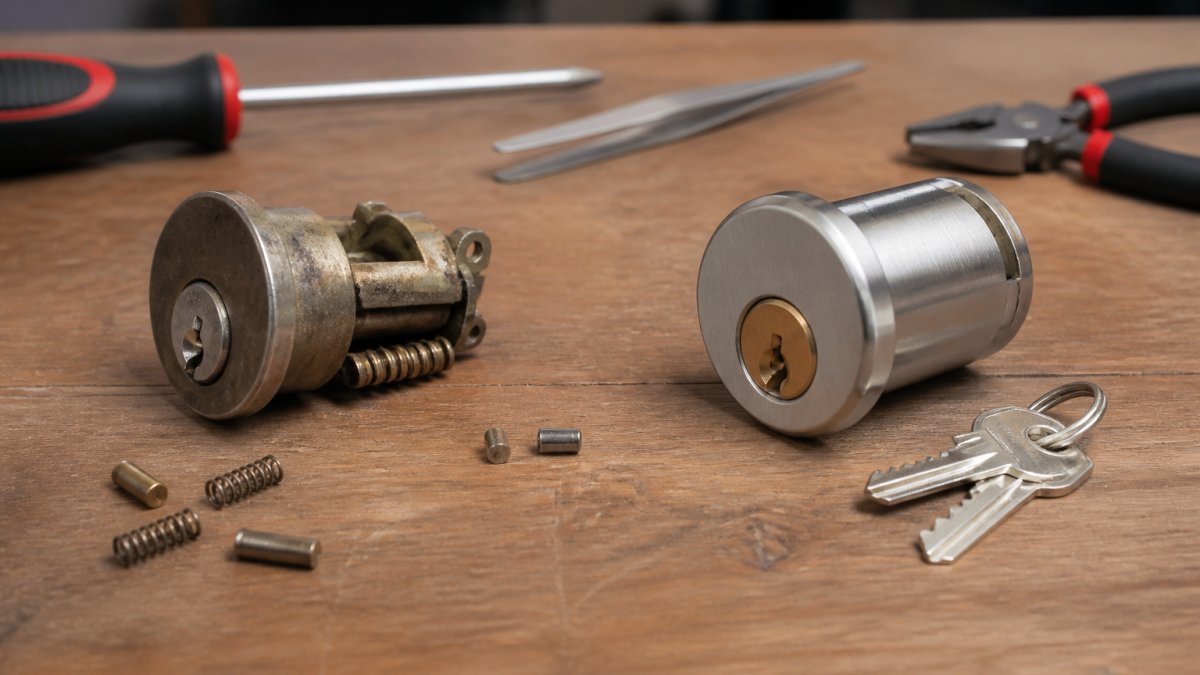
When a residential lock fails, you face a straightforward decision: repair the existing hardware or replace it entirely. The choice depends on the lock's age, the severity of damage, your security needs, and cost considerations. Most homeowners don't realize that what feels like a complete lock failure often comes down to a single worn component, sometimes fixable for a fraction of replacement cost. Other times, the lock's reliability is so compromised that repair only delays the inevitable expense.
Here's the practical reality: a lock repair vs replacement decision hinges on whether the mechanism can be restored to full function or whether the underlying damage makes replacement the safer investment. American Locksmith CT helps homeowners and property managers navigate this choice by diagnosing the actual problem, not just the symptom.
| Repair Option | Replacement Option |
|---|---|
| Fixes specific worn components (springs, pins, cylinders) | Installs entirely new lock hardware |
| Lower upfront cost for minor issues | Higher cost but guarantees new functionality |
| Best for newer locks with isolated damage | Best for old locks or multiple failures |
| Faster service, minimal disruption | Requires more time and installation work |
| May not restore full security if lock is old | Provides modern security features |
| Temporary solution if wear is widespread | Long-term solution with warranty |
The table above shows the core trade-offs. But the real decision comes down to three factors: the lock's age, the extent of damage, and whether you're fixing a single problem or addressing systemic wear.
Common Lock Problems and When They Signal Repair or Replacement
Residential locks fail in predictable ways, and understanding what's actually broken tells you whether repair makes sense.
Sticking or grinding locks usually mean the lock cylinder has accumulated debris or the internal pins are worn. This is often repairable, a locksmith can clean the mechanism, lubricate it, or replace the cylinder alone.
Keys that are hard to turn or require excessive force signal worn tumblers or a misaligned cylinder. Again, this is typically fixable. The locksmith replaces internal components, restoring smooth operation.
Latches that don't catch or retract smoothly often point to a broken spring or a bent latch bolt. This is almost always a repair situation, the mechanism itself is sound, but one component has failed. Replacement would be overkill.
Locks that won't open even with the correct key indicate a severely jammed or broken cylinder. Depending on the lock's age and value, repair (removing and replacing the cylinder) may be cost-effective.
The distinction matters because repair addresses the broken part, while replacement addresses the entire lock. A 5-year-old Schlage deadbolt with a worn cylinder is a repair candidate. A 25-year-old lock of unknown brand with multiple failing components is a replacement candidate.
Signs a Door Lock Needs Replacing
Some locks have reached the end of their useful life. Recognizing these signs prevents you from pouring money into repairs that only buy time before the next failure.
Age is the first indicator. Residential locks typically last 15-20 years with normal use. If your lock is older and showing multiple problems, sticking, grinding, and a key that's hard to turn, replacement is the practical choice.
Visible damage from a break-in or attempted entry is a replacement trigger. Even if the lock still functions, a forced lock is compromised.
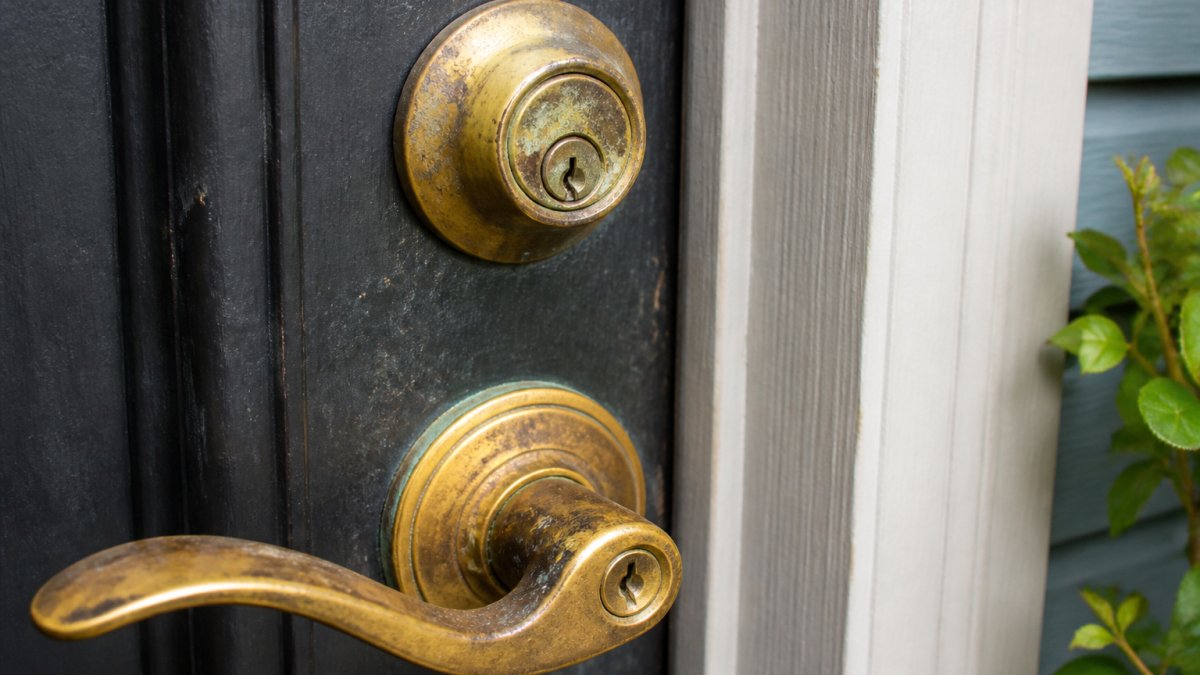
Rust or corrosion on the exterior or visible through the keyway suggests internal corrosion as well. Surface-level cleaning might help temporarily, but rust spreads to springs and pins. Once corrosion is visible, replacement is more reliable than repair.
Multiple independent failures in the same lock, a sticking cylinder plus a faulty latch, for example, indicate that the lock's overall integrity is compromised. Repairing one component won't fix the others, and you'll face repeated service calls.
Keys that are difficult to duplicate or no longer available signal an obsolete lock.
Loss of keys without the ability to rekey is a security issue. If you've lost keys and can't locate the original lock documentation, or if the lock is too worn to rekey reliably, replacement is the safest option.
How to Fix a Door Lock That Is Hard to Turn
A lock that requires excessive force to turn is frustrating and often fixable. Before calling for replacement, understand what's causing the resistance.
Lubrication is the first step. Locks accumulate dust, dirt, and dried lubricant over time. A graphite-based lubricant (not oil, which attracts dirt) applied to the keyway can restore smooth operation.
Key wear is another common cause. If the key has been used thousands of times or has been bent or forced, the cuts may no longer match the lock's pins precisely.
Misaligned cylinders happen when a lock is installed slightly off-center or when the door frame has settled. The cylinder may bind against the surrounding hardware as it turns.
Frozen locks in cold climates can feel like they won't turn at all. Never force a frozen lock, you'll break the key or damage the mechanism. Instead, apply heat gently (a hair dryer works) to thaw the lock, then use graphite lubricant.
Broken internal springs cause resistance that lubricant won't fix. If the lock is difficult to turn even after lubrication, and the key isn't worn, a spring inside the lock may be broken.
The key point: a hard-to-turn lock is usually repairable. Lubrication solves most cases. If lubrication doesn't help, a locksmith can diagnose the specific problem and either repair or replace the lock based on the cost and the lock's age.
Rekey vs Replace House Locks: Which Protects You Better
After moving into a new home or experiencing a security concern, you need to ensure that only authorized people have access. Two options exist: rekeying your existing locks or replacing them entirely. The choice depends on your security goals and the current condition of your locks.
Rekeying means changing the internal pin configuration so that old keys no longer work and new keys operate the lock. The physical lock stays in place; only the cylinder is altered.
Replacement means installing entirely new locks, often with upgraded security features. This is the choice when your existing locks are old, damaged, or when you want to upgrade to deadbolts, smart locks, or high-security hardware.
For a new homeowner, rekeying makes sense if the existing locks are solid, typically locks less than 10 years old from a reputable brand like Schlage or Yale. You eliminate the risk that previous owners or contractors have copies of your keys. The cost is lower, and the process takes hours, not days.
However, if you're buying an older home or you don't know the history of the locks, replacement is the safer choice. Older locks may have security vulnerabilities. A modern deadbolt offers better security than a rekeyed antique lock.
From a security standpoint, replacement is the stronger option because you control the entire lock from installation. Rekeying is a practical middle ground when existing hardware is sound.
Residential Lock Repair Cost vs Replacement Cost
Cost is often the deciding factor, but understanding what drives pricing helps you make the right choice.
Repair costs vary by the specific problem. A simple lubrication and cleaning might be a service call charge with minimal parts cost. Replacing a worn lock cylinder or fixing a broken spring typically costs less than a full lock replacement.
Replacement costs depend on the lock type and quality. A basic residential deadbolt or knob lock from a standard brand costs less than a high-security or smart lock. Installation time also affects the total cost, some locks are quick to install, while others require door frame adjustments or additional hardware.
The financial decision often comes down to this: if repair costs more than 50-60% of replacement, replacement is the better value. You're paying slightly more upfront but getting a new lock with a warranty and years of reliable service ahead.
For landlords managing multiple properties, rekeying existing locks is cost-effective between tenant turnovers. For homeowners concerned about security or dealing with old locks, replacement is an investment in peace of mind.
American Locksmith CT can assess your specific locks and provide a clear recommendation based on the actual condition and the cost-benefit of repair versus replacement. Transparent pricing and professional diagnosis mean you're never pressured into an unnecessary expense.
Security Implications: Repair, Replacement, and Break-In Recovery
Beyond function, the security of your home depends on whether your locks can reliably prevent unauthorized entry.
A repaired lock restores functionality but may not restore full security if the lock is old or if it was damaged by a break-in attempt. A lock that was picked, forced, or bumped may have internal damage that repair doesn't fully address.
A replaced lock gives you modern security features. Current deadbolts use more complex keyways and pin configurations that are harder to pick. Smart locks add features like remote access, entry logs, and the ability to change access without rekeying.
After a break-in or attempted entry, security assessment is critical. Even if the lock still operates, the door frame, strike plate, or hinges may be damaged. A locksmith can evaluate the entire entry point, not just the lock, and recommend repairs or upgrades that restore security.
For homeowners in areas with higher crime or those who've experienced a break-in, upgrading to deadbolts on all exterior doors and considering smart locks for main entry points is a worthwhile investment. Rekeying alone after a break-in is insufficient; the lock mechanism itself may be compromised.
When your residential lock fails, the choice between repair and replacement comes down to the lock's age, the severity of damage, and your security needs. Whether your lock needs a simple fix or a complete upgrade, our mobile locksmith services bring expert solutions directly to your home.
Frequently Asked Questions
Is it cheaper to repair a lock or replace it?
Repair is typically less expensive upfront, but replacement may be the wiser long-term investment if the lock is old, damaged, or compromised. A residential lock repair cost depends on the specific problem, a simple adjustment or lubrication costs far less than replacing internal components. Replacement locks offer new warranty coverage and improved security. The real comparison is repair cost versus replacement cost plus installation labor. If repair extends the lock's life by only months, replacement becomes the cost-effective choice.
How do I know if my house lock needs to be replaced?
Signs a door lock needs replacing include: a key that no longer turns smoothly, a lock that sticks or jams consistently, visible rust or corrosion on the lock cylinder or hardware, a key that breaks inside the lock, or a lock that fails after a break-in attempt or forced entry. If the lock mechanism is worn beyond adjustment, or if the lock has been compromised by damage or tampering, replacement is safer than repair. Age also matters, locks older than 10 years may lack modern security features.
What's the difference between rekeying and replacing a lock?
Rekeying changes the key that opens the existing lock without removing the hardware from the door. Replacement removes the old lock entirely and installs new hardware. Rekey vs replace house locks depends on your situation: rekey when the existing lock is secure and functional but you need new key control (after moving, losing keys, or a tenant turnover). Replace when the lock is damaged, worn, or you want upgraded security features. Rekeying is faster and less disruptive; replacement offers a fresh start with warranty protection.
Can a locksmith repair a lock that is difficult to turn?
Yes. A lock that is hard to turn often needs cleaning, lubrication, or internal adjustment, all repairs a locksmith can perform. How to fix a door lock that is hard to turn usually starts with removing debris and applying the correct lubricant to the lock cylinder and keyway. If the problem is a worn or damaged pin stack inside the cylinder, the locksmith may replace just the cylinder instead of the entire lock. If the issue stems from door misalignment or strike-plate problems, those are separate repairs that address the root cause.
How long does lock repair or replacement take?
Repair typically takes 30 minutes to 1 hour, depending on the problem. Simple adjustments or lubrication are quickest; internal repairs take longer. Replacement usually takes 1 to 2 hours, including removal of the old lock, installation of new hardware, and testing. Mobile locksmith services like American Locksmith CT can complete both at your home without requiring you to leave or disrupting your schedule. Timeline also depends on lock type, deadbolts and knob locks are faster than mortise locks or smart locks.