 Ultimate guide
Best Ways to Secure a New Home: 2026 Guide
Table of Contents
- Start With a New Home Security Checklist
- How to Rekey House Locks After Moving
- How to Secure a Front Door and Entry Points
- Window Security Tips for Every Floor
- Lighting, Landscaping, and Visibility as Deterrents
- Alarms, Cameras, and Smart Home Privacy
- A Layered Plan for Securing a New Home on Any Budget
- Frequently Asked Questions
Last Updated: October 18, 2026
Start With a New Home Security Checklist
The best ways to secure a new home start with one uncomfortable question: who else has a key? A new home security checklist is a room-by-room, door-by-door audit you complete in the first week after closing, before furniture arrives and routines set in. It covers locks, entry points, lighting, and occupancy signals.
Here is the checklist we would work through, in order:
- Confirm how many keys exist and who holds them
- Test every exterior lock and deadbolt by hand
- Check all windows, including basement and second-floor units
Who Had Keys Before You Moved In?
Realistically, more people than the seller disclosed. Realtors, contractors, cleaners, pet sitters, family members, and previous tenants may all hold copies. A seller's "we only had two keys" claim is not verifiable, and spare keys turn up under planters, in magnetic boxes, and taped inside garage cabinets.
Our advice is blunt. Do not try to track down every copy. Change the locks or rekey them, and treat the old keys as void.
How to Rekey House Locks After Moving
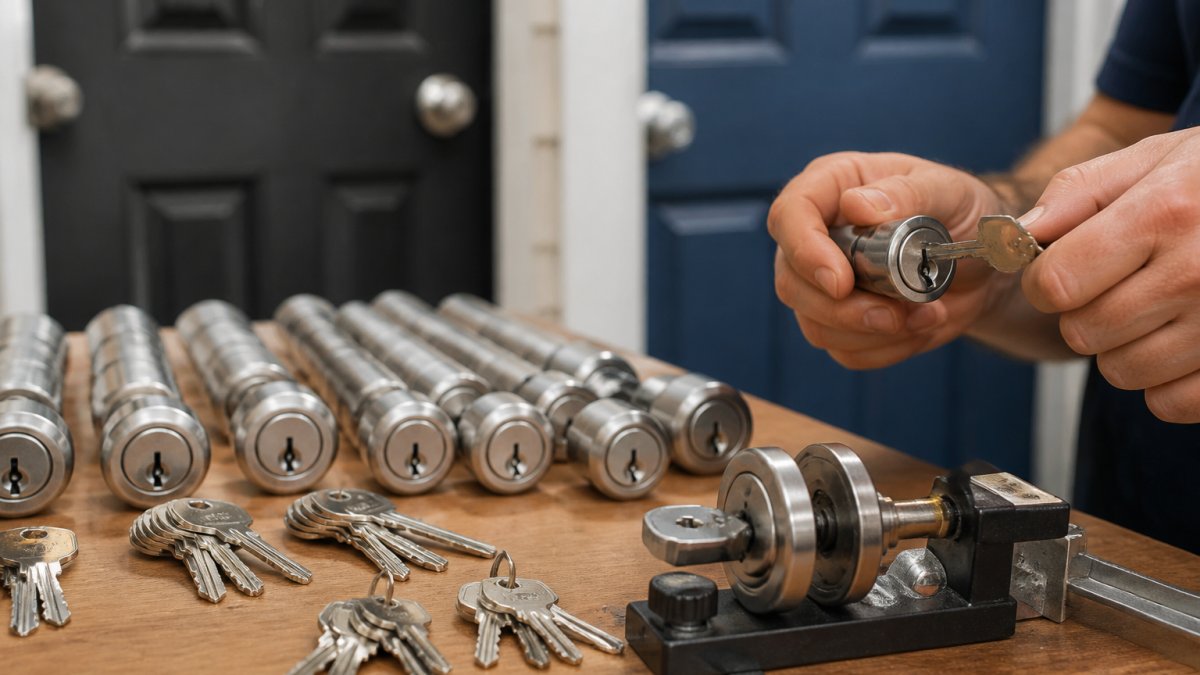
Rekeying replaces the internal pins in a lock cylinder so old keys no longer work while the existing hardware stays on the door. Knowing how to rekey house locks after moving is one of the highest-value skills a new owner can pick up, even if you hire it out.
The sequence:
- Count every exterior lock cylinder, including back doors, garage entry, and basement doors
- Decide whether to rekey to a single key or keep separate keys per door
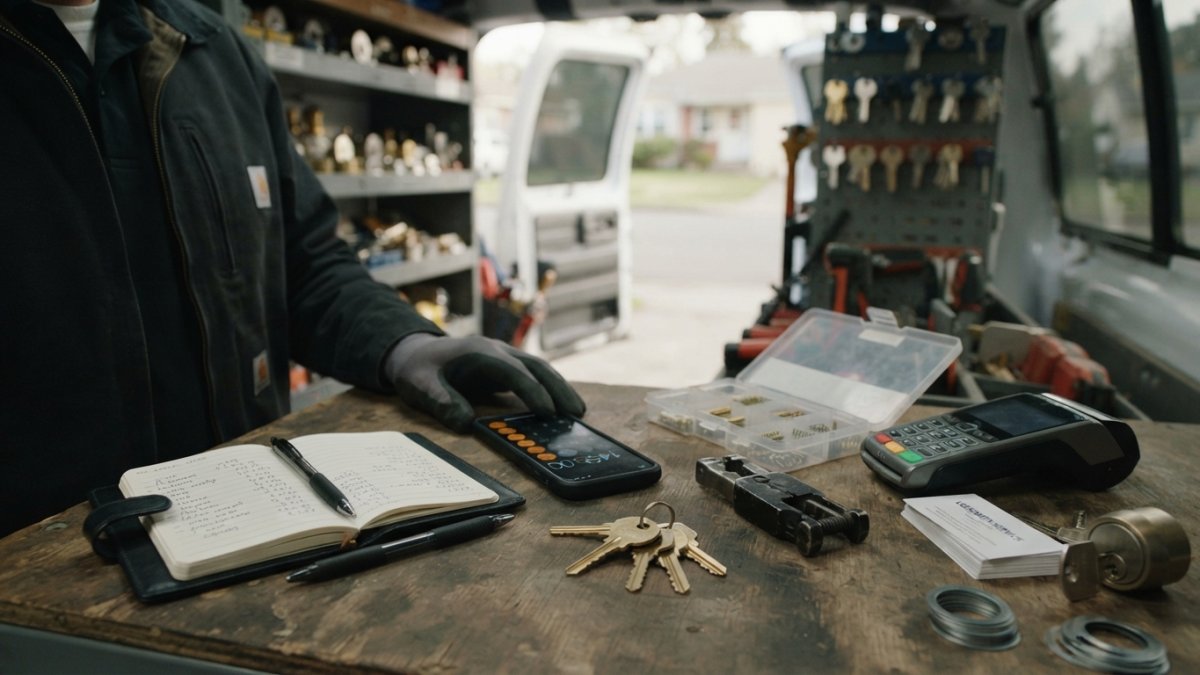
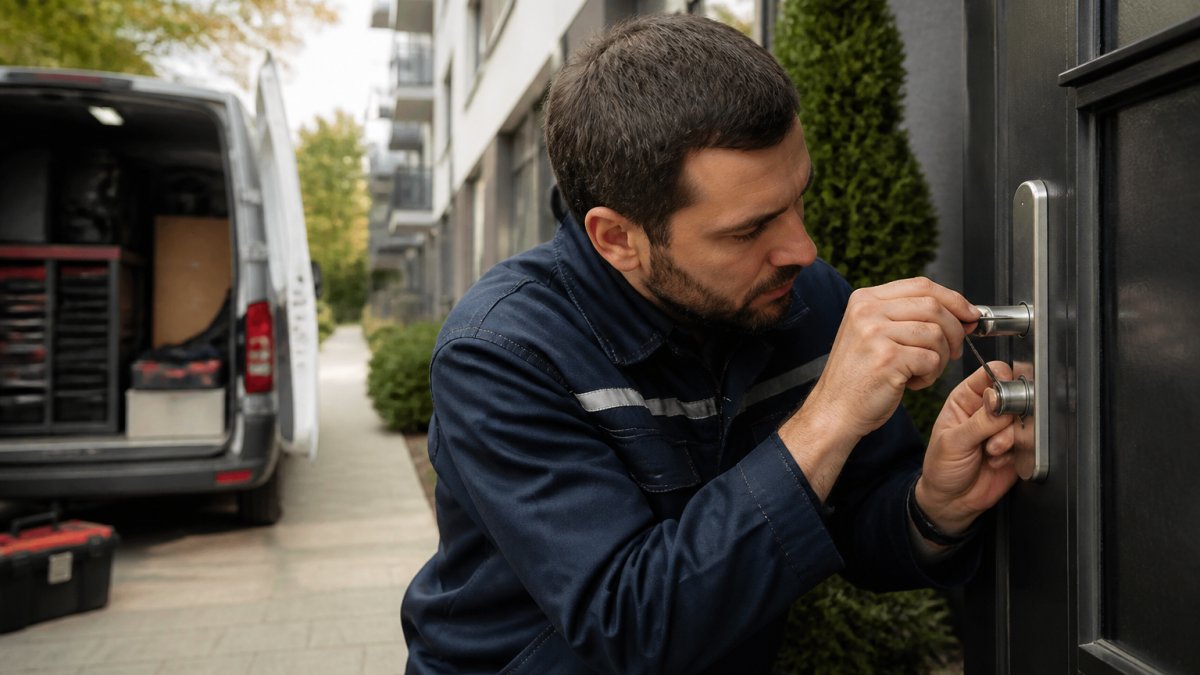
- Remove each cylinder or have a mobile locksmith service them on site
- Replace the pin stacks to match a new key
- Test every key in every lock before the technician leaves
- Distribute new keys only to household members, and log who has one
A single-key setup is convenient, but it means one lost key compromises every door. Separate keys per entry add friction for an intruder and give you time.
American Locksmith CT handles residential rekeying and master rekeying as mobile service. If you are managing several rental units, ask about master keying before the work starts.
How to Secure a Front Door and Entry Points
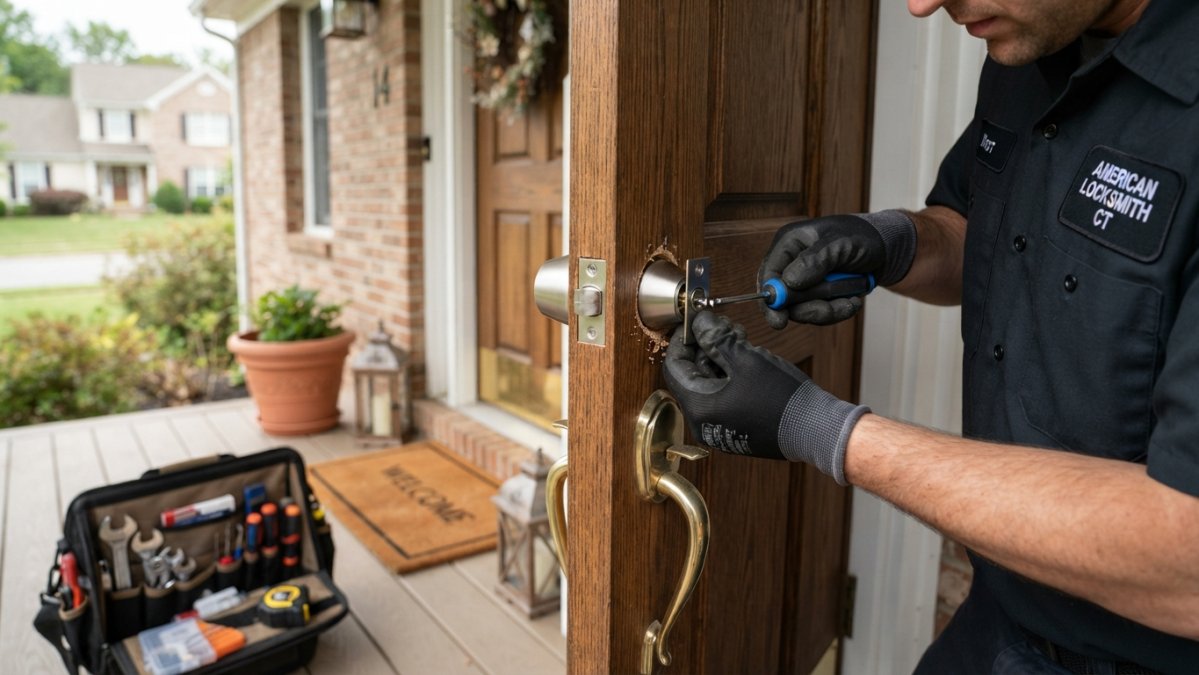
The front door is the entry point most burglars test first, and most residential doors fail. A hollow-core door, a short strike plate screw, and a deadbolt with a 1-inch throw or less all give way to a solid kick.
Deadbolts, Strike Plates, and Door Reinforcement
A deadbolt is a locking mechanism that extends a solid steel bolt into the door frame, independent of the handle latch. Grade matters: look for ANSI/BHMA Grade 1 or Grade 2 hardware, which is tested against forced entry. The [ANSI/BHMA standards published by the Builders Hardware Manufacturers Association | buildershardware.com] define those grades if you want to verify a product before buying.
Three upgrades do most of the work:
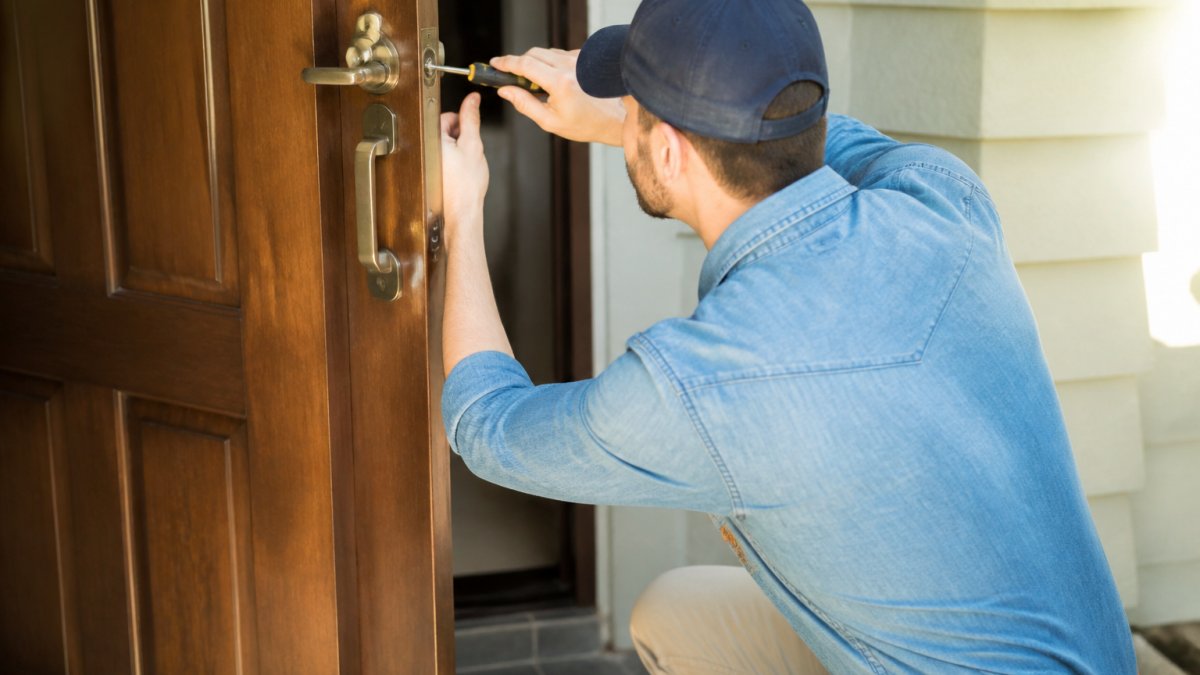
- Deadbolt: replace any spring-latch-only exterior door with a Grade 1 or Grade 2 deadbolt
- Strike plate: swap the short factory screws for 3-inch screws that reach the wall framing
- Door reinforcement: add a metal kick plate or jamb reinforcement so the frame does not split
Window Security Tips for Every Floor
Window security is where most homeowners stop at "lock the latch" and call it done. That is a mistake: a window latch is a privacy device, not a security device. Ground-floor windows need secondary hardware, and so do upper-floor windows, because a ladder, porch roof, or tree makes a second-story window a ground-floor window. The goal is to make every window slow enough to force that an intruder gives up or makes noise.
Match the Hardware to the Window Type
Not every window takes the same fix. The mechanism matters more than the brand:
- Double-hung windows: a keyed sash lock or a pin-style lock that drills through the upper and lower sash. The pin is the stronger option because it ties the two sashes together; a latch alone can be slipped with a shim.
- Casement and awning windows: the crank mechanism is the weak point. Add a casement lock that secures the sash to the frame, and check that the crank does not back off under pressure.
- Sliding windows: a dowel or sash limiter in the track stops the panel from sliding, but the factory latch can still be lifted. Pair the limiter with a secondary lock at the meeting rail.
Sliding Glass Doors Are Windows With a Handle
The factory latch on a sliding glass door is weak by design, a spring-loaded hook, not a deadbolt. A charley bar or dowel in the track plus a secondary lock at the top rail makes the door dramatically harder to force. The [Consumer Product Safety Commission | cpsc.gov] publishes guidance on window and door safety hardware worth reviewing, and the [ANSI/BHMA standards published by the Builders Hardware Manufacturers Association | buildershardware.com] define the grades that separate residential from commercial-grade hardware.
The Trade-Offs Nobody Mentions
Every window security measure has a cost beyond money:
- Keyed locks are strong but create an egress problem. If a keyed lock is on a bedroom window, make sure the key is stored where a resident can reach it in a fire, not in a drawer across the room.
- Pins and dowels are cheap and effective but only work when the window is closed and locked. An open window for ventilation defeats them.
- Window film and security screens add impact resistance but do not stop a determined intruder; they buy time and noise.
A Simple Priority Order
If you cannot do every window at once, work in this order: ground-floor windows reachable from the ground, then windows above a porch roof or tree, then basement windows, then upper floors. Trim anything within reach of an upper window, and check that window air conditioning units are secured from the inside, a window unit is a removable panel with a gap around it.
Lighting, Landscaping, and Visibility as Deterrents
Motion-sensor lights and deliberate landscaping are the cheapest, most underused deterrents available. An intruder wants cover; light and clear sightlines remove it.
What works:
- Motion-sensor lights at every exterior door and along the driveway
- Consistent low-level lighting rather than one bright floodlight
- Trim shrubs below window height and clear sightlines to the door
Alarms, Cameras, and Smart Home Privacy
An alarm system is a monitored or self-monitoring setup of sensors and sirens that detects entry and alerts you or a monitoring center. Cameras and video doorbells add visible deterrence and evidence.
A practical order of operations:
- Sensors first: door and window contacts plus a motion detector on the main floor
- Siren and signage: a loud interior siren and visible yard sign
- Cameras second: cover the front door, driveway, and rear entry
- Monitoring decision: professional monitoring versus self-monitoring with phone alerts
Smart-home privacy deserves real attention. Change default passwords on every camera and hub, enable two-factor authentication, keep firmware updated, and put cameras on a separate network if your router supports it.
Physical security and digital security are the same project now. A smart lock with a default admin code is less secure than a mechanical deadbolt with a key.
A Layered Plan for Securing a New Home on Any Budget
The best ways to secure a new home follow a priority order, not a shopping list. Spend first on what stops entry, then on what detects it, then on what monitors it. Here is the plan we would give a new owner on day one, with trade-offs spelled out so you can decide where to stop.
Layer 1: Stop Entry (Highest Return)
This is where every dollar does the most work, and where most new owners underinvest because the hardware looks boring.
- Rekey or replace all exterior locks. This eliminates unknown key holders, the single largest unaddressed risk in a new home. Rekeying is cheaper and keeps existing hardware; replace if the hardware is builder-grade or worn.
- Upgrade deadbolts and strike plates. A Grade 1 or Grade 2 deadbolt with a 1-inch throw, paired with 3-inch strike plate screws that reach the wall framing, is the cheapest forced-entry fix on the list. The [ANSI/BHMA standards published by the Builders Hardware Manufacturers Association | buildershardware.com] define those grades if you want to verify a product before buying.
- Secure windows and sliding doors. Pins, limiters, and a charley bar close the secondary entry points that a door-focused burglar will test next.
Trade-off: this layer is mostly one-time cost and low maintenance, but it does nothing once someone is inside. That is what Layer 2 is for.
Layer 2: Detect and Deter (Best Value After Entry Is Closed)
- Motion lighting and clear landscaping. The cheapest deterrent available. Trim shrubs below window height and keep side yards lit.
- Alarm sensors and a siren. Door and window contacts plus a main-floor motion detector, with a loud interior siren. The siren matters more than the monitoring contract in the first minutes, noise drives most intruders off.
- Cameras and a video doorbell. Cover the front door, driveway, and rear entry. Cameras are deterrence and evidence, not prevention; they do not stop entry.
Trade-off: detection hardware adds maintenance, batteries, firmware, false alarms, and a camera without a plan for reviewing footage is a decoration. Professional monitoring adds recurring cost; self-monitoring is cheaper but depends on you seeing the alert.
Layer 3: Monitor and Harden (Diminishing Returns)
- Professional monitoring versus self-monitoring. Professional monitoring buys a response when you are unreachable; self-monitoring buys cost savings and control. Neither replaces the siren.
- Smart-home privacy hardening. Change default passwords on every camera and hub, enable two-factor authentication, keep firmware updated, and put cameras on a separate network if your router supports it. The [Federal Trade Commission's consumer guidance on connected devices | ftc.gov] covers the basics.
Trade-off: this layer is where spending can outrun value. A monitored system on a house with a flimsy front door is money in the wrong order.
Where Renters and New Construction Fit
Renters and shared households can act on Layer 2 immediately and ask the landlord in writing for Layer 1. New construction lets you plan all three layers before drywall goes up, pre-wiring for cameras and sensors, blocking for deadbolts, and lighting circuits are far cheaper at build stage than retrofitting.
The order is the plan. Stop entry first, detect second, monitor third. If you only do one thing, rekey the locks and upgrade the strike plates, that combination closes the two most common failure points for the least money.
Request a quote from American Locksmith CT.
Frequently Asked Questions
What should I do first to secure a new home?
Change or rekey every exterior lock before you unpack. You have no record of who received keys from the previous owner, realtor, contractor, or past tenants. A locksmith can rekey all entry doors in a single visit so one new key works everywhere, and you can add deadbolts or reinforced strike plates at the same time. After the locks, walk the property and check window latches, garage door openers, and exterior lighting.
Should I rekey the locks after moving into a new house?
Yes. Rekeying changes the internal pins so old keys stop working while you keep the existing hardware, which usually costs less than replacing every lock. It also lets you put all entry doors on one key. If the locks are worn, loose, or of unknown quality, replacement makes more sense than rekeying. A locksmith can tell you which option fits your doors during a quick assessment.
How can I make my front door more secure without replacing it?
Install a Grade 1 or Grade 2 deadbolt with a full one-inch throw, replace the strike plate with a heavy-duty version anchored with three-inch screws into the door frame, and add a door reinforcement plate around the lock. These upgrades target the spots where forced entry usually happens: the frame and the strike. A solid core door with a tight fit and no glass within arm's reach of the lock completes the setup.
Are smart locks a good choice for a new home?
Smart locks are convenient for keyless entry, temporary access codes for guests or contractors, and checking whether a door is locked. The trade-offs are batteries, app dependence, and cybersecurity. Use a unique account password, enable two-factor authentication, keep firmware updated, and connect the lock to a separate guest network if your router supports it. For a rental or shared household, code-based access is easier to manage than handing out physical keys.
How can I secure my home without a full security system?
Locks, lighting, and habits cover most of the gap. Rekey the doors, reinforce the front and back entries, add window locks or pins on ground-floor windows, and put motion-sensor lights on every approach. Keep valuables out of sight from windows, hold mail and packages when you travel, and ask a neighbor to watch the house. A monitored alarm adds response capability, but the physical layer is what stops most break-ins.
What home security steps should I take before moving in?
Schedule a locksmith for move-in day or the day before. Have every exterior lock rekeyed, add deadbolts where they are missing, and get keys for all household members at once. While the house is empty, check window latches, test the garage door and its opener codes, and confirm exterior lights work. If the home is still under construction, ask the builder about prewiring for alarms and cameras before the drywall goes up.
Securing a new home is a sequence, not a single purchase, and the first step is the one most buyers skip: getting control of every key and every entry point. American Locksmith CT provides mobile residential lock changes, rekeying, master rekeying, and door hardware repair, with technicians who come to the property and document what they changed. Get started with American Locksmith CT and lock down the house before the boxes are unpacked.