 ultimate-guide
Cost to Rekey Multiple Rental Units: 2026 Guide
Table of Contents
- Cost to Rekey Multiple Rental Units: What Property Managers Pay
- Rekey vs. Replace Locks for Rental Property
- Labor Costs vs. Hardware Costs Breakdown
- Master Key System Cost for Apartments and Multi-Unit Properties
- How Long Does It Take to Rekey Multiple Locks
- Bulk Pricing, Tax Deductibility, and Key Management
- When to Rekey Rental Units and Security Best Practices
- Frequently Asked Questions
Last Updated: October 7, 2026
Cost to Rekey Multiple Rental Units: What Property Managers Pay
Tenants move out, locks need rekeying, and the question surfaces: how much will this cost? The cost to rekey multiple rental units depends on factors most landlords don't anticipate until the bill arrives. Whether you manage a duplex or a 20-unit complex, understanding the split between labor, hardware, and bulk pricing can save thousands annually.
This guide breaks down what property managers realistically pay and how to budget for turnover cycles.
Rekey vs. Replace Locks for Rental Property
When a tenant moves out, you choose between rekeying existing locks and replacing them entirely, a decision that shapes your entire budget.
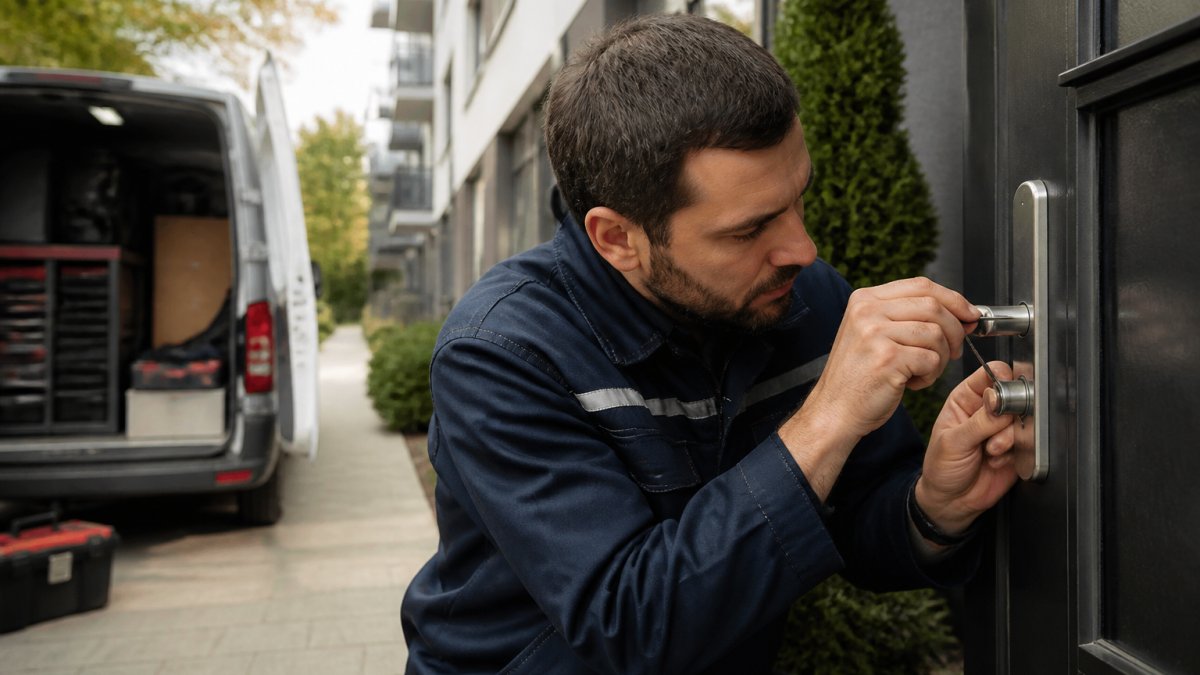
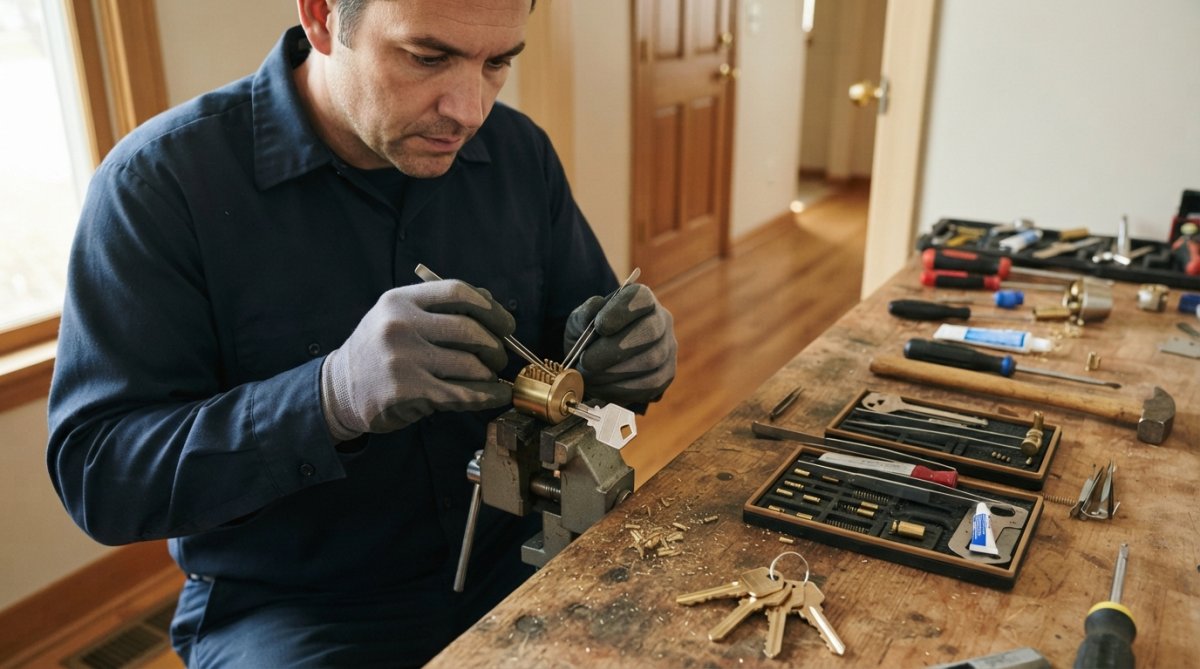
Rekeying means a locksmith disassembles the lock cylinder, removes the pin stack, and replaces it with new pins that match a fresh key. The deadbolt, knobset, and strike plate stay in place. Replacing means removing the entire lock mechanism and installing new hardware.
For rentals, rekeying is almost always better: a functioning deadbolt keeps working, you're only changing internal pins, and it costs less and takes less time than replacement. Replace only if the lock shows visible damage, the cylinder won't turn smoothly, or you're upgrading to smart locks or higher-security hardware.
Most property managers rekey between tenants and reserve replacement for locks that are genuinely worn out or compromised.
Labor Costs vs. Hardware Costs Breakdown
The cost to rekey multiple rental units splits into locksmith time and expertise, and physical lock components. Understanding how each is billed is the difference between a fair quote and an inflated one.

How locksmiths actually bill multi-unit jobs
Most locksmiths quote multi-unit rekeys under one of three billing models. Knowing which one you're quoted is the biggest lever on your final invoice.
- Trip fee + per-lock labor. A flat service-call or trip fee plus a per-lock labor rate. This is the most common model for property managers.
- Flat per-unit package. A single all-in price per unit that bundles trip, labor, and keys. Easier to budget, but usually carries a small premium for the convenience.
- Hourly + materials. Common for large portfolios or unusual hardware. You pay for time on site plus key blanks and pins.
Under the trip-fee model, the trip fee is fixed no matter how many locks you rekey, that's why bulk rekeying saves money.
Typical labor ranges to expect
A single residential rekey runs 15-30 minutes; corroded or high-security cylinders can push toward 45. For multi-unit work in one building, the first unit absorbs setup and assessment (closer to 30 minutes) and each subsequent unit runs 15-20 minutes.
That's why per-lock labor rates for multi-unit jobs are often lower than single residential calls, no second trip, parking search, or setup.
Hardware and key costs
Hardware costs on a rekey are minimal because you reuse the existing cylinder, housing, and strike plate. You pay for:
- Pin kits and springs, consumed per rekey, priced in cents to low single-digit dollars per lock.
- Key blanks, a few dollars each for standard residential keyways; more for restricted or high-security keyways.
- Key cutting, often bundled into the per-lock rate, but confirm it in writing.
The arithmetic that matters for your budget
Run the numbers before you call. For 12 units at a $75 trip fee plus $22 per lock, the total is $339, about $28 per unit, versus $540 for a flat $45 per unit. With only two units, the flat $45 per unit ($90) beats $75 + $44 = $119. Always quote both ways.
Master Key System Cost for Apartments and Multi-Unit Properties
For property managers with multiple rental units, a master key system transforms access and tenant turnover management.
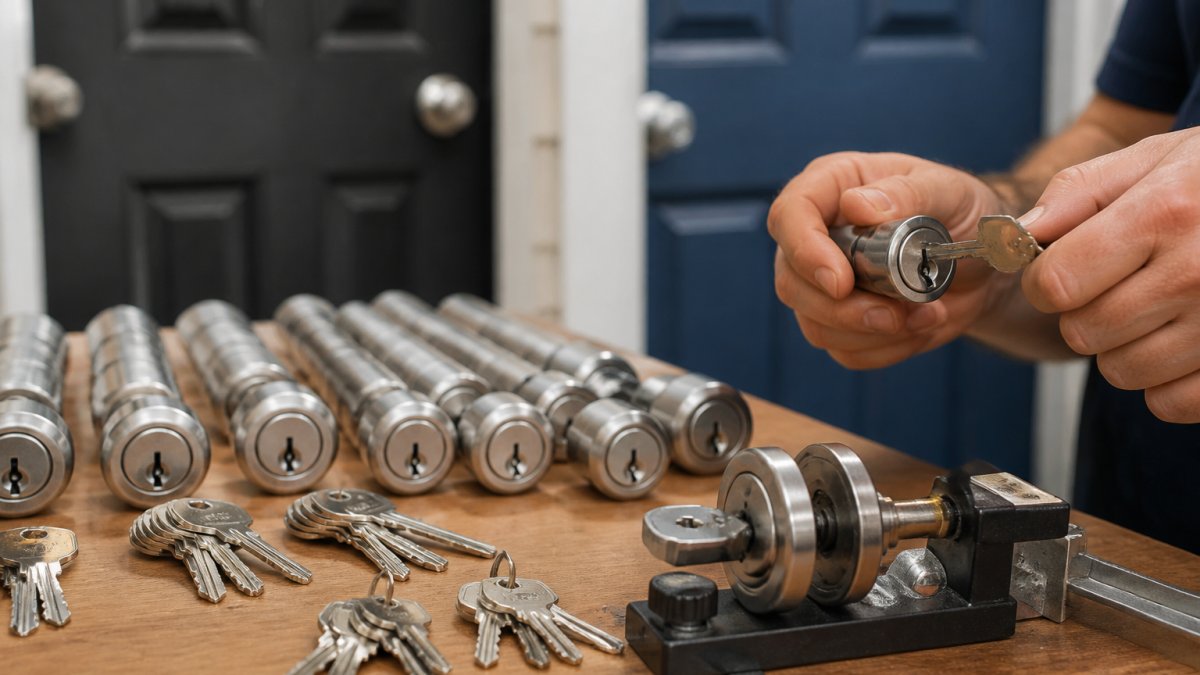
A master key system uses a hierarchical structure: one master key opens all locks in the building, while tenant keys open only their assigned unit.
Implementation has two cost layers. Initial setup: a locksmith assesses the property, determines the keyway, and establishes the master key configuration, rekeying existing locks or replacing hardware that can't support it.
For a 10-unit building, a master key system can offer substantial operational savings: no chaos of separate keys, less risk of lost-key security gaps, simpler turnover.
American Locksmith CT specializes in master key system design for apartment complexes and multi-unit rentals. The right system depends on your lock configuration, unit count, and security requirements.
How Long Does It Take to Rekey Multiple Locks
Timing matters when you're coordinating tenant turnover, maintenance windows, or building-wide security upgrades.
A single lock rekey typically takes 15-30 minutes, including assessment, disassembly, pin replacement, testing, and reassembly. Stuck or corroded locks can take 45 minutes.
Rekeying multiple locks in the same building is more efficient per lock.
For a 10-unit building, a professional locksmith can often complete all rekeying in a single day if scheduled efficiently. A 20-unit complex might require two days.
The key variable is access. A master key or building access speeds things up; waiting on tenants or staff to unlock each unit stretches the timeline. Scheduling during a planned turnover window is always faster than reactive rekeying of occupied units.
Bulk Pricing, Tax Deductibility, and Key Management
Property managers need three things most rekeying guides skip: how to negotiate volume pricing, how the IRS treats rekeying costs, and how to pair physical rekeying with modern key-management systems.
How to negotiate bulk pricing for 10+ units
Bulk pricing isn't a rate card, it's a negotiation. Locksmiths price multi-unit work by how much of their day you consume and how much travel you eliminate.
- Bundle units into one visit. The single strongest lever. Ten units in one building on one afternoon is dramatically cheaper per unit than ten units spread across ten addresses. Say so explicitly when you request the quote.
- Ask for a per-unit rate, not a lump sum. A per-unit rate lets you compare quotes apples-to-apples and scale the number up or down without renegotiating.
- Offer a recurring relationship. If you turn over units every month, tell the locksmith. Predictable repeat volume is worth a real discount to a small operator, and many will price accordingly.
- Schedule during business hours. After-hours, weekend, and emergency calls carry surcharges that can double the effective per-unit cost. Batch your rekeys into normal working hours whenever turnover allows.
- Provide access in advance. If you can hand over a master key or arrange for all units to be unlocked and vacant, you cut the locksmith's time on site, and time is what you're paying for.
- Get the quote in writing with the unit count stated. "Rekey 10 units at $X per unit" is enforceable; "rekey some units" is not.
Are rekeying costs tax-deductible?
For a rental property owner, rekeying between tenants is generally an ordinary and necessary maintenance expense, incurred to keep the property rentable and prepare it for a new tenant, and is typically deductible in the year incurred rather than depreciated.
Watch the line between a repair and an improvement. Rekeying an existing lock is a repair. Replacing an entire lock system, upgrading hardware, or installing a new master key system can look like an improvement, potentially capitalized and depreciated instead of expensed. The distinction turns on whether you restored the property or made it better.
Keep clean records either way: date, units serviced, invoice, and a one-line description of the work. If the treatment is ever questioned, documentation is your defense.
Pairing rekeying with key-management systems
Physical rekeying solves the key problem at the lock; key-management systems solve it at the record level. The two work best together.
- Manual key logs. A simple spreadsheet tracking which key was issued to which unit, on what date, and to whom. Free, and already better than most landlords do.
- Digital key-management software. Property management platforms and dedicated key-tracking tools let you log every key issued, flag lost keys, and tie key records to tenant records. For portfolios where manual tracking has become unmanageable, this closes the accountability gap.
- Electronic access control. Smart locks and electronic access systems eliminate physical key copying entirely, you revoke a code or credential instead of rekeying a cylinder. The trade-off is higher upfront cost and a dependency on batteries, network, and software. For many landlords, the right answer is a hybrid: electronic access on common entries and high-turnover units, traditional rekeyed cylinders on the rest.
When to Rekey Rental Units and Security Best Practices
Timing your rekeying strategy prevents security gaps and keeps costs manageable.
Rekey between every tenant transition. This is non-negotiable. When a tenant moves out, you can't know if they made unauthorized copies, gave keys to others, or lost keys someone else could recover.
Rekey if a tenant reports a lost key. Don't assume the key won't be used. Rekey immediately and issue a new key to the tenant.
Upgrade to higher-security locks when replacing. Standard pin-and-tumbler locks are vulnerable to picking and bumping.
Document your key distribution. Keep records of which keys were issued to which tenant, when, and under what circumstances.
Managing the cost to rekey multiple rental units comes down to understanding labor, hardware, bulk pricing, and timing, and building a system that works for your portfolio.
Frequently Asked Questions
Is it cheaper to replace locks or rekey them for rental properties?
Rekeying is almost always cheaper than replacing locks. When you rekey, a locksmith adjusts the internal pin stack and tumbler to work with new keys, preserving the existing hardware. Replacement means buying entirely new deadbolts and knobsets. For multiple rental units, rekeying saves substantially on hardware costs while maintaining lock integrity. The choice depends on lock age and condition, replace only if existing locks are damaged or obsolete.
What is the benefit of a master key system for multi-unit properties?
A master key system lets property managers access all units with one key while tenants use individual unit keys. This eliminates the need to carry dozens of keys and streamlines emergency access, maintenance, and tenant turnover. Master key systems also improve key control and security audit capabilities. For landlords managing multiple rental units, this setup reduces operational complexity and enhances access management across the entire property.
How much does it cost to rekey a deadbolt on average?
Pricing depends on quantity, lock type, keyway complexity, and whether you're using a master key system. Contact American Locksmith CT for a quote based on your specific property size and security requirements.
How often should landlords rekey locks between tenants?
Best practice is to rekey all entry points between every tenant turnover. This ensures previous occupants cannot access the property and protects your liability. Rekeying deadbolts, knobsets, and any keyed entry points prevents unauthorized access and maintains security integrity. For properties with high turnover, scheduling rekeying as part of your standard tenant transition process protects both your investment and new tenants' peace of mind.
Can you rekey locks without replacing them?
Yes. Rekeying adjusts the internal lock mechanism to work with new keys while keeping the existing hardware in place. A locksmith removes the cylinder, replaces the pin stack, and re-pins it to match a new key blank. This preserves your existing deadbolts and knobsets, making it far more cost-effective than replacement. Rekeying works on most standard residential and commercial locks used in rental properties.
Are rekey costs tax-deductible for landlords?
Yes, rekeying costs are typically deductible as a rental property maintenance expense under IRS guidelines. Rekeying between tenant turnovers qualifies as ordinary and necessary maintenance to keep the property secure and habitable. Keep receipts and invoices from your locksmith. Consult a tax professional to ensure your specific situation qualifies, as deductibility depends on your property structure and local tax rules.