 ultimate-guide
How to Rekey House Locks After Moving: 2026 Guide
Table of Contents
- Why Rekeying House Locks After Moving Matters
- Rekeying vs Replacing Locks: Which Should You Choose?
- What You'll Need Before You Start
- Step-by-Step: How to Rekey House Locks Yourself
- How Long Does It Take to Rekey a Lock?
- Cost to Rekey House Locks: DIY vs Professional
- Smart Lock Integration and Brand Compatibility
- Troubleshooting Common Rekeying Failures
- Frequently Asked Questions
Last Updated: September 21, 2026
Why Rekeying House Locks After Moving Matters
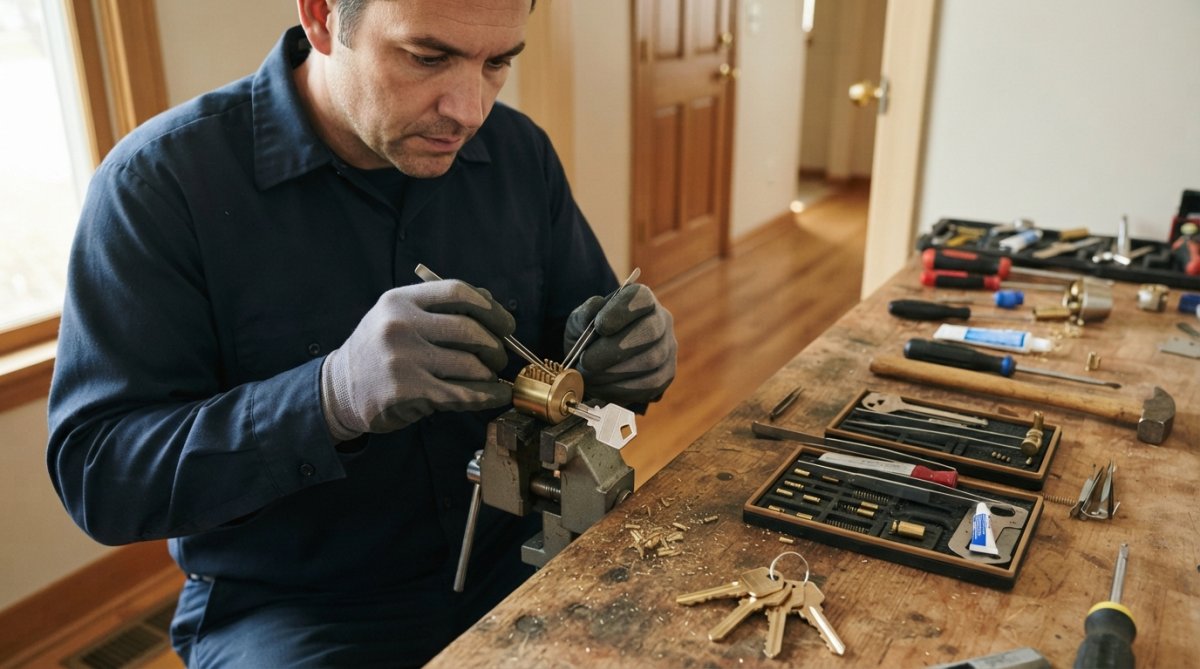
Rekeying house locks changes the internal pin configuration of a lock cylinder so old keys no longer work and new keys take their place. For anyone asking how to rekey house locks after moving, the answer starts here: you have no idea how many copies of your front door key exist. For anyone asking how to rekey house locks after moving, the answer starts here: you have no idea how many copies of your front door key exist. A fresh set of keys is the only way to know who can and cannot walk through your door.
A lock cylinder aligns tumbler pins at a specific height when the correct key is inserted. Change those pins, and every previously cut key becomes useless, which is why rekeying beats hoping the seller handed over every spare. Before you touch a screwdriver, decide whether rekeying or full replacement fits your situation.
Rekeying vs Replacing Locks: Which Should You Choose?
Rekeying reuses your existing lock bodies and only swaps the pins inside, while replacing locks installs entirely new hardware. Choose rekeying when your current locks are solid, modern, and you simply want old keys retired. Choose replacement when the hardware is worn, the finish is damaged, or you want to upgrade to a different deadbolt or lockset altogether.
The decision comes down to condition. A deadbolt that turns smoothly and sits flush needs nothing but new pins.
| Factor | Rekeying | Replacing Locks |
|---|---|---|
| Hardware cost | Low, pins only | Higher, full lockset |
| Time per lock | Quick | Longer |
| Best for | Solid, modern locks | Worn or outdated hardware |
| Key control | Full | Full |
| Look and finish | Unchanged | Fully refreshed |
What You'll Need Before You Start
Gather your tools and confirm one thing first: every lock you plan to rekey must share the same keyway, the slot the key slides into. If your front and back doors use different keyways, a single rekeying kit will not cover both.
Tools and Materials for a DIY Rekey
- Rekeying kit with color-coded pins for your keyway
- Follower tool to push the cylinder plug out without spilling pins
- Plug follower and a small screwdriver set
- New key blanks cut to a fresh key (the "control" key)
- A pinning tray or shallow dish to hold springs and pins
- Lock lubricant and a clean cloth
Step-by-Step: How to Rekey House Locks Yourself
The process is mechanical and repeatable: remove the cylinder, swap the pins to match your new key, then reassemble and test. Work on one lock at a time and keep every small part contained. The steps below assume a standard pin-tumbler cylinder, found on most residential deadbolts and knobsets. If your lock is a wafer, disc, or high-security cylinder (for example, a Medeco or an ASSA Abloy restricted keyway), stop here, those are not DIY-rekeyable with a standard kit.
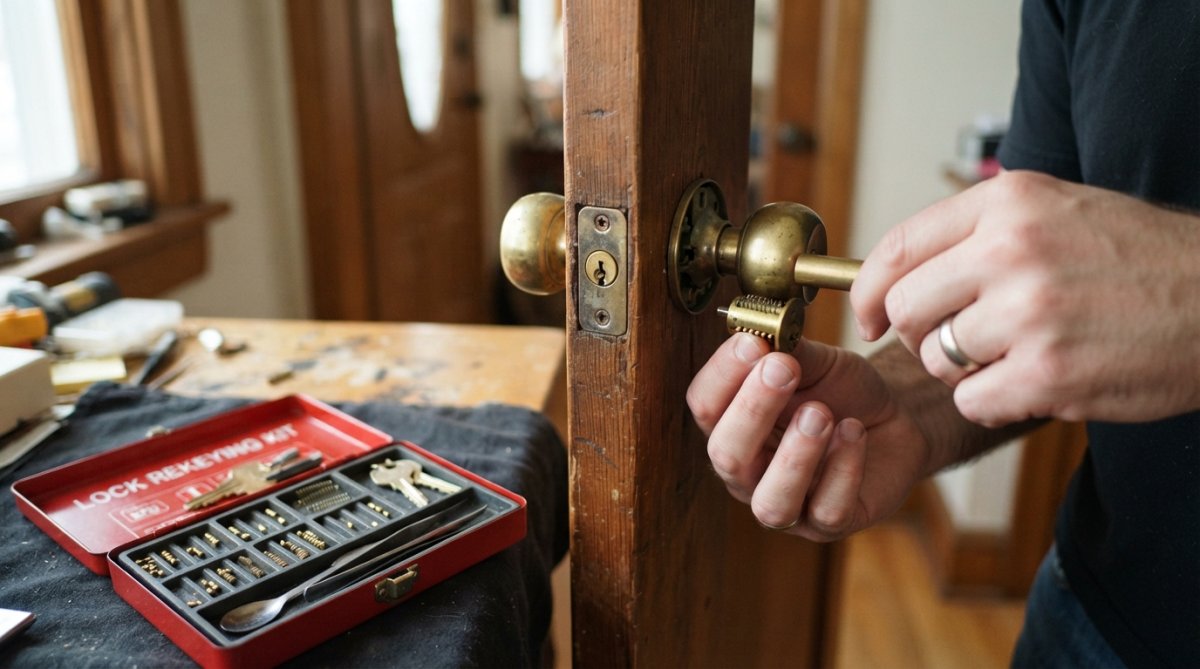
Step 1: Remove the Lock Cylinder
Start on the interior side of the door. Remove the mounting screws holding the interior and exterior halves together, then pull the interior half away. On a typical deadbolt, the cylinder is held in the exterior housing by two interior screws; back those out and it slides free. On a knobset, the cylinder is usually retained by a single screw or spring clip inside the rose.
Step 2: Swap the Tumbler Pins to Match the New Key
Insert the follower tool into the cylinder shell from the rear, pushing the plug forward just enough to keep springs and pins from escaping. Slide the plug out the front while the follower takes its place. Dump the old pins and springs onto your pinning tray in order, bottom pins first, then springs.
Step 3: Reassemble and Test the Lock
Reinstall the cylinder in the housing, then the lock body on the door. Insert the new key and turn it, it should rotate smoothly with no catch. Try an old key: it should insert but not turn. If the new key binds, the plug is likely one pin off; if the old key still turns, a pin was left out of a chamber.
Troubleshooting a Failed Rekey
Three failures account for most DIY rekey problems. A key that will not insert means a pin sits too high, the plug was loaded with the wrong pin number. A key that inserts but will not turn points to a pin in the wrong chamber, or a spring left out and blocking the shear line. A plug that will not slide back into the shell is almost always a follower not held flush, letting a spring pop up.
How Long Does It Take to Rekey a Lock?
A single lock takes a skilled hand a few minutes; a first-timer needs longer to get comfortable with the pins. A whole house moves faster once you have done one, because the motions repeat.
Cost to Rekey House Locks: DIY vs Professional
The cost to rekey house locks depends on how many locks you have, whether you buy a kit or hire help, and the condition of the hardware. A DIY rekeying kit and key blanks carry a one-time materials cost; a residential locksmith trades that for labor and convenience.
What Drives the DIY Cost
A basic rekeying kit for a single keyway (Kwikset KW1 and Schlage SC1 are the two most common residential keyways) is a modest one-time purchase, reusable across every lock that shares that keyway. Add key blanks cut to your new bitting, a follower tool if not included, and a pinning tray. If your home has both Kwikset and Schlage locks, you need two kits, pins are not interchangeable between brands, the most common reason a DIY rekey stalls halfway through.
What Drives the Professional Cost
A residential locksmith prices by the visit plus a per-lock charge. Most charge a service call fee covering travel and the first lock, then a lower per-lock rate for each additional cylinder; whole-house jobs are usually quoted as a package. Ask two questions before booking: does the service fee cover the visit or each lock, and does the quote include new keys cut to the new bitting or only the rekey itself.
Rekeying vs Replacing: The Real Cost Comparison
Rekeying almost always costs less than replacing hardware, because you pay for pins and labor rather than new lock bodies. Replacement only wins when the existing hardware is already failing, a deadbolt with a worn cylinder, a knobset with a stripped spindle, or a lock with a damaged keyway. In those cases, rekeying is money spent on hardware that will need replacing anyway.
| Approach | You Provide | Best For |
|---|---|---|
| DIY | Kit, key blanks, time | One or two simple locks on a single keyway |
| Professional | Nothing but access | Whole-house, mixed hardware, smart locks |
| Replacement | New locksets | Worn, damaged, or outdated hardware |
Smart Lock Integration and Brand Compatibility
Smart locks change the rekeying conversation. Many electronic deadbolts use a standard cylinder you can still rekey, but some use proprietary keyways or sealed cylinders that cannot be repinned. Check your model before assuming.
Troubleshooting Common Rekeying Failures
Most failures trace back to three things: a pin in the wrong position, a lost spring, or a plug not fully seated. A key that will not turn usually means the pin stack is misaligned; a lock that turns but feels gritty often just needs lock lubricant.
Frequently Asked Questions
Can I rekey my locks myself?
Yes, if your locks use standard pin tumbler cylinders and you buy a rekeying kit matched to your brand. You'll need a follower tool, pin tweezers, and new tumbler pins. Wafer locks and some smart locks are harder to rekey at home. If you're unsure about brand compatibility or have high-security cylinders, a residential locksmith can handle it in one visit.
Is it cheaper to replace locks or rekey them?
Rekeying usually costs less because you keep the existing hardware and only change the tumbler pins. Replacing locks means buying new locksets and paying for installation. Rekeying also lets you keep a consistent look across entry doors. If your hardware is worn, damaged, or outdated, replacement makes more sense.
How long does it take to rekey a lock?
DIY rekeying often takes longer the first time, especially if you need to identify your lock brand or order matching pins. Having the right rekeying kit on hand speeds up the process.
Does rekeying change the lock hardware?
No. Rekeying only changes the tumbler pins inside the cylinder so old keys no longer work. The deadbolt, doorknob, strike plate, and other hardware stay in place. This is why rekeying is often preferred after moving: you get key control without replacing functioning locks.
Moving into a new home should feel like a fresh start, not a question mark over who still holds a key. If the DIY route feels risky, or your locks are mixed brands, worn, or tied to smart hardware, American Locksmith CT can handle the whole job with mobile service, master rekeying, and lock repairs. Our technicians bring expert solutions to your door so every lock is set correctly the first time. Inquire now with American Locksmith CT and get your key control sorted.