 How-to
How to Rekey a Lock Without the Original Key
Quick Summary
Yes, you can rekey locks without the original key for most residential doors. The process removes the old pins inside the cylinder and replaces them so a new key works, though a locksmith can open the lock non-destructively first if you have no key at all.
- Most standard pin-tumbler cylinders can be rekeyed; smart and some high-security locks usually cannot.
- Rekeying keeps your hardware and changes only the internal pins, unlike replacing the whole lock.
- Without the original key, decode the new key's bitting with a key gauge or depth markings.
- Confirm you own the lock or have permission before rekeying, to avoid legal trouble.
- Rekey every exterior lock on move-in day when you move into a home with unknown key holders.
Table of Contents
- Can You Rekey Locks Without the Original Key?
- Decision Tree: Which Lock Type and Situation Fits Your Case
- How to Rekey a Door Lock Without a Key, Step by Step
- How to Rekey a Deadbolt Without the Original Key
- Rekit Kit vs. Changing Your Locks: Which Is Right for You?
- Rekey Kit or Locksmith: DIY Cost and Time Compared
- Booking a Professional Rekey With American Locksmith CT
- Frequently Asked Questions
Can You Rekey Locks Without the Original Key?
Last Updated: November 22, 2026
Yes, you can rekey locks without the original key for most residential doors. Homeowners who have lost their keys or just moved into a new home often ask this question.
The big question is whether the lock can be taken apart at all. Most standard pin-tumbler cylinders can be rekeyed. Smart locks and some high-security cylinders cannot, and they usually need the manufacturer's software or a full replacement.
A common mistake is assuming rekeying and replacing a lock are the same thing. Rekeying keeps your hardware and changes only the internal pins. Replacing swaps the entire lock.
Watch out: rekeying a lock you do not own or have no right to change can cause legal trouble. Confirm ownership or permission before you start.
Decision Tree: Which Lock Type and Situation Fits Your Case
Use this quick guide to pick your path:
- Standard deadbolt or doorknob lock, you have a spare key: Rekey it yourself or hire a locksmith for a quick job.
- Standard lock, no key at all: A locksmith can usually open it non-destructively, then rekey it.
- Smart-key or electronic lock: Reset it through the manufacturer's app or keypad, or replace it.
- Lock is damaged or worn out: Replacing it is often cheaper than repairing it.
- New home with unknown key holders: Rekey every exterior lock on move-in day.
Most homeowners fall into the first two rows. Those are the cases where rekeying makes the most sense.
How to Rekey a Door Lock Without a Key, Step by Step
Rekeying a standard pin-tumbler cylinder can take a DIYer a while, depending on experience with basic hand tools. A fuller guide to rekeying residential door locks covers each stage in more detail. The steps below cover a typical residential pin-tumbler lock, including the part most guides skip: figuring out the new pin configuration when you do not have the old key. For a deadbolt-specific walkthrough, see step-by-step deadbolt rekeying.
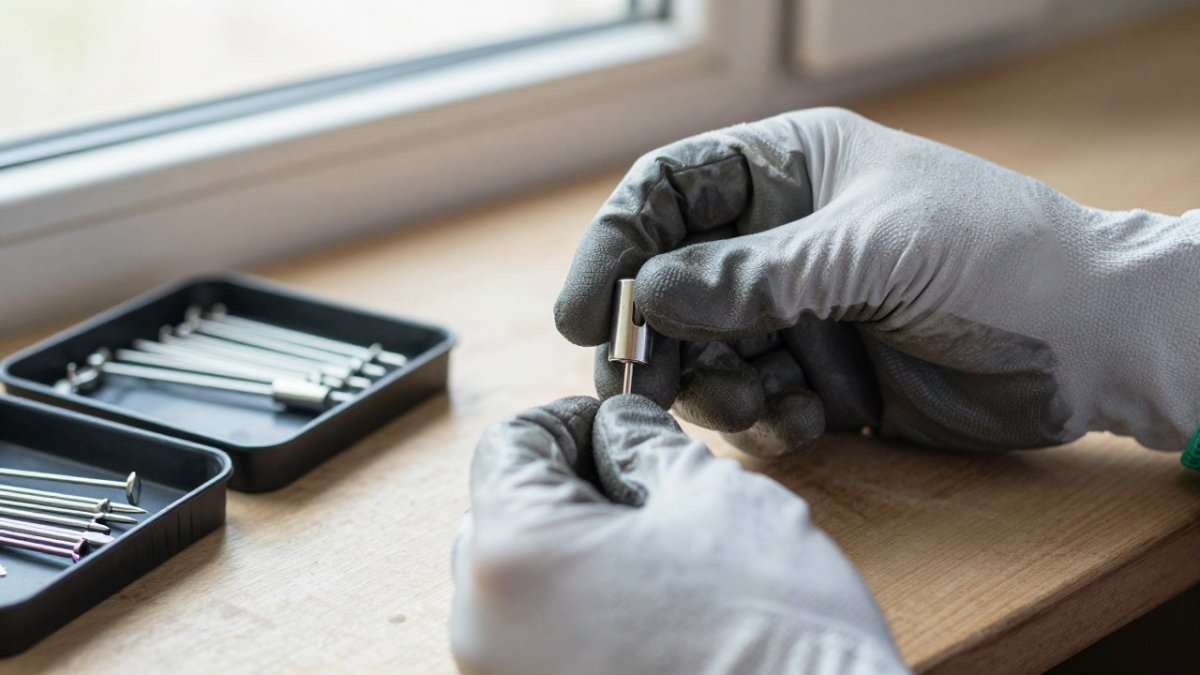
- Remove the lock cylinder from the door. Unscrew the retaining screws on the interior side and slide the cylinder out. On a deadbolt, the cylinder usually comes out from the exterior side after the thumb-turn is removed.
- Pull the plug from the housing. Insert the new key (or a plug follower) and rotate the plug about 90 degrees so the pin chambers line up, then slide the plug out while the follower holds the springs and pins in place.
- Remove the old key pins and drivers. Use tweezers and a plug spring tool to lift out the springs and driver pins, then the bottom key pins. Lay every part out in order on a tray.
- Decode the new key's bitting. This is the step that replaces the missing original key. Read the cuts on your new key against a key gauge or use the depth markings printed on most rekeying kits. Each cut corresponds to a pin length, usually numbered 1 through 9 on standard Kwikset and Schlage kits. Write the bitting down as a sequence, for example 3-5-2-4-6.
- Install new key pins to match the bitting. Drop a key pin of the correct length into each chamber, then the driver pins and springs. If you do not know the bitting, a locksmith can decode the cylinder with a pinning kit or a depth gauge in a few minutes.
- Reassemble and test. Slide the plug back into the housing with the follower, reinstall the retaining clip, and test the new key with the door open before you tighten anything down.
Work on a clean surface, and lay the parts out in order so nothing gets lost. If the cylinder uses a sidebar or a smart-key wafer system rather than standard pins, stop here and use the manufacturer's reset procedure or call a locksmith.
Tools and Supplies You Will Need
- A rekeying kit with the correct pin set for your lock brand
- A plug follower and a plug spring tool
- A key gauge or depth gauge for decoding the new key's bitting
- Tweezers and a small screwdriver
- A new key cut to the new bitting
- A soft cloth or tray to hold small parts
Pricing for DIY kits and locksmith visits depends on the lock type, the number of locks, and local market conditions. For current pricing and a quote, contact American Locksmith CT directly.
Removing and Disassembling the Cylinder
Take the cylinder out first. Then disassemble it in a clean spot with good light. Keep the pins in the exact order they came out, because the order matters when you rebuild the lock. On most standard cylinders the plug is held by a retaining clip or a set screw; remove that before you try to slide the plug free.
Watch out: pins and springs can shoot out of the housing. Hold the cylinder over a tray and keep your thumb over the pin chambers as you pull the plug.
How to Rekey a Deadbolt Without the Original Key
Deadbolts follow the same basic process, but they often have a longer cylinder and a tailpiece that must line up with the bolt. Remove the deadbolt cylinder from the outside, take out the plug, and replace the pins to match your new key.
Check that the bolt still slides smoothly after reassembly. A binding deadbolt usually means a pin sits wrong or the tailpiece is misaligned.
Rekit Kit vs. Changing Your Locks: Which Is Right for You?
A rekey kit is the right choice when your lock is in good shape and you only need new access. Changing the whole lock makes sense when the hardware is worn, damaged, or outdated. The table below compares the realistic options so you can pick a path without guessing.
| Option | Typical Cost (USD) | Typical Time | Best For |
|---|---|---|---|
| DIY rekey kit | $15 to $40 for the kit, plus $3 to $10 per new key | 30 to 60 minutes per lock | Confident homeowners with one or two standard cylinders |
| Hardware-store rekey service | $10 to $25 per cylinder in many markets | Same day to a few days | Homeowners who can bring the cylinder in |
| Professional locksmith rekey | $75 to $150 for one or two locks; $20 to $40 per additional lock is a common pattern | Under an hour on site | Multiple locks, smart locks, or a tight schedule |
| Full lock replacement | $30 to $200 per lock for hardware, plus installation | 20 to 45 minutes per lock | Worn, damaged, or outdated hardware |
Costs vary by location, lock brand, and urgency. For a quote specific to your situation, contact American Locksmith CT.
- Choose a rekey kit if the lock works well, uses a standard pin-tumbler cylinder, and you want to save money. Check that the kit lists your lock brand and keyway before you buy.
- Choose a hardware-store rekey if you can remove the cylinder yourself and do not mind waiting a day or two.
- Choose a locksmith if you have several locks, a smart-key or high-security cylinder, or no key at all and the lock is still installed.
- Choose a new lock if the lock is old, sticky, lacks modern security features, or the cylinder is damaged. Replacing is often cheaper than repairing a compromised lock.
Compatibility and Key-Control Checks Before You Buy
Before you buy a kit or book service, confirm four things:
- Keyway compatibility. Kwikset, Schlage, and Weiser use different pin kits and key blanks. A kit for one brand will not rekey another brand's cylinder.
- Keyed-alike plans. If you want one key to open several locks, tell the locksmith or buy a kit with enough pins to match all cylinders to the same bitting.
- Restricted or high-security keys. Keys marked "Do Not Duplicate" or sold with a security card usually require the manufacturer's system or an authorized locksmith.
- Smart-key and electronic locks. These often need the manufacturer's app or reset tool rather than a pin kit.
Testing and Troubleshooting After the Rekey
Test the new key with the door open first. Turn it smoothly in both directions, then close the door and test the deadbolt and latch separately. If the key binds, the cylinder is stiff, or the key does not turn, stop and check the pin order and the bitting before forcing it.
Watch out: forcing a binding cylinder can bend the key or damage the pins. If the key works in the cylinder but not in the door, check the tailpiece alignment on a deadbolt before you reinstall the hardware.
Rekey Kit or Locksmith: DIY Cost and Time Compared
Doing it yourself costs less up front, but it takes longer and needs patience. Compare current rates in the key fob reprogramming service cost guide before deciding. A locksmith can often complete the work more quickly, but you pay for the service.
| Option | Typical Time | Best For |
|---|---|---|
| DIY rekey kit | 30 to 60 minutes | Confident homeowners with one or two locks |
| Professional locksmith | Under an hour | Multiple locks, smart locks, or a tight schedule |
For exact pricing, contact American Locksmith CT directly. Quotes depend on the number of locks, the lock type, and how quickly you need the work done.
Booking a Professional Rekey With American Locksmith CT
If the DIY route feels like too much, American Locksmith CT offers mobile locksmith services, including lock changes, repairs, and master rekeying for residential and commercial properties.
You can book a professional rekey with American Locksmith CT at a time that works for you.
Rekeying without the original key is a practical fix for lost keys, new homes, and tenant changes. If you want the job done right the first time, American Locksmith CT is ready to help with a quote and same-day scheduling.
Frequently Asked Questions
Is it possible to rekey a lock without the original key?
Yes, in most cases. A rekey changes the internal pin stacks so the lock accepts a new key, and it can be done without the old key if you can remove the cylinder and identify its current pin configuration. Some lock types, such as certain smart-key or high-security cylinders, are harder or require the manufacturer's tools and proof of ownership. Locks you cannot open non-destructively may need a locksmith to pick or decode them. Confirm your lock type first, since the approach differs for standard pin-tumbler cylinders and electronic locks.
Is it cheaper to rekey a lock or buy a new lock?
Rekeying is usually the lower-cost option when the lock hardware is in good condition, because you keep the existing deadbolt or knob and replace only the internal pins. Replacing the whole lock means buying new hardware and often paying for installation. Pricing for either route depends on the lock brand, the number of locks, and whether you need a locksmith visit. For current pricing and a quote, contact American Locksmith CT directly.
Can a locksmith rekey a deadbolt without the original key?
A licensed locksmith can rekey a deadbolt without the original key by removing the cylinder, decoding or picking the existing pins, and replacing the pins to match a new key. This is standard locksmith work. If the lock is damaged or high-security, the locksmith may recommend replacement instead. Ask for proof of identity and licensing before any work begins, especially if you are locked out and have no key to verify ownership.
What should you do if you are locked out and have lost your key?
Stay calm and avoid forcing the lock, which can damage the cylinder. Check for an open window or door you can safely use, and contact a locksmith who can work on the lock without destroying it. Before the technician arrives, have proof of residence or ownership ready, such as an ID and a utility bill or deed. If you lost keys to a rental or a shared building, notify the property manager as well so the lock can be rekeyed for security.