 How-to
Best Ways to Hide a Spare Key Safely at Home
Last Updated: November 14, 2026
Quick Summary
The best ways to hide a spare key safely are a wall-mount combination lockbox anchored into solid material, or leaving the key indoors with a trusted neighbor. Avoid doormats, flowerpots, fake rocks, mailboxes, porch lights and door ledges, since burglars check these first. A bare key in a garden decoration can be found, copied and returned without a trace.
- A hidden key is a backup plan, not a security upgrade, so start with a threat model.
- Shackle lockboxes are easy to remove with bolt cutters or by unscrewing the knob.
- Change the factory default lockbox code before first use and after any guest uses it.
- A magnetic key holder only hides a key and offers no lock at all.
- Rekey the lock once a hidden key goes missing to make the old key useless.
Table of Contents
- Start With a Threat Model Before You Hide a Spare Key
- Where NOT to Hide a Spare Key: The Spots Burglars Check First
- The Safest Place to Hide a Key Outside Is Usually Not Outside
- Key Lockbox for Spare Key: The Purpose-Built Option
- Where to Keep a Spare House Key When You Have a Trusted Neighbor
- Where to Hide a Spare Key Apartment and Rental Residents Can Use
- Weather, Wear, and Long-Term Reliability of Hidden Keys
- What to Do After a Hidden Key Goes Missing
- Frequently Asked Questions
Start With a Threat Model Before You Hide a Spare Key
Most people hide a spare key to solve one problem: getting locked out. But the way you hide it should depend on who you're hiding it from. That's the threat model, and it changes everything. A hidden key is a backup plan, not a security upgrade. A poorly hidden key can turn a small inconvenience into a break-in. So before you pick a spot, ask three questions. Who might find this key? How much time would they need? And what's the worst outcome if they do? The answers point you toward better options, like a lockbox or a trusted neighbor, instead of a fake rock.
Where NOT to Hide a Spare Key: The Spots Burglars Check First
Burglars know the classic hiding spots because everyone uses them. A key under the doormat is the first place a stranger looks. These obvious hiding spots offer zero protection. They feel clever to the person hiding the key and laughably predictable to anyone else. If a spot has a name in every home-security article, it's already burned.
Doormats, Flowerpots, and Fake Rocks
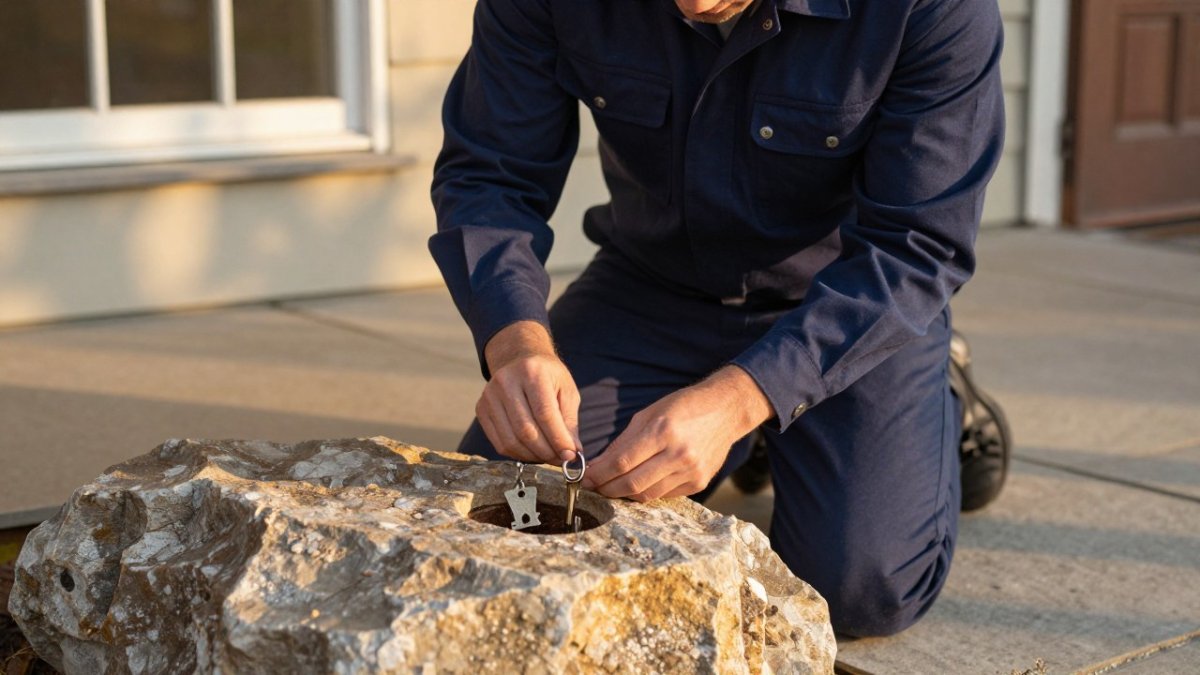
The doormat, the flowerpot, and the fake rock are the top three mistakes. Each one sits right by the door, in plain sight, and gets checked within seconds. A fake rock looks fake up close. A planter gets lifted. A doormat gets kicked. None of these count as well hidden. They are the first places anyone tests.
Mailboxes, Porch Lights, and Door Ledges
The mailbox, the porch light fixture, and the door ledge follow the same logic. A mailbox is meant for mail, not keys, and it's often unlocked. Porch lights and door ledges are within arm's reach of the entry. A key balanced on a ledge or tucked in a fixture is easy to spot and easy to grab. Skip them all.
The Safest Place to Hide a Key Outside Is Usually Not Outside
Here's the honest answer: the safest place to hide a key outside is rarely outside at all. The safest place to hide a key outside is a locked container, not a loose key. A bare key in a garden decoration or under a brick can be found, copied, and returned without a trace. A locked box at least slows someone down. But even a good box is a compromise. The truly safe move is to keep the key off the property entirely, with a person you trust. If you want to cut lockout risk at the source, read our guide on 7 ways to prevent home lockouts before they happen and build a plan that doesn't lean on a hidden key.
Key Lockbox for Spare Key: The Purpose-Built Option
A key lockbox for a spare key is a purpose-built outdoor option. It holds the key in a locked compartment that opens with a code, so there is no loose key to find and no fake rock to see through.
Most residential lockboxes fall into two mounting styles, and the choice matters more than the brand:
- Shackle or hanging lockboxes loop over a doorknob, a fence rail, or a pipe. They are the easiest to install and the easiest to remove, because anyone with bolt cutters can cut the shackle or unscrew the knob. Use one only where the shackle itself is protected, such as inside a gated area.
- Wall-mount lockboxes screw into siding, brick, or a post with anchors. They take longer to install but cannot be carried away, and the key compartment stays out of reach of a casual passerby. This is the better choice for a long-term spare.
Mount the box out of view from the street and off the main walking path to the door.
Code management is where most lockbox owners go wrong. Change the factory default code before the first use, because default codes are published in the manual and known to anyone who looks up the model.
Watch out: a lockbox mounted on a hollow-core door or a loose fence picket can be pulled off with the mounting screws still attached, so anchor it into solid framing, masonry, or a dedicated post.
Combination Lockboxes vs. Magnetic Key Holders
A combination lockbox hides and locks the key. A magnetic key holder only hides it. That is the core difference. A magnetic holder sticks under a car, a mailbox, or a metal surface and holds a bare key with no lock at all. It is cheap and quick, but anyone who finds it has your key, and the magnet itself can slide off in heat or vibration. A combination lockbox adds real protection and keeps the key in one known place, though it takes a little longer to open.
| Option | Protection | Best For | Watch Out For |
|---|---|---|---|
| Wall-mount combination lockbox | Locked, code-protected, anchored | Long-term spare at a primary home | Reused codes, mounting into hollow material |
| Shackle lockbox | Locked, code-protected, removable | Rentals, temporary access, gated areas | Cut shackles, unscrewed knobs |
| Magnetic key holder | Hidden only, no lock | Quick, temporary use | Easy to find, no lock, magnet failure |
When you are ready to set one up or want it done right, you can book service with our team.
Where to Keep a Spare House Key When You Have a Trusted Neighbor
A trusted neighbor can hold a spare key indoors, where it is not exposed to the weather or to someone casing the porch. No hiding spot beats a person who keeps the key indoors, knows you, and can hand it over when you're locked out. The key stays inside a locked home, not under a rock. Just keep it simple: pick one neighbor you trust, tell them clearly which key it is, and skip handing out copies to everyone on the block. More copies mean less control.
Where to Hide a Spare Key Apartment and Rental Residents Can Use
Renters face a harder problem. Shared hallways, apartment complexes, and common areas leave few private spots. Never hide a key in a shared space where any neighbor or visitor can find it. If you rent, ask your landlord about a lockbox or a key safe. And if you just moved in, the locks may still work with keys the last tenant kept. Our guide on how to rekey house locks after moving explains why rekeying beats a hidden key for renters.
Weather, Wear, and Long-Term Reliability of Hidden Keys
A hidden key has to survive the seasons, and most of them do not. The failure is rarely dramatic; it is a key that turns stiffly, a code dial that will not spin, or a container that fills with water and freezes shut.
Four mechanisms do most of the damage:
- Corrosion. Bare steel and many brass keys oxidize when exposed to moisture and road salt. A key left in a planter, gutter, or magnetic holder under a car can pit and stiffen within a season. Stainless and coated keys resist better, but no key is truly weatherproof when left wet.
- Water ingress. A lockbox that is not sealed lets rain in through the dial or the door seam. Water pools in the compartment, and in freezing weather it expands and jams the mechanism. Look for a box with a gasket or a drain, and mount it so the door faces down or sideways rather than straight up into the rain.
- UV and temperature cycling. Plastic fake rocks, magnetic holders, and cheap boxes chalk, crack, and fade under sun exposure, and repeated freeze-thaw cycles open seams. A container that looked fine in spring can split by the first hard freeze.
- Mechanical wear. Combination dials and push-button locks collect grit and lose tolerance over years of use. A box that opens smoothly in year one may need two hands and a wiggle by year five.
Material choice follows from that. A magnetic holder is the weakest link in every category: the magnet loses strength with heat and vibration, and the holder itself offers no barrier to water or to a person who finds it.
A practical maintenance routine is short. Every few months, open the box, remove the key, wipe it dry, and work a little graphite or dry lubricant into the lock cylinder rather than oil, which attracts grit.
If you would rather not maintain a hidden key at all, our guide on 7 ways to prevent home lockouts before they happen covers alternatives.
What to Do After a Hidden Key Goes Missing
A missing hidden key is a security problem, not just an inconvenience. If the key is gone, treat it as a possible unauthorized entry risk. First, check the spot to confirm it's really missing. If you're locked out right now, our guide on what to do when locked out of your house walks you through the next steps. And if you're rethinking the whole approach, our home security checklist for a new home covers securing every entry point.
Hiding a spare key is a small decision with real security stakes. The wrong spot invites a break-in; the right one protects you without giving anyone easy access. At American Locksmith CT, we handle lockouts, repairs, and master rekeying with mobile service that comes to you. We can rekey your locks after a key goes missing, install a proper lockbox, and help you build a backup plan that actually holds up.
Frequently Asked Questions
What are some safe ways to hide a spare key?
The safest options are a combination key lockbox mounted out of reach, a key kept with a trusted neighbor, or a key stored inside a locked garage or shed rather than outdoors. Avoid doormats, flowerpots, fake rocks, and mailbox magnets, since burglars check those first. Whatever method you choose, keep the key away from the door and never label it with your address. If a hidden key is ever lost or taken, rekey the affected locks rather than simply hiding a new copy.
Are outdoor key lockboxes safer than hiding a key?
Yes, in most cases. A key lockbox for a spare key requires a combination or code, so finding the box does not give someone entry. Choose a heavy-duty model with a shackle that resists cutting, mount it in a shaded spot away from the door, and change the code after anyone with access moves out. Lockboxes are not indestructible, so treat them as a delay tactic, not a guarantee, and pair them with a rekey if the code has been shared widely.
Is it safer to leave a spare key with a trusted neighbor?
For most households, yes. A neighbor holds the key indoors, where it cannot be found by someone casing your porch, and you can retrieve it in minutes during a lockout. Give the key to one or two neighbors you trust, keep a written record of who has one, and collect it back if the relationship changes or they move. This approach also works well in apartments, where outdoor hiding spots are shared and heavily watched.
Where should you keep a spare key in an apartment?
Apartment residents should skip hallway magnets and fake rocks entirely, since shared corridors, stairwells, and mailrooms are common areas where a hidden key is easy to spot and easy to take. Keep the spare with a neighbor on your floor, in a lockbox inside your unit, or with a trusted family member who lives nearby. If your building has a front desk or management office, ask whether they hold emergency keys, and confirm the building's policy in writing before relying on it.