 how-to
How to Verify Locksmith Credentials: A Step-by-Step Guide
Table of Contents
- Why Verifying Locksmith Credentials Matters
- How to Perform a Locksmith License Lookup
- Check Professional Certifications and Training
- Confirm Insurance, Bonding, and Business Registration
- Questions to Ask a Locksmith Before Hiring
- How to Spot a Locksmith Scam
- Verify Background Investigations and Professional Standards
- Frequently Asked Questions
Last Updated: October 4, 2026
Why Verifying Locksmith Credentials Matters
When you're locked out or need locksmith services, stress can lead you to hire the first available provider. But unqualified or fraudulent locksmiths compromise your security and cost far more than money.
Verify locksmith credentials before hiring. Legitimate locksmiths hold valid licenses, carry insurance, and complete professional training. This difference protects your security and property.
This guide shows you how to verify locksmith credentials, find licensing information, evaluate certifications, and spot red flags.
How to Perform a Locksmith License Lookup
Start by checking the locksmith's license status through your state's regulatory board.
Finding Your State's Regulatory Board
To find your state's licensing authority:
- Search "[Your State] locksmith license regulatory board"
- Look for the official state government website (ends in .gov)
- Call your state's consumer protection office
- Check the National Association of Locksmiths website for state contacts
Searching the License Database
Search your state board's online database:
- Enter the locksmith's full name or business name
- Confirm the license is listed with number and expiration date
- Verify the license type matches your needs (residential, commercial, or both)
If the name doesn't appear, don't hire them.
Verifying License Status and Renewal
Confirm the license is current and in good standing:
- Status should show "active" or "current," not "expired," "suspended," or "revoked"
- Check renewal date and disciplinary history
- Verify the license covers your specific service needs
If you see suspension, revocation, or unresolved complaints, find a different locksmith.
Check Professional Certifications and Training
Professional locksmiths often hold additional certifications demonstrating advanced training.
Certified Master Locksmith Designation
The Certified Master Locksmith credential, issued by the Automotive Locksmith Association and ALOA, requires thousands of hours of documented experience, a comprehensive exam, and continuing education. Ask to see proof and verify through ALOA's directory.
Continuing Education Requirements
Ask the locksmith about continuing education hours, recent training topics, additional certifications, and professional association membership. Ongoing training indicates quality work.
Confirm Insurance, Bonding, and Business Registration
A legitimate locksmith carries insurance and bonding to protect you and themselves. These aren't optional, they're essential safeguards.
Liability Insurance Verification
Before hiring, ask if the locksmith carries general liability insurance and request a certificate of insurance. Call the insurance company directly (not the number on the document) to verify the policy is active and covers your specific work.
Bonding Status and Consumer Protection
A surety bond guarantees ethical work and compensates you if the locksmith fails to perform. Ask for a bond certificate and verify it's current and covers your state.
Questions to Ask a Locksmith Before Hiring
Before you let a locksmith into your home or business, ask these questions. Their answers will tell you a lot.
Credential and Authorization Questions
Ask for license number and state, years licensed, proof of bonding and insurance, certifications, company affiliation, and customer references. Legitimate locksmiths answer directly and provide documentation without hesitation.
Service and Pricing Transparency
Ask about service call fees, hourly rates or flat fees, estimated total cost, written estimates, and work guarantees. Transparent pricing indicates professionalism. If a locksmith refuses an estimate or is evasive about costs, find another provider.
How to Spot a Locksmith Scam
Scammers exploit urgency when you're locked out. Perform a quick verification process on your phone before allowing work to begin.
Mobile-First Verification Checklist
Before They Arrive:
- Call your state's licensing board directly to confirm the license is active and current.
- Search the business name on Google Maps and the Better Business Bureau for consistent contact info and reviews.
- Ask for license number and verify it matches their vehicle or ID.
- Request proof of insurance and bonding; call the insurance company's main number to verify.
- Request a written estimate before work begins.
When They Arrive:
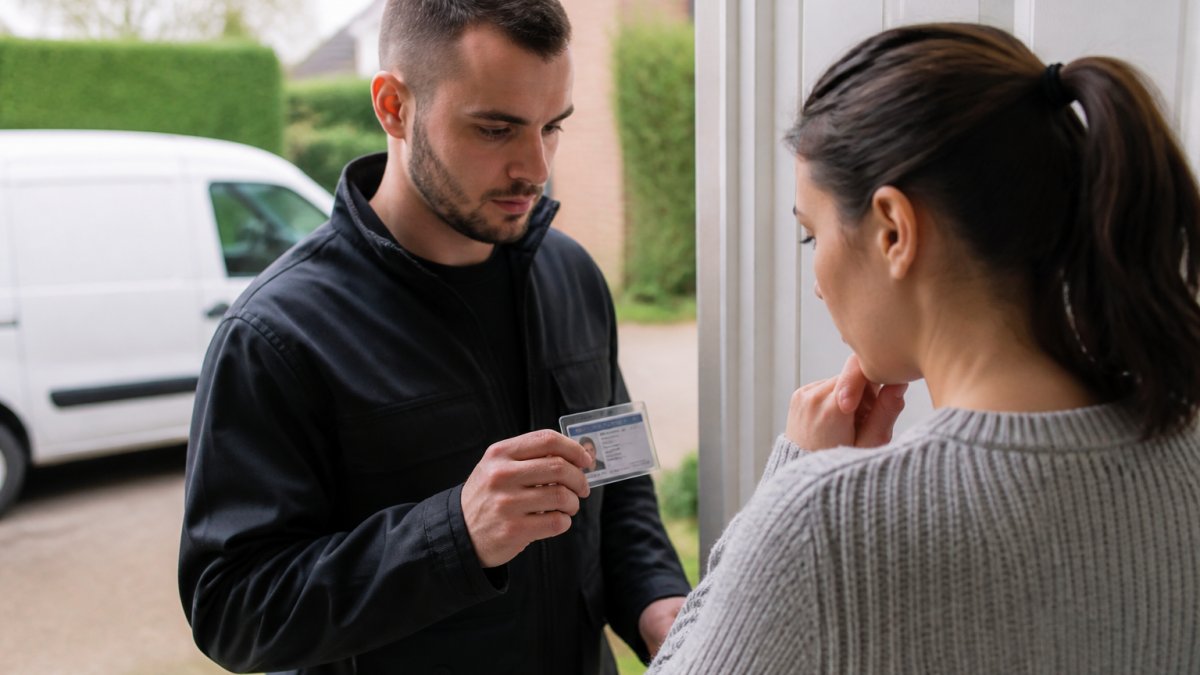
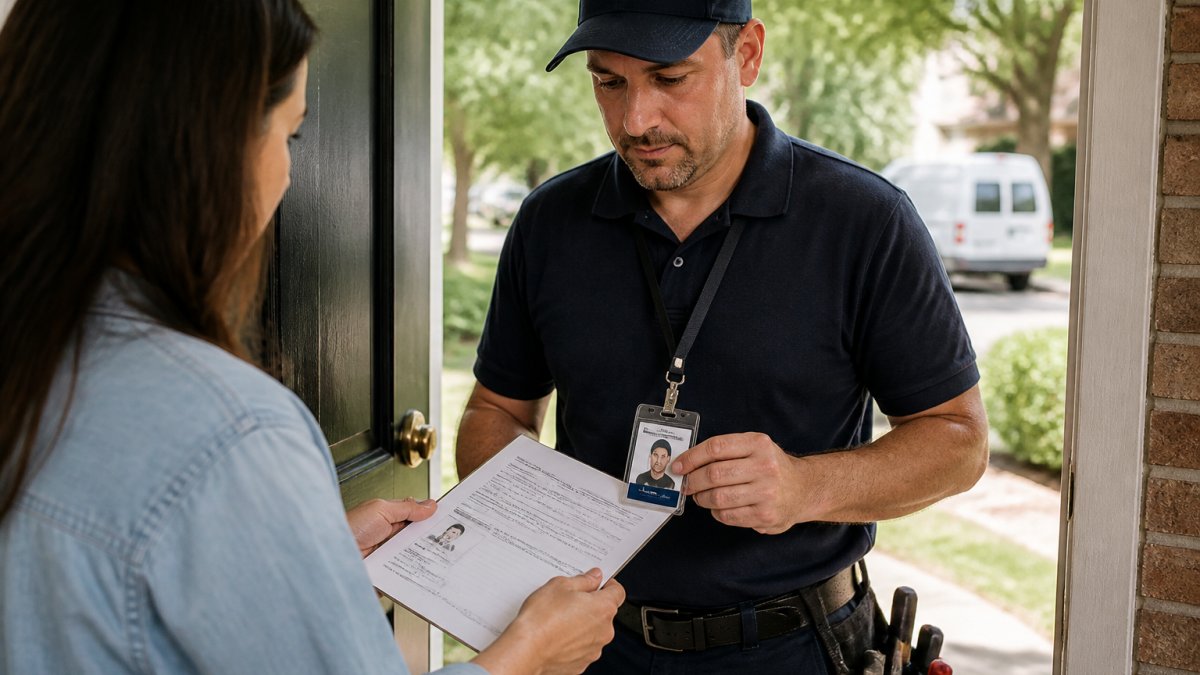
- Ask to see a physical ID badge or license card and compare it to online verification.
- Check their vehicle for matching business name, logo, and phone number.
- Ask them to explain their rate structure before they touch your lock.
- Do not pay cash upfront. Legitimate locksmiths collect payment after work is complete.
- Request an itemized receipt with service performed, time spent, and parts used.
Red Flags During Initial Contact
Watch for these warning signs when you call:
- No local presence: They can't tell you where they're based, have no physical business address, or operate only through a call center.
- Generic business name: "Locksmith" or "24-Hour Lock Service" with no specific company name or branding.
- Pressure to pay upfront: Legitimate locksmiths collect payment after work is complete. If they demand payment before arriving or before finishing, decline.
- Vague pricing: They refuse to give any estimate, quote, or hourly rate. They say "We'll see when we get there."
- No verifiable phone number: The number isn't listed in Google Maps, the Better Business Bureau, or doesn't match their website.
- Extremely low quotes: If the price is 50% below other estimates, it's likely a bait-and-switch scam.
- Inability to answer credential questions: They get defensive, evasive, or angry when you ask about their license, insurance, or certifications.
Warning Signs at Your Property
Once the locksmith arrives, stay alert:
- No uniform or identification: They can't produce a badge, license, or company identification. Their ID looks homemade, blurry, or doesn't match their appearance.
- Unmarked vehicle: No business name, logo, or contact information on the truck. The vehicle looks personal or hastily marked.
- Damaged locks: They damage your lock unnecessarily, drill when picking would work, or suggest you need expensive replacements you didn't ask for.
- Pressure to pay cash: They insist on cash only, won't provide a receipt, or demand payment before finishing the job.
- High final bill: The final cost is dramatically higher than the estimate (more than 20% variance without explanation).
- Refusal to provide documentation: They won't give you an itemized receipt, won't explain what they charged for, or rush you off the phone.
- Unusual tools or behavior: They use tools that seem inappropriate for the job, or they spend an unusually long time working on a simple lock.
What to Do If You Suspect a Scam
If something feels wrong during the service, you have the right to stop the work immediately. You do not have to pay for incomplete or suspicious work. Ask the locksmith to leave and contact a different provider.
If you've already paid a fraudulent locksmith or suspect you've been scammed, report it immediately. See the section below on reporting fraudulent locksmiths for specific steps and agencies.
Verify Background Investigations and Professional Standards
Professional locksmiths undergo background investigations and adhere to strict ethical standards as a condition of licensure. Understanding what these standards are, and how to verify compliance, protects you from hiring someone with a criminal history or disciplinary record.
What Background Checks Cover
Most states require locksmiths to pass a criminal background check before issuing or renewing a license. This typically includes:
- Felony convictions: Any felony conviction, particularly those involving theft, fraud, burglary, or property crime, may disqualify an applicant or result in license denial.
- Misdemeanor convictions: Depending on the state, certain misdemeanors (especially those involving dishonesty or violence) may be grounds for denial or discipline.
- Sex offender registry: Locksmiths cannot be registered sex offenders in most jurisdictions.
- Outstanding warrants or unpaid fines: Some states deny licenses to applicants with unresolved legal issues.
However, background check standards vary significantly by state. Some states conduct thorough investigations; others perform minimal screening. Ask your state licensing board what background check requirements apply to locksmiths in your area.
How to Verify a Locksmith's Disciplinary History
When you search a locksmith's license in your state's database, the results often include disciplinary history. Look for:
- Complaints filed against the locksmith: The number and nature of complaints (e.g., poor workmanship, overcharging, property damage).
- Violations or citations: Whether the locksmith has violated state regulations or professional standards.
- Suspensions or revocations: Any temporary or permanent loss of license.
- Fines or restitution orders: Whether the locksmith has been ordered to pay penalties or compensate customers.
- Probation or conditional license status: Whether the locksmith is operating under restrictions.
If you see a pattern of complaints or any serious violations, find a different locksmith. One or two old complaints may be normal; multiple recent complaints suggest a pattern of problems.
Professional Association Membership and Accountability
Locksmiths who belong to professional associations like the Associated Locksmiths of America (ALOA) or the Automotive Locksmith Association agree to a code of ethics and submit to peer review. These organizations maintain standards of conduct and can discipline members who violate ethical rules.
When hiring a locksmith, ask:
- "Are you a member of ALOA or another professional locksmith association?"
- "If so, how long have you been a member, and have you ever faced disciplinary action from the association?"
- "Do you carry a membership card or certificate I can verify?"
You can verify ALOA membership by visiting the organization's website or calling directly. Professional association membership is a strong indicator of commitment to ethical standards.
What to Do If You Suspect a Locksmith Has Violated Professional Standards
If a locksmith has treated you unfairly, damaged your property, overcharged you, or you suspect they have a criminal history they didn't disclose, you have options:
File a Complaint with Your State Licensing Board:
Every state has a process for filing complaints against licensed locksmiths. Contact your state's licensing board (the same agency that issues locksmith licenses) and ask how to file a complaint. You'll typically need to provide:
- The locksmith's name and license number
- The date of service
- A detailed description of what went wrong
- Documentation (photos of damage, receipts, estimates, correspondence)
- Your contact information
The licensing board will investigate and may take disciplinary action, including fines, license suspension, or revocation.
Report to the Better Business Bureau:
File a complaint with the Better Business Bureau (BBB). While the BBB has no legal authority, a pattern of complaints can damage a locksmith's reputation and may trigger state investigation.
Report Fraud to Law Enforcement:
Dispute the Charge with Your Credit Card or Bank:
If you paid by credit card, you can dispute the charge with your card issuer.
Contact Your State Attorney General:
Most states have a consumer protection division within the attorney general's office. You can file a complaint about unfair or deceptive locksmith practices.
Frequently Asked Questions
How do I verify a locksmith's license online?
Visit your state's licensing board or contractor license board website and search their database by the locksmith's name or license number. Most states maintain searchable online registries where you can confirm current license status, renewal dates, and any disciplinary actions. If the locksmith cannot provide a license number or the number doesn't appear in the database, that's a major red flag. Request proof of identification and ask to see their physical license before they begin work.
What's the difference between a licensed and certified locksmith?
A licensed locksmith has passed a written examination and meets state regulatory requirements set by the contractor license board. A certified locksmith has completed additional professional training and continuing education units through organizations like the Associated Locksmiths of America (ALOA). Certified master locksmiths demonstrate advanced technical proficiency and professional standards. Both credentials matter: licensing ensures regulatory compliance, while certification shows commitment to ongoing professional development and technical expertise beyond minimum requirements.
What should I ask a locksmith before hiring them?
Ask for proof of their license number and verify it immediately with your state's regulatory board. Request documentation of liability insurance and bonding status. Ask about their response time for emergency services and get pricing in writing before they arrive. Inquire about their experience with your specific lock type or service need. Ask if they're a member of a professional association and what continuing education they've completed. Request references from recent customers. Legitimate locksmiths welcome these questions and provide clear, confident answers.
How can I report a fraudulent or unlicensed locksmith?
Report unlicensed or fraudulent locksmiths to your state's contractor license board or attorney general's office. Document the locksmith's name, business name, phone number, and details of the fraudulent activity or service failure. File a complaint with the Better Business Bureau and leave a detailed review on trusted platforms. If the locksmith damaged your property or overcharged you, consult with your local consumer protection agency about your options. Reporting helps protect other consumers and supports regulatory enforcement.