 Listicle
Signs Your Door Lock Is Failing: A Homeowner's Guide
Table of Contents
- Early Warning Signs Your Door Lock Is Failing
- Common Door Lock Problems and What They Mean
- When Your Door Lock Sticks or Jams
- Door Misalignment vs. Lock Failure: How to Tell the Difference
- Loose Handles, Drooping Knobs, and Hardware Wear
- Electronic Door Lock Troubleshooting
- Door Lock Repair or Replacement: Making the Right Choice
- Preventive Maintenance to Extend Lock Life
- Frequently Asked Questions
Last Updated: October 12, 2026
Early Warning Signs Your Door Lock Is Failing
A failing door lock rarely announces itself loudly. It starts with small frustrations: a key that's harder to turn, a handle that feels loose, or a latch that doesn't catch right. These early signals give you time to act before you're locked out at 2 AM or find your door unsecured.
The most common early warning signs your door lock is failing include difficulty turning the key, resistance in the mechanism, handles that move independently of the bolt, and visible hardware wear.
Watch for these specific indicators:
- The key requires noticeably more pressure to turn than it did months ago
- Your door handle moves or wobbles when you grab it
- The key sticks or catches slightly during insertion or removal
- The deadbolt doesn't fully extend when you lock the door
- The latch rattles or feels loose when you move the handle
- You notice rust, corrosion, or visible damage on the lock hardware
- The door has shifted, causing the lock to bind against the frame
Some of these point to door frame issues rather than the lock itself, but all are worth investigating early, while you still have options.
Common Door Lock Problems and What They Mean
Different lock failures point to different root causes. Knowing what's actually wrong tells you whether you need a quick fix, a professional repair, or full replacement.
Key Insertion and Removal Issues
A key that's hard to insert or remove usually signals keyway wear or a damaged key. If it slides in smoothly but sticks coming out, the cylinder has internal friction. If insertion itself is the problem, the key is bent or the keyway is misaligned.
Test with a second key. If both bind, the cylinder is the issue; if only one sticks, that key is bent or worn. Bent keys come from pressure, sitting on them, or forcing them into a misaligned lock.
The fix depends on what you find. A bent or worn key just needs a replacement cut. If the keyway itself is damaged or misaligned, you're looking at lock repair or replacement.
Key Turning Resistance
When a key turns but needs significant pressure, you're dealing with internal friction: corroded pins, a dry cylinder, or accumulated debris.
Cold weather often worsens this temporarily, since moisture in the lock freezes until it warms. If stiffness only happens in winter, cold is the culprit. If resistance persists year-round, internal wear or contamination is the real problem.
A stiff lock that still functions can often be improved with graphite lubricant (not oil, which attracts dirt). Spray a little into the keyway, work the key in and out several times, and wipe away excess. If stiffness returns within days or weeks, the lock is deteriorating and replacement is coming.
Latch and Bolt Problems
The latch is the spring-loaded part that holds the door closed when you push it shut. The deadbolt is the solid bar that extends when you turn the key. Both can fail independently.
A latch that won't catch means the door won't stay closed; it may rattle or swing open on its own. A deadbolt that won't fully extend means the door looks locked but isn't.
Test the latch by pushing the door closed and checking if it holds; a working latch resists pressure. For the deadbolt, lock the door and try the handle. It should be completely rigid.
These problems usually come from misalignment (a shifted frame keeps the bolt from full extension) or internal mechanical failure (broken or worn springs).
When Your Door Lock Sticks or Jams
A sticking lock is frustrating because it often works eventually, if you jiggle, turn slowly, or apply extra pressure. That unpredictability is what makes it dangerous: you might get locked in or out unexpectedly.
Sticking usually means the mechanism is binding internally. The key turns but resists, often requiring a wiggle or simultaneous handle turn to free it. This happens when:
- Dirt or debris has accumulated inside the lock cylinder
- The internal pins are corroded or damaged
- The lock housing has warped slightly from temperature changes or moisture
- The key is slightly bent, causing it to catch on the cylinder walls
Immediate steps: try graphite lubricant first. It's dry, so it won't trap dirt like oil. If a few applications don't help, the lock is likely beyond simple lubrication.
The real question is whether the lock is worth repairing. If it's otherwise sound and just needs cleaning, a locksmith can disassemble and service it. If the mechanism is damaged, replacement is often faster and more reliable.
Door Misalignment vs. Lock Failure: How to Tell the Difference
This distinction matters because the fixes are completely different. A misaligned door looks like a lock problem but isn't, and treating it as one wastes time and money.
A misaligned frame makes the latch or bolt miss the strike plate (the metal plate where the bolt should land).
A truly failing lock won't extend the bolt at all, or only partway, regardless of frame alignment.
Here's how to test: close the door and check the gap between door and frame.
Next, turn the key and feel the bolt. If it moves smoothly and extends fully but the door still won't lock, misalignment is the problem.
Frame misalignment often comes from settling, moisture damage (wood swells and warps), or loosened hinges.
Loose Handles, Drooping Knobs, and Hardware Wear
A loose door handle or drooping knob is one of the most visible signs your door lock is failing.
If the handle spins freely or moves side to side, the connection between the handle and the lock mechanism has failed. This happens when:
- The set screws holding the handle to the lock shaft have loosened
- The internal connection inside the lock has broken
- The handle itself has cracked or stripped
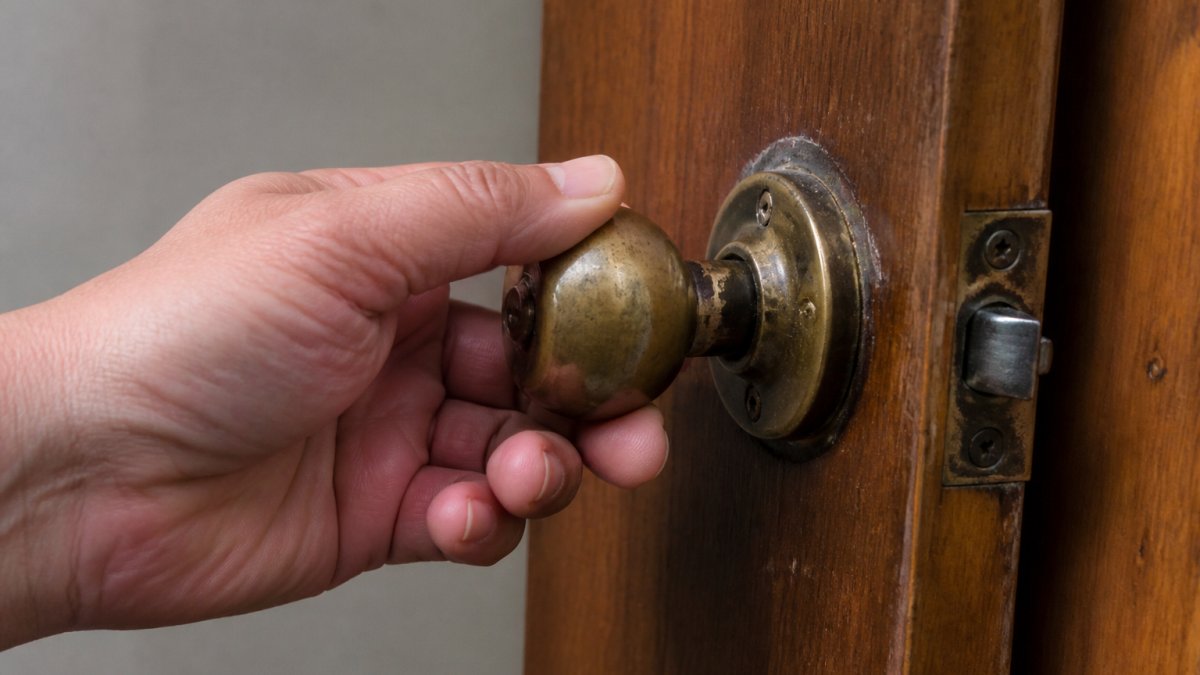
A drooping knob usually means a loose set screw or failed internal fastener. A spinning handle suggests the internal shaft is damaged or disconnected.
First try tightening any visible set screws with an Allen wrench or screwdriver; many loose handles are fixed this way.
Visible wear, rust, corrosion, or pitting on the handle, knob, or lock plate suggests aging hardware. Surface corrosion is cosmetic unless severe.
Electronic Door Lock Troubleshooting
Smart locks and electronic deadbolts fail differently than mechanical locks because they have batteries, Wi-Fi, and circuit boards. A failing electronic lock may not extend the bolt at all, or may ignore your keypad, app, or physical key.
Common electronic lock failures:
- Low battery: The lock beeps or blinks red. Replace the battery (usually AA or AAA). This is the most common issue and the easiest fix.
- Unresponsive keypad or app: The lock doesn't respond to code entry or app commands. Try resetting the lock according to the manufacturer's instructions. If that fails, the circuit board may be damaged.
- Mechanical bolt won't extend: The electronic components work but the physical bolt is stuck. This is a mechanical failure within the lock and usually requires replacement.
- Wi-Fi disconnection: The lock loses connection to your home network. Check your router, move closer to it, or restart both devices. Persistent disconnection suggests the lock's Wi-Fi module is failing.
- Stuck bolt from forced entry or tampering: If someone forced the lock, the bolt may be jammed. This is a security risk and the lock should be replaced.
Electronic locks are more complex, so troubleshooting is more limited. If the battery is good and a reset doesn't work, professional service is usually necessary. The good news: they often fail obviously (dead battery, no app response) rather than degrading gradually like mechanical locks.
Door Lock Repair or Replacement: Making the Right Choice
Not every failing lock needs replacement. Some can be repaired, but at a certain point repair costs more than replacement, or reliability has degraded enough that replacement is smarter.
| Condition | Repair Option | Replacement Recommended |
|---|---|---|
| Sticking but fully functional | Lubrication or internal cleaning | If sticking returns within weeks |
| Loose handle, set screws intact | Tighten set screws | If tightening doesn't hold |
| Misaligned latch | Adjust strike plate or hinges | Only if frame damage is severe |
| Partially extending bolt | Professional adjustment | Usually requires replacement |
| Worn key | Cut new key | Only solution |
| Corroded or rusted hardware | Surface cleaning | If corrosion is deep or structural |
| Electronic lock, low battery | Replace battery | If other components fail |
| Broken internal mechanism | Professional service attempt | Usually replacement is faster |
The decision often comes down to age and reliability. A 15-20 year old lock that's failing is near the end of its life; repair might only buy a year or two. A 5-year-old lock with one fixable issue is worth repairing.
Cost matters too. If repair costs more than a new lock, replacement usually makes more sense: you get a warranty, a full lifespan ahead, and peace of mind.
American Locksmith CT can assess your lock and recommend whether repair or replacement makes sense.
Preventive Maintenance to Extend Lock Life
The best way to avoid a failing lock is to maintain it before problems start. Regular maintenance extends lock life and catches small issues before they become emergencies.
Quarterly maintenance:
- Inspect the lock visually for rust, corrosion, or visible damage
- Test that the key turns smoothly and the bolt extends fully
- Check that the handle doesn't move or wobble
- Look at the strike plate to make sure it's aligned with the bolt
Annual maintenance:
- Apply graphite lubricant to the keyway (not oil)
- Check that all visible screws and fasteners are tight
- Inspect the door frame for signs of warping, settling, or moisture damage
- Test the lock under different temperatures if you live in a climate with extreme seasonal changes
Seasonal adjustments:
- In winter, be aware that locks may stiffen temporarily due to cold and moisture
- In spring and fall, check for frame movement caused by humidity changes
- After heavy rain or snow, inspect for water damage or rust starting to form
These steps take minutes and cost nothing. They also give you baseline knowledge of how your lock normally feels and sounds, so you'll notice changes quickly.
Electronic locks need slightly different maintenance:
- Check battery level monthly (most have a low-battery indicator)
- Replace batteries before they die completely (a dead battery leaves you locked out)
- Keep the lock clean and dry; wipe moisture away promptly
- Test the keypad and app monthly to confirm they're responsive
- Update the lock's firmware if the manufacturer releases updates
When signs your door lock is failing start to appear, act quickly rather than hoping the problem goes away. A sticking lock today becomes an inoperable lock tomorrow, and loose hardware you ignore will eventually fail completely.
American Locksmith CT specializes in lock repair, replacement, and emergency lockout assistance. Our mobile technicians diagnose what's actually wrong, recommend whether repair or replacement makes sense, and handle the work on your schedule.
Frequently Asked Questions
What are the most common signs that a door lock is failing?
The most common signs your door lock is failing include difficulty turning the key, resistance when inserting or removing the key, a sticking or jamming latch, loose or drooping handles, and a key that spins without engaging the lock mechanism. If you notice any combination of these symptoms, your lock likely needs professional inspection to determine whether repair or replacement is necessary.
How can I tell if my door lock problem is caused by the door or the lock itself?
Check door alignment first: open the door and look for gaps between the frame and door edges. If gaps are uneven or the door sags, misalignment is the problem. Test the lock on a different door to see if the key works smoothly. If the lock fails on all doors, the lock mechanism itself has failed.
Should I repair or replace a failing door lock?
Replace the lock if: the key is bent or broken, the mechanism is severely frozen, or the keyway is damaged. Repair may work if the problem is lubrication, a loose strike plate, or minor latch misalignment. If you're uncertain, a professional locksmith can assess whether your specific lock is worth repairing or if replacement is safer and more cost-effective.
What should I do if my electronic door lock is unresponsive?
First, check the battery: replace it if the indicator shows low power or the lock won't respond at all. Ensure your Wi-Fi connection is stable if it's a connected lock. Test the backup key to rule out the electronic mechanism. If the battery is fresh and Wi-Fi is working, the lock may have an internal failure requiring professional service or replacement.