 How-to
What to Ask Emergency Locksmiths: 2026 Safety Guide
Table of Contents
- What to Ask Emergency Locksmiths Before You Let Them In
- Questions to Ask a Locksmith Before Hiring
- Emergency Locksmith Response Time: What to Expect
- Emergency Locksmith Cost: Fees, Quotes, and Hidden Charges
- What to Tell a Locksmith When Locked Out
- Red Flags: How to Spot and Avoid a Locksmith Scam
- Payment Security, Documentation, and Late-Night Safety
- Conclusion: Your Emergency Locksmith Checklist
- Frequently Asked Questions
Last Updated: October 9, 2026
What to Ask Emergency Locksmiths Before You Let Them In
A locked door at 2 a.m. is a high-stress, high-risk moment. That is exactly when bad actors count on you to skip questions.
This guide breaks down the exact questions to ask, the red flags to watch for, and how to handle payment and safety during a late-night lockout.
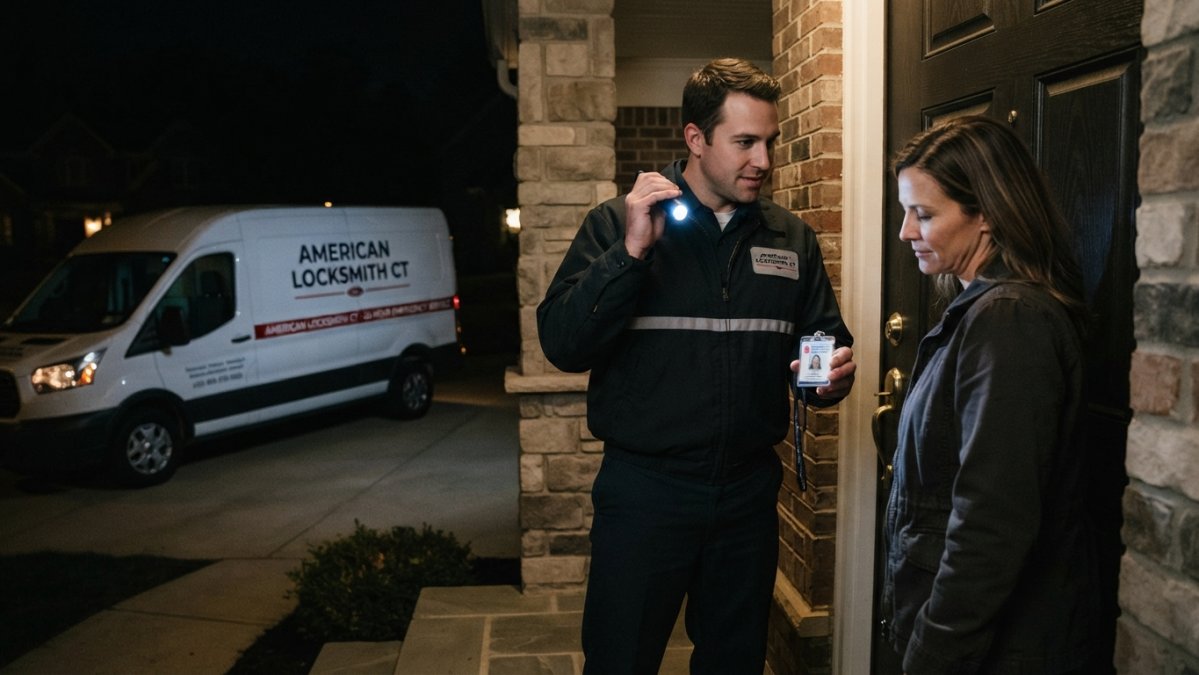
Questions to Ask a Locksmith Before Hiring
The most important questions to ask a locksmith before hiring cover three things: credentials, insurance, and price. Ask them before you agree to anything. A legitimate locksmith will answer every one without hesitation.
Keep this list handy:
- Are you licensed and insured?
- Can I see your ID and license number?
- What is your total price, including the service call fee?
- How long until you arrive?
- Will you damage my lock to get in?
If a company dodges any of these, call someone else.
Verify Credentials, Licensing, and Background Checks
Ask for the technician's name, license number, and photo ID before they start work. A real professional will hand it over without a fuss.
You can also check your state's consumer protection office or licensing board to confirm a company is registered. For general guidance on hiring home service pros, the Federal Trade Commission consumer advice is a solid starting point.
Watch for these warning signs:
- No physical business address
- No license number on the van or paperwork
- Refusal to show ID
- A generic company name with no local ties
Confirm Insurance, Guarantees, and Warranty Coverage
Ask if the company carries liability insurance. This matters if the technician damages your door, frame, or lock during entry. A licensed, insured locksmith can cover that damage. An uninsured one leaves you paying the repair bill.
Also ask about the guarantee. A good company stands behind its work and its parts. Get the warranty terms in writing before any work begins.
Emergency Locksmith Response Time: What to Expect
A reasonable emergency response time is 20 to 60 minutes in most metro areas. Rural areas and bad weather can push that longer. Ask for an estimated time of arrival before you hang up, and get it in writing by text if you can.
Response time depends on a few things:
- Your distance from the dispatcher
- Time of day and traffic
- Weather conditions
- Whether the company is truly local or routing calls nationally
A local mobile locksmith usually arrives faster than a call-center operation that subcontracts to whoever is nearby. When you call, ask directly: "Are you dispatching a local technician, or a subcontractor?"
Emergency Locksmith Cost: Fees, Quotes, and Hidden Charges
Emergency locksmith cost depends on the job, the time of day, and your location. Ask for a full quote before the technician leaves the shop, not after they arrive at your door. The quote should break down the service call fee, labor costs, and any parts.
Get these numbers confirmed up front:
- Service call fee
- Labor rate per hour or per job
- After-hours or weekend surcharge
- Cost of any new parts or key cutting
- Total you will pay
If the final bill is far higher than the quote, stop and ask why. Legitimate companies explain charges clearly. Pushy ones pressure you to pay on the spot.
What to Tell a Locksmith When Locked Out
When you call, give the dispatcher clear, calm details so they can help fast. Tell them your address, the type of door, and whether it is a home, car, or business lockout.
Here is what to have ready:
- Your exact address and cross street
- The type of lock and door
- Whether anyone is inside or if pets are present
- Your phone number and a backup contact
- Proof that you live there
Have your ID, a lease, or a piece of mail ready to show you belong. This protects you and the locksmith. A professional will always ask for proof of ownership before opening a door.
Red Flags: How to Spot and Avoid a Locksmith Scam
Most locksmith scams follow a predictable script, and once you know the script you can spot it in the first 60 seconds of the phone call. The victim is always stressed, often standing outside in the cold, and almost always in a hurry, which is precisely why the scam works.
How the Bait-and-Switch Actually Works
The classic pattern has four stages:
- The low phone quote. The dispatcher quotes an unrealistically low number, often just a "service call fee", and avoids giving a total. They may say something like "it starts at $X" or "the tech will confirm on site."
- The national call center. The number you dialed is not a local shop. It routes to a call center that subcontracts the job to whoever is closest, and that subcontractor sets their own price once they are standing at your door.
- The on-site inflation. The technician arrives, looks at the lock, and announces the real price, often several times the phone quote. You are locked out, it is late, and they know you will pay.
- The unnecessary drill. If you push back, the tech claims the lock is "seized" or "high-security" and drills it, then charges for a full replacement you never needed. A skilled locksmith can pick or bypass most residential cylinders without drilling.
Red Flags to Watch For
- A quote that only covers the "service call" and not the total job
- A price that jumps once the technician is at your door
- Cash-only demands with no itemized receipt
- No license number, photo ID, or physical business address
- Pressure to drill or replace a lock that still turns
What to Do in the Moment
If any red flag appears before work starts, you are allowed to stop. Say clearly: "I am not authorizing this work. Please leave." Do not hand over a card, do not sign anything, and do not let the person inside. If they refuse to leave or demand payment for a service you did not approve, call the police non-emergency line and report the incident.
Payment Security, Documentation, and Late-Night Safety
How you pay and what you keep on paper determine whether you have any recourse if the job goes wrong. This is the part of the process most homeowners skip, and it is exactly where disputes are won or lost.
What a Legitimate Invoice Must Show
Before you hand over any payment, confirm the invoice or receipt includes all of the following:
- The company's legal business name and physical address (not just a phone number)
- The technician's name and license number, if your state requires one
- The date and time of service
- An itemized breakdown: service call fee, labor, parts, and any after-hours surcharge
- The total charged, matching the quote you received by text or email
If any of those are missing, ask for a corrected invoice before you pay. A company that cannot produce a proper invoice is a company you cannot hold accountable later.
Payment Methods and Why They Matter
Pay by credit card whenever possible. Credit card transactions create a paper trail and give you dispute rights under the Fair Credit Billing Act if you are overcharged or the work was not authorized. Debit cards offer weaker protections. Cash leaves no trail at all, which is why pushy operators demand it.
If the technician insists on cash only, that alone is a reason to refuse service.
Staying Safe During a Late-Night Lockout
Personal safety matters as much as price when you are locked out after dark. A few habits reduce risk without slowing down the response:
- Wait in a lit, public location, a neighbor's porch, a 24-hour store, or your building lobby, rather than alone at the door
- Share your live location with a friend or family member and tell them the company name and ETA
- Keep your phone charged and in your hand, not buried in a bag
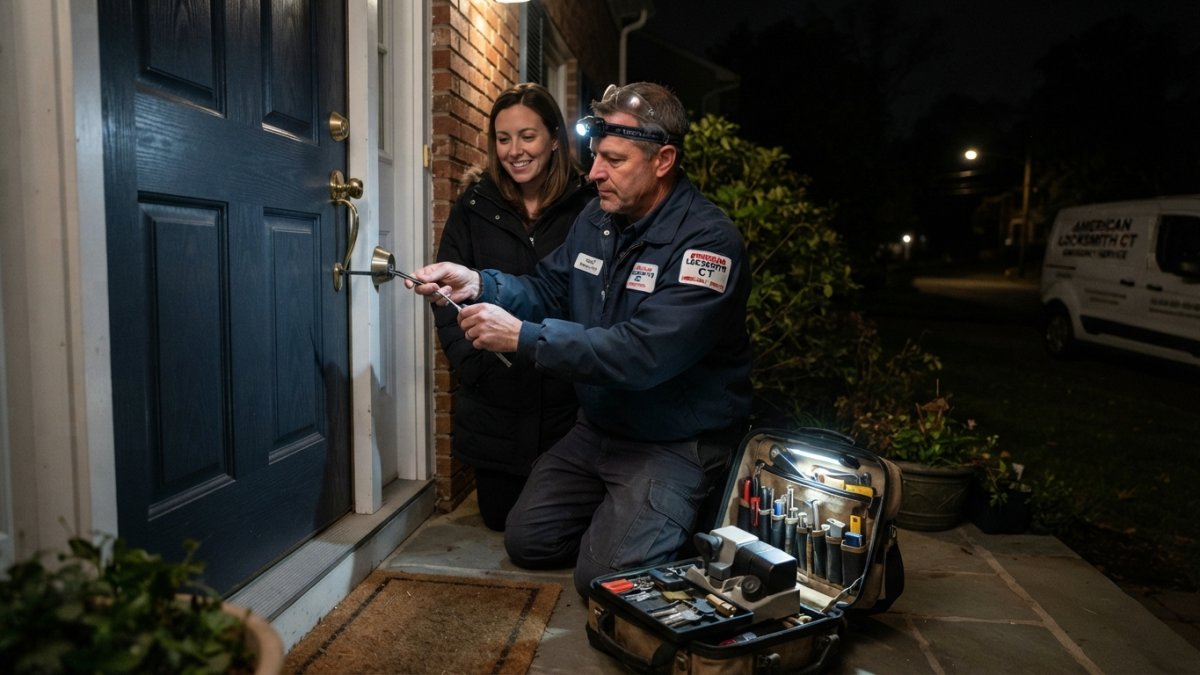
- When the technician arrives, ask them to hold their ID up to a porch light or window before you open the door
- Confirm the company name matches what dispatch told you before you unlock anything
Keeping Your Records
Store the invoice, warranty, and any texted quote together. If a lock fails within the warranty window, or if you later discover unauthorized charges, that file is your proof. Most consumer complaints succeed or fail on whether the homeowner can show what was quoted, what was charged, and what was promised.
Pay by card, demand an itemized invoice, and photograph the technician's credentials before they leave. Those three steps turn a stressful lockout into a documented transaction you can defend.
Conclusion: Your Emergency Locksmith Checklist
A lockout is stressful, but a few quick questions keep you in control. Ask about licensing, insurance, price, and response time.
At American Locksmith CT, we send reliable mobile technicians for residential, commercial, and automotive lockouts, plus lock changes, repairs, and master rekeying.
Get started with American Locksmith CT and unlock your peace of mind the next time you are locked out.
Quick checklist before you hire:
| What to Check | Why It Matters | How to Confirm |
|---|---|---|
| License and ID | Proves the tech is legitimate | Ask to see photo ID and license number |
| Insurance | Covers damage during entry | Ask for proof of liability coverage |
| Written quote | Prevents surprise charges | Get the total by text before arrival |
| Response time | Tells you how long you'll wait | Ask for an ETA when you call |
| Payment method | Creates a paper trail | Pay by card, keep the receipt |
Frequently Asked Questions
What should I ask an emergency locksmith before hiring them?
Ask for their state license number, liability insurance details, and a written quote that breaks down the service call fee, labor costs, and any parts. Confirm they are a mobile locksmith with a marked van and that they will provide a receipt. Also ask about their estimated time of arrival and whether they have a guarantee on the work. These questions help you avoid hidden charges and verify you are working with a legitimate professional.
How can I verify that a locksmith is legitimate?
Check for a physical business address, a state locksmith license, and proof of liability insurance. Ask for the technician's identification and a background check confirmation. Legitimate locksmiths will not hesitate to show credentials and will arrive in a marked vehicle. You can also verify their business registration with the state and look for professional certifications. Never hire someone who refuses to provide this information or pressures you to pay cash only.
How much should an emergency locksmith charge?
Emergency locksmith cost varies based on time of day, location, and lock type. You should expect a service call fee plus labor costs, and possibly a surcharge for after-hours work. Always ask for a full quote before work begins, including any hidden charges. A reputable locksmith will provide a written estimate and stick to it. If the price changes dramatically after they arrive, that is a red flag for a potential scam.
Can a locksmith unlock my door without damaging it?
Yes, a skilled locksmith uses lock picking and non-destructive entry techniques to open most residential locks without damage. However, if the lock is high-security or damaged, they may need to drill it. Ask about their approach before they start and confirm whether they carry replacement locks if drilling is necessary. A professional will explain the process and any risks upfront, and should have insurance to cover accidental damage.