 How-to
7 Ways to Prevent Home Lockouts Before They Happen
Last Updated: October 30, 2026
Quick Summary
You can prevent home lockouts by keeping a spare key with a trusted contact, testing your smart lock's physical key and backup code quarterly, and running a ten-second check that your keys are in hand before the door closes. Fixing sticking keys and self-locking knobs early also stops most lockouts.
- Never label a key with your address, since a lost keyring with an address is a security risk.
- Treat a smart lock's low-battery warning at 20% or lower as a deadline, not a suggestion.
- Test every exterior door from both sides after any hardware adjustment.
- Renters should ask the landlord about rekeying between tenants and get permission before adding a smart lock.
- A trusted spare key contact should be someone who can actually reach your door.
Table of Contents
- Why Home Lockouts Happen More Often Than You Think
- Spare House Key Ideas That Actually Keep You Secure
- Smart Lock Lockout Prevention: Backup Access and Failure Planning
- Your Home Lockout Checklist for Leaving the House
- Fixing the Door Hardware That Locks You Out
- What to Do When Locked Out of House: A Step-by-Step Response Plan
- Advice for Renters, Shared Households, and Accessibility Needs
- Choosing Your Lockout Prevention Plan
- Frequently Asked Questions
Why Home Lockouts Happen More Often Than You Think
A home lockout is what happens when a door closes and locks behind you while your keys are on the other side. It's a small moment.
Most lockouts aren't caused by bad luck. They come from the same handful of habits.
- Rushing out the door with your hands full
- Letting a self-locking knob do its job while your keys sit inside
- Assuming a spare key exists somewhere, without checking
The good news: every one of those causes has a fix. Below, we'll show you exactly how to prevent home lockouts with a plan you can set up in one afternoon.
A little planning removes most of these preventable situations.
Spare House Key Ideas That Actually Keep You Secure
Spare house key ideas work best when they balance access with control. A spare key is only useful if you can reach it when locked out, and only safe if a stranger can't find it.
The trick is choosing storage that solves both problems at once. A Consumer Reports guide to home security basics makes the same point: convenience and security have to be planned together.
Where to Keep a Spare Key Without Inviting Trouble
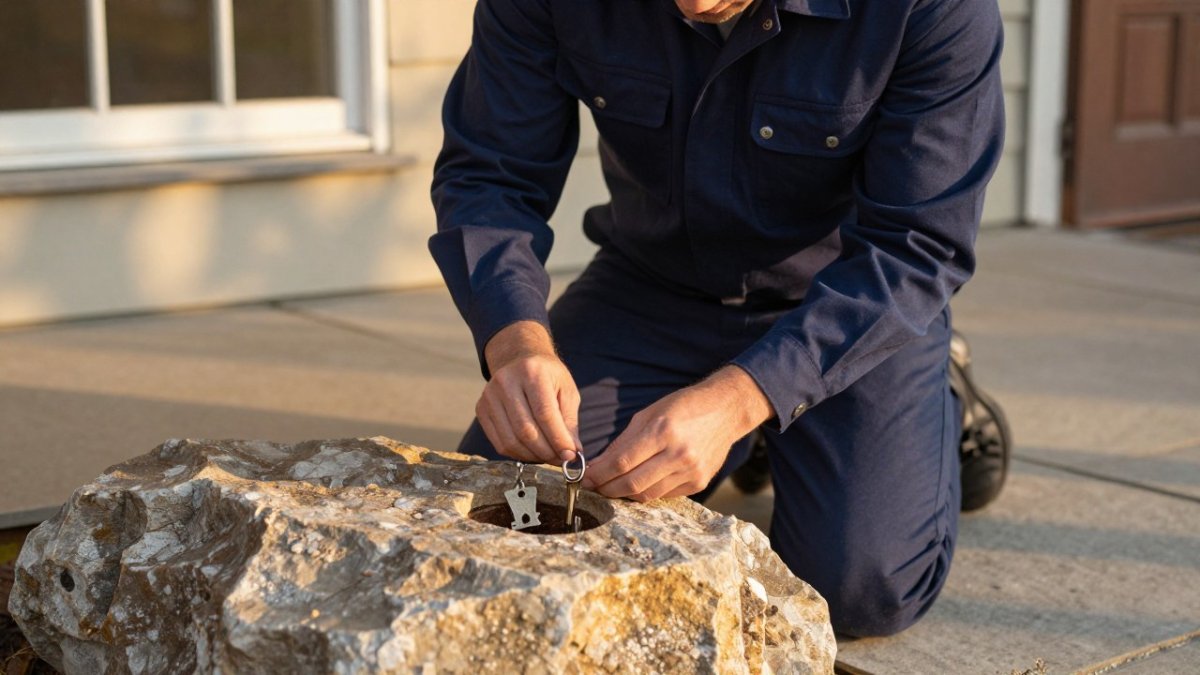
Skip the doormat. Skip the fake rock and the flowerpot. Those are the first places anyone looks.
Better options:
- A trusted neighbor or family member. Give a duplicate key to one person you actually trust. This is the simplest backup access there is.
- A key lockbox. Mount it out of sight and change the code regularly.
- A keyed safe inside a locked garage or shed. Only works if that space has its own secure entry.
One rule applies to all of them: never label a key with your address. A lost keyring with an address on it is a security risk, not a backup plan.
Smart Lock Lockout Prevention: Backup Access and Failure Planning
Smart lock lockout prevention starts with one question: what happens when the technology fails? Digital locks are convenient, but every one of them depends on power, software, or a network. The difference between a minor inconvenience and a locked-out night is whether you planned for failure before it happened.
Plan for failure before it happens:
- Keep a physical key. Most smart locks still include a keyway for exactly this reason. Store that key with a trusted contact, not in a drawer inside the house.
- Set up a backup entry code. Choose a code you have never used elsewhere, and store it somewhere outside the app, a password manager or a written note in a safe place.
- Check the battery on a schedule. Replace it before the low-battery warning becomes a dead lock. Many locks warn at 20% or lower; treat that warning as a deadline, not a suggestion.
What Happens When the Battery Dies or the App Fails
When a smart lock battery dies, the lock usually stays locked and the app shows nothing wrong. That's the trap. The app can look fine while the lock itself is dead.
A keypad lock with a dead battery is the same story. No power, no entry code, no access.
So build in a fallback. Keep a physical key with a trusted contact. Test your backup code every few months.
Account Security and Backup Access
Your smart lock is only as secure as the account that controls it. A few practical steps protect both access and peace of mind:
- Use a unique password and two-factor authentication on the lock's app account. If someone gains access to your account, they may be able to unlock your door remotely.
- Review authorized users regularly. Remove former roommates, contractors, or guests who no longer need access.
- Keep backup codes offline. Store them where a power outage or phone failure cannot erase them.
If you are choosing between a keypad lock and a full smart lock, weigh convenience against the backup plan you are willing to maintain. The best lockout prevention is the one you will actually test.
Your Home Lockout Checklist for Leaving the House
A home lockout checklist is a short routine you run every time you leave. It takes about ten seconds and prevents most accidental lockouts.
Use this one:
- Keys are in my hand or pocket, not on the counter
- I checked for keys before I closed the door
- My spare key contact still has a working key
Build the habit of a daily routine. Pat the pocket. Check the keyring. Avoid rushing, because rushing is when keys get left behind.
A quick check for keys at the door beats a two-hour wait on the porch.
Fixing the Door Hardware That Locks You Out
Door hardware causes more lockouts than people realize. A worn lock or a sticky latch can turn a normal exit into a locked door with your keys inside. The fix is usually simple, but only if you recognize the warning signs early.
Watch for these warning signs:
- The key sticks or needs a wiggle to turn
- The knob locks itself when it closes
- The latch doesn't fully retract
- The deadbolt feels loose or grinds
If you notice any of these, get the lock checked. A guide to residential door lock maintenance covers basic adjustments you can try first.
Self-Locking Knobs, Sticking Keys, and Worn Locks
Self-locking door knobs are a common culprit. They lock automatically when the door shuts, which is fine until your keys are on the wrong side.
Your options:
- Replace the knob with a non-locking passage set on interior doors
- Adjust or replace the latch so it doesn't catch
- Upgrade to a deadbolt you control manually
A sticking key is an early warning, not a minor annoyance. It usually means the lock cylinder is worn, the key is bent, or the door has shifted and the bolt no longer aligns with the strike plate.
When to Repair and When to Replace
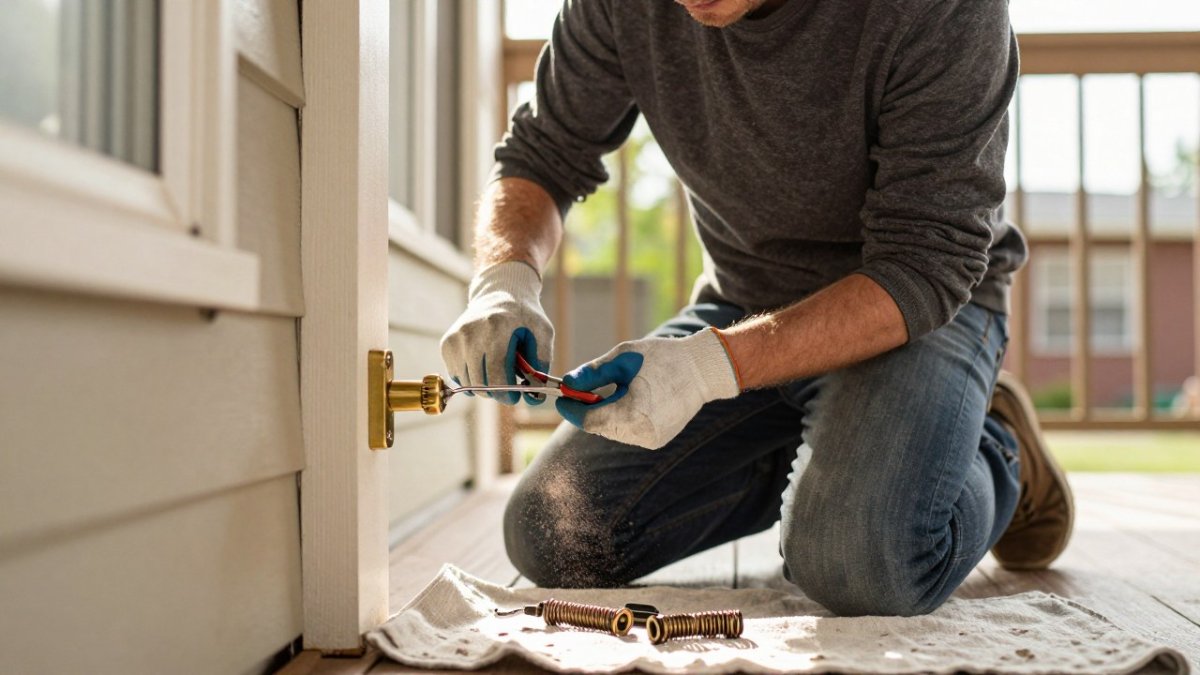
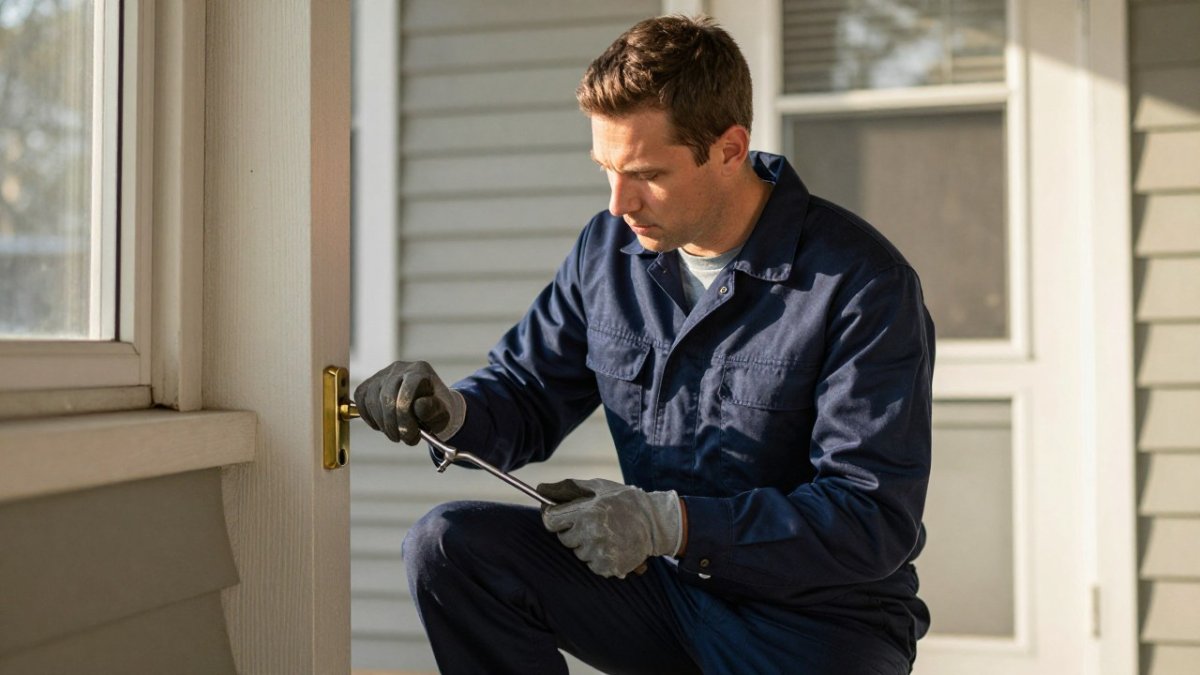
A few adjustments are within reach of most homeowners: tightening strike-plate screws, lubricating a cylinder with graphite or a silicone-based lock lubricant, and clearing debris from the latch.
A misaligned door, often caused by a loose hinge or a house that has settled, can make even a new lock fail. In that case, adjusting the strike plate or hinge may solve the problem without replacing hardware.
If a worn lock or self-locking knob is behind your close calls, our guide to signs your door lock is failing shows what to check. Ready to fix the hardware or set up a safer entry? Book a locksmith service and get the job handled by a professional.
What to Do When Locked Out of House: A Step-by-Step Response Plan
If you're locked out right now, stay calm and work through these steps in order.
- Check every door and window. A back door or garage entry may be unlocked.
- Call your spare key contact. This is the fastest fix if you planned ahead.
- Confirm your ID is with you. A locksmith will need proof you live there.
- Call a licensed locksmith. Know which safety questions to ask before they arrive. Ask about response time and how pricing is structured before they arrive.
- Don't force the door. Prying a lock can damage the frame and cost more to fix.
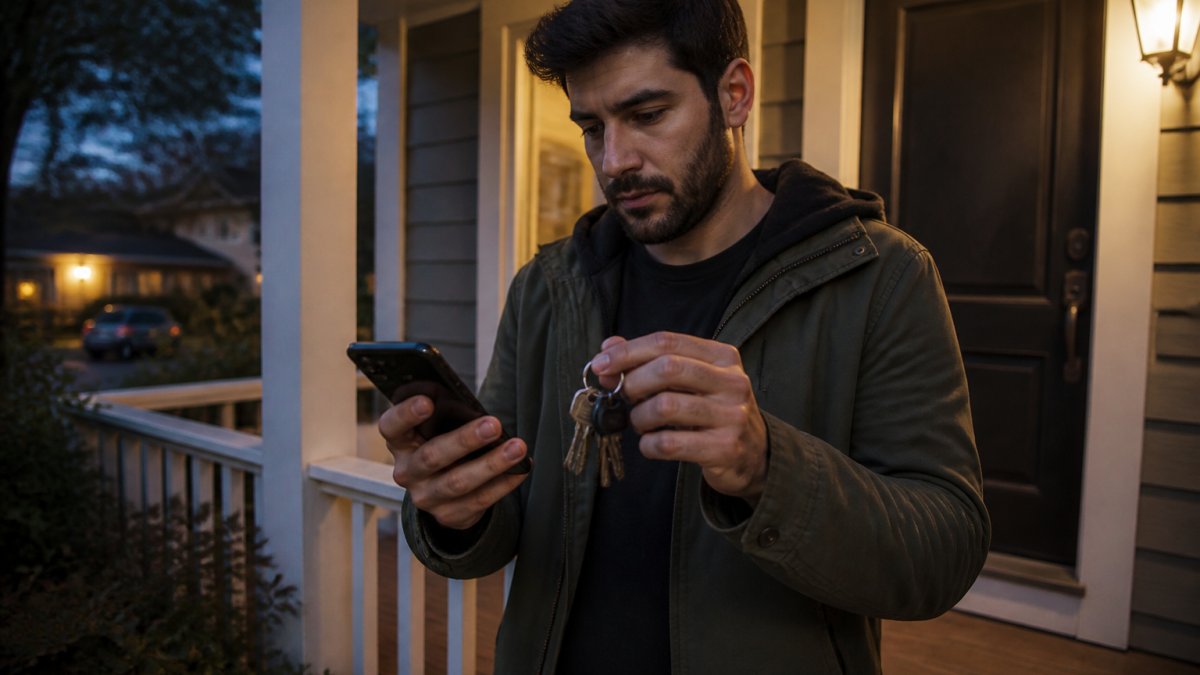
Before you call anyone, ask any locksmith you contact about how they will open the door and what damage risk to expect.
Advice for Renters, Shared Households, and Accessibility Needs
Renters and shared households need a plan that respects everyone's access. You can't always change the locks, and you shouldn't hand out keys freely.
- Renters: ask your landlord about rekeying between tenants and get permission before adding a smart lock.
- Roommates: agree on one shared spare key and one trusted outside contact.
- Accessibility needs: a keypad lock or smart lock can remove the need to handle a small key. Test it thoroughly before relying on it.
A trusted contact should be someone who can actually reach your door. A friend two towns over won't help at midnight.
Choosing Your Lockout Prevention Plan
Pick your plan based on your situation, not on what sounds most high-tech.
| Plan | Best For | Effort | Backup Access |
|---|---|---|---|
| Spare key with a trusted contact | Most households | Low | Yes |
| Key lockbox | Renters, frequent travelers | Low | Yes |
| Keypad or smart lock | Key-free convenience | Medium | Only with a physical key |
| Hardware repair or replacement | Sticking keys, self-locking knobs | Medium | Depends on the lock |
Whichever route you choose, test it before you need it. A backup you've never tried isn't a backup.
If a worn lock or self-locking knob is behind your close calls, our guide to signs your door lock is failing shows what to check. Ready to fix the hardware or set up a safer entry?
Frequently Asked Questions
What are the most common causes of home lockouts?
Most home lockouts come from a handful of habits: rushing out without checking for keys, relying on a self-locking door knob, and letting a worn lock or sticking key jam at the wrong moment. Taking out the trash or grabbing mail without keys is another frequent trigger. A short daily routine of patting your pocket before the door closes prevents most of these, and a spare key or keypad lock covers the rest.
Is it safe to hide a spare key outside?
A hidden key under the doormat, in a planter, or above the frame is a security risk because those spots are the first ones a burglar checks. If you need outdoor backup access, use a combination lockbox mounted out of sight or a keypad lock with a unique entry code. Give a duplicate key to a trusted neighbor or family member instead of hiding one, and change the code or retrieve the key if trust changes.
Can a smart lock help prevent home lockouts?
A smart lock or keypad lock reduces lockout risk because you can enter with an access code instead of a physical key. The catch is failure planning: batteries die, apps go down, and wireless connections drop. Choose a model with a battery backup or a physical key override, keep a backup access method such as a lockbox or trusted contact, and replace batteries on a schedule rather than waiting for a warning.
When should you call a locksmith for a home lockout?
Call a locksmith when you have no spare key, no trusted contact nearby, and no keyless entry option, or when a key breaks in the lock or the door hardware fails. Before calling, ask any locksmith about their licensing and background checks, how pricing is structured, and whether they can get you in without damaging the door. A professional locksmith should explain the process and any damage risk before starting.
Most home lockouts come down to a missing routine or failing hardware, and both are fixable. American Locksmith CT brings mobile locksmith service to your door, with specialists in lockouts, repairs, and master rekeying. Our technicians handle residential lock changes and door hardware so your entry works the way it should. Get started with American Locksmith CT and lock in your peace of mind.