 How-to
Locksmith Services for Property Managers: A 2026 Guide
Table of Contents
- Why Property Managers Need Dedicated Locksmith Services
- Lockout Services for Property Managers: Emergency Response and Prevention
- Rekeying Rental Properties Between Tenants: A Step-by-Step Workflow
- Master Key Systems for Property Management: Simplifying Access Control
- Commercial Door Hardware Repair and Lock Maintenance
- Choosing and Onboarding a Locksmith Provider for Your Portfolio
- Key Control, Budgeting, and Service Agreements
- Frequently Asked Questions
Last Updated: October 13, 2026
Why Property Managers Need Dedicated Locksmith Services
The difference shows up immediately: 2 AM lockouts, turnover deadlines, and aging hardware all demand expert response. American Locksmith CT specializes in exactly this, from rekeying between tenants to master key system installation.
Most property managers underestimate how much time locks consume. A single lockout can cost hours of coordination; across a portfolio, the burden compounds. The right partner turns lock issues into routine service calls.
Lockout Services for Property Managers: Emergency Response and Prevention
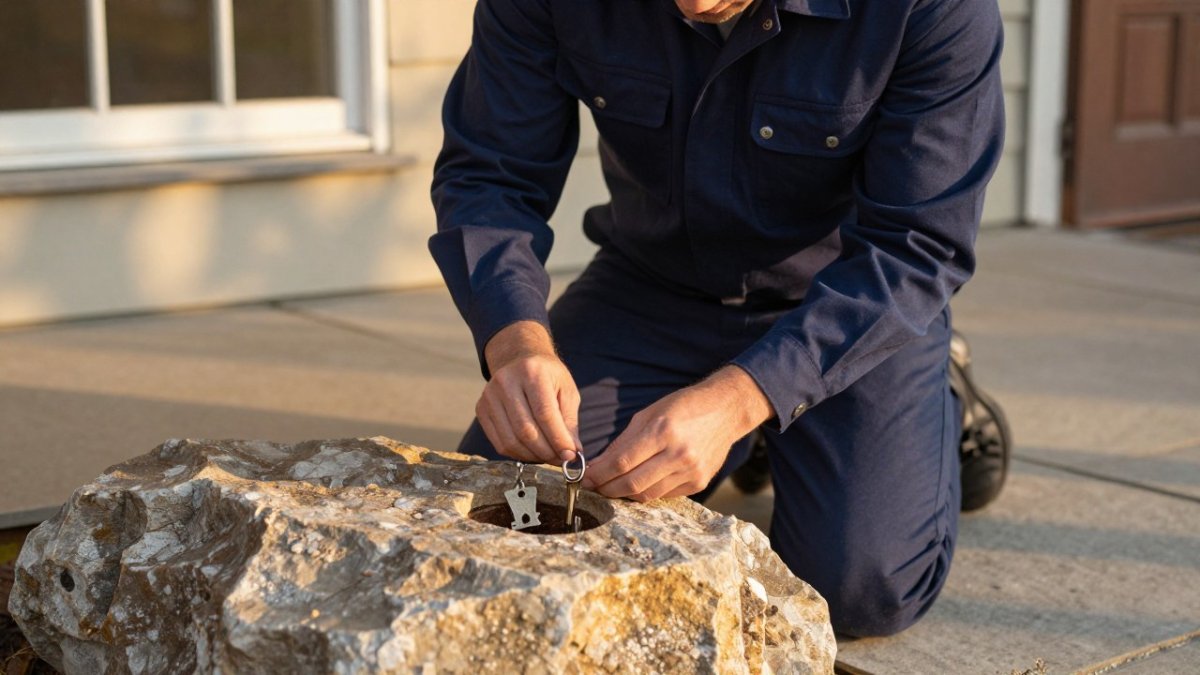
Lockouts happen: a tenant loses keys, a contractor gets locked out mid-job, a resident leaves their key at work. At 2 AM on a weekend, you need a locksmith who answers the phone.
Emergency lockout response requires two things: speed and reliability. Professional locksmith services for property managers offer 24/7 availability because emergencies don't follow business hours, and every hour a tenant is locked out risks frustration and damage claims.
What a Property-Management-Grade Dispatch Process Looks Like
A residential locksmith answers a call and drives out; one set up for property management runs a dispatch process that includes:
- A single dispatch number that reaches a live person or an on-call rotation, not a national call center that subcontracts to whoever is nearby.
- A tenant verification step. Before a technician rolls, the dispatcher confirms the caller is on the lease or is an authorized contact. Common practice is a callback to the tenant's number on file, or a code word your office issues at move-in.
- A property profile on file. Gate codes, lockbox locations, parking instructions, and the location of the main shutoff or elevator key so the technician isn't calling you at 2 AM for directions.
- A response-time commitment in writing. Many property managers ask for a target window (for example, a stated arrival window for after-hours calls) and a notification when the technician is en route.
- Documentation after every call. A service ticket showing the address, unit, time in and out, work performed, and the technician's name. You want this for insurance claims and for tracking which units generate repeat calls.
Non-Emergency Lockouts Are the Bigger Cost
Most lockout volume isn't 2 AM. It's a tenant locked out at 6 PM, a vendor needing a utility closet, or a new resident whose key fails on move-in day. These calls are cheaper to prevent than to dispatch.
- Issue two keys at move-in and document both. A tenant who loses one still has a spare, which turns an emergency call into a next-business-day rekey.
- Set a written lockout policy. State the after-hours fee, who pays it, and what counts as an emergency versus a tenant-caused lockout. Putting the fee in the lease reduces disputes.
- Keep a manager key or lockbox for common areas and mechanical rooms. This keeps vendor lockouts off your emergency line entirely.
- Consider electronic access for high-turnover units. Keypad or fob entry eliminates the 'lost key' lockout for the unit door, though you still need a mechanical override and a battery-failure plan.
What to Expect on the Call
When you dispatch an emergency locksmith, the technician should gain entry without damaging a functional lock, provide ID, and leave a written ticket. If a lock has failed, they should explain the options (bypass, cylinder replacement, or full hardware replacement) before doing the work.
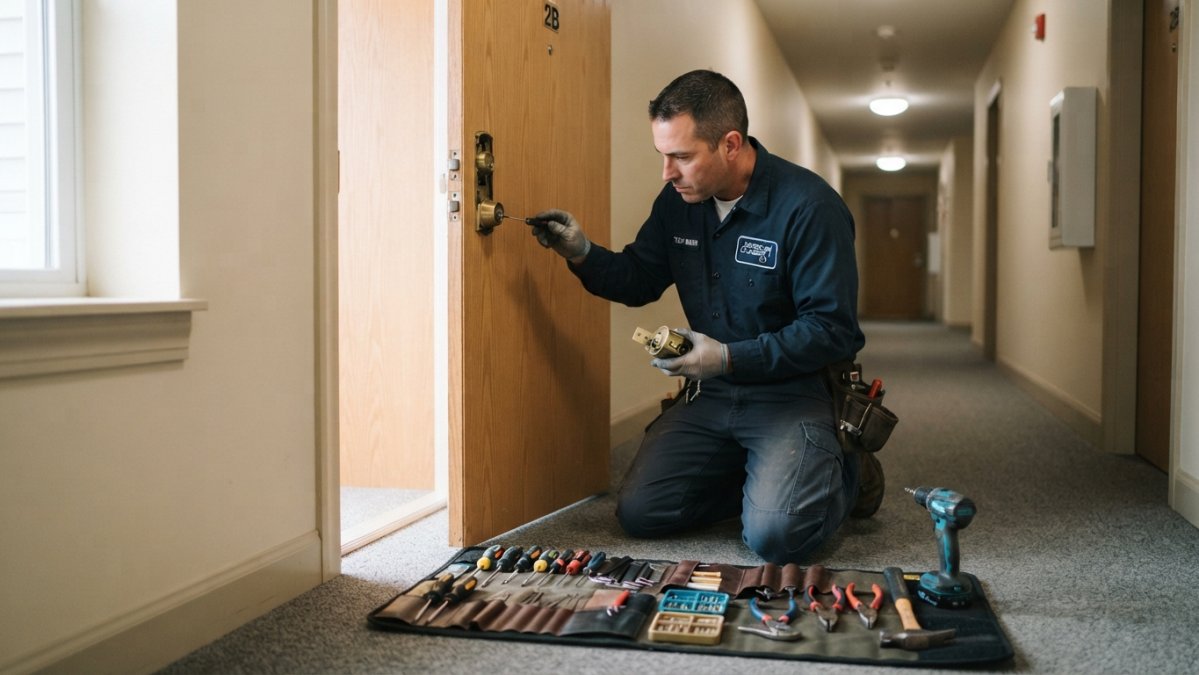
Rekeying Rental Properties Between Tenants: A Step-by-Step Workflow
Rekeying between tenants is non-negotiable.
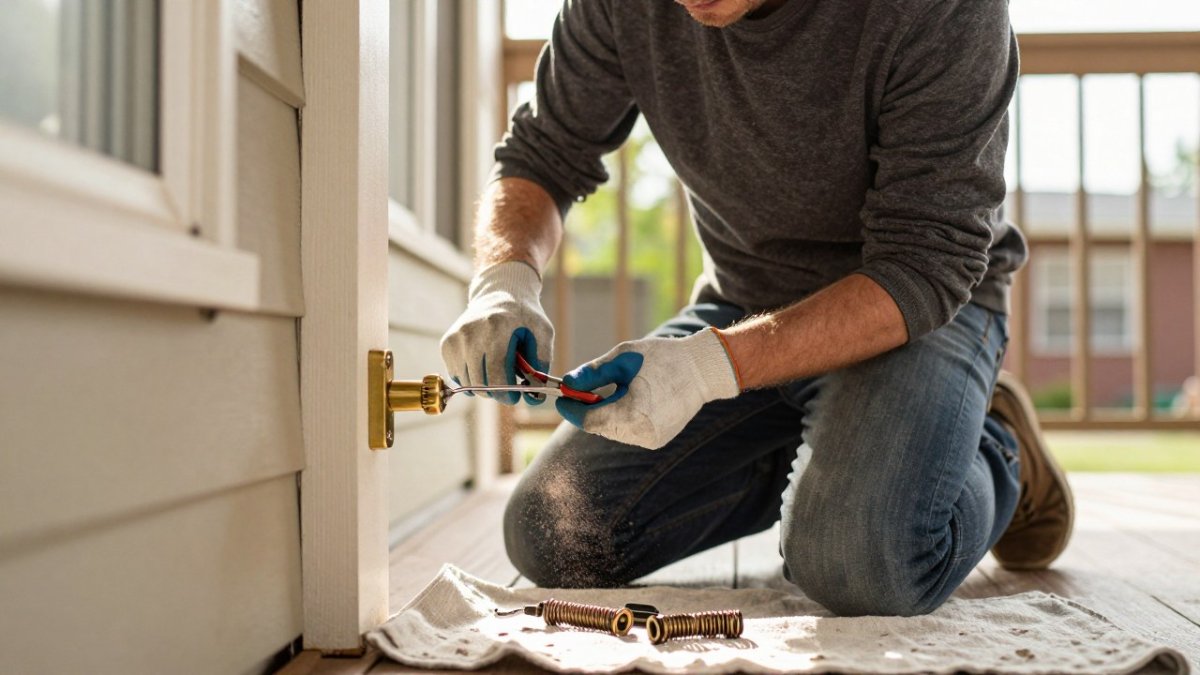
The standard workflow: tenant moves out, you schedule the rekey, the locksmith changes the cylinders and provides new keys.
Here's the operational process that works:
Step 1: Schedule the rekey during the turnover window. Ideally the 24-48 hour vacancy between move-out and move-in. Many property managers batch rekeys on the same day to reduce service calls and costs.
Step 2: Provide access to the locksmith. Have a master key or unlock the unit yourself.
Step 3: Get documentation and new keys. The locksmith should provide a receipt showing which locks were rekeyed, the date, and the new key count.
Cost and timeline depend on how many locks need rekeying.
Master Key Systems for Property Management: Simplifying Access Control
Master key systems design locks so a single "master key" opens all of them while tenant keys open only their unit.
Design matters: a poor master key system creates vulnerabilities, while a good one balances convenience with security.
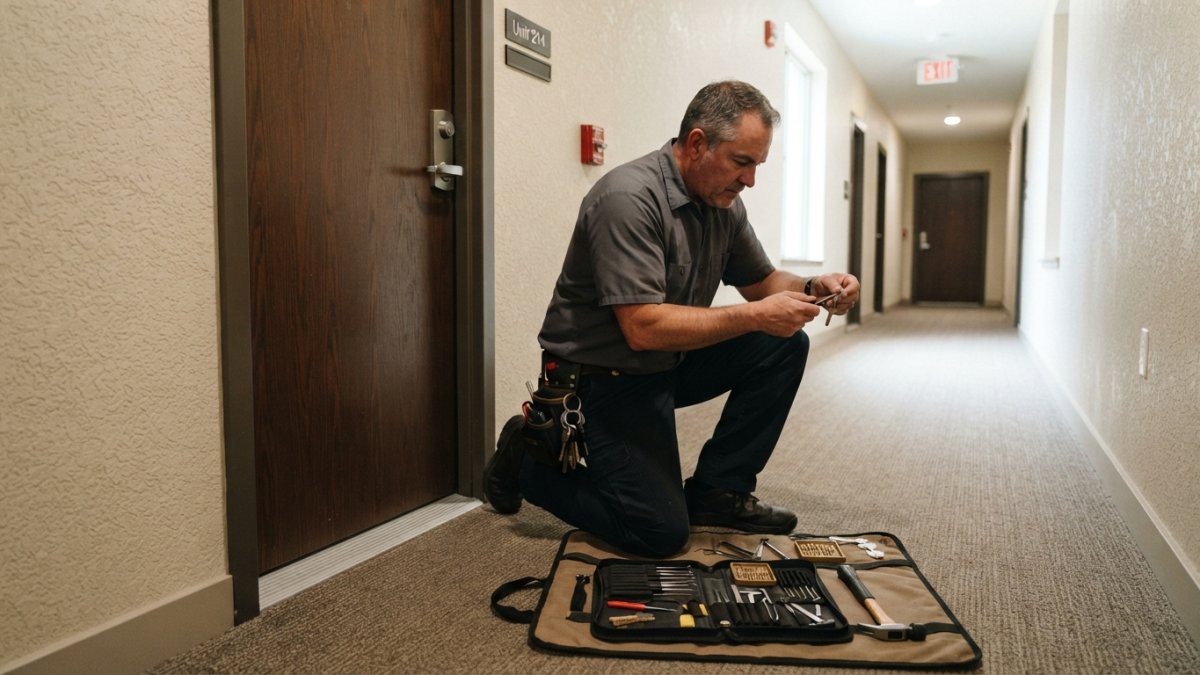
Implementation requires planning. You decide which doors need master access: entry doors, maintenance rooms, utility closets, common areas. The locksmith installs matching locks and provides the master key.
Benefits accumulate quickly: faster maintenance, straightforward emergency access, and no tenant disputes over access because the system is transparent and documented. For property managers with 5+ units, a master key system pays for itself in time savings within the first year.
Commercial Door Hardware Repair and Lock Maintenance
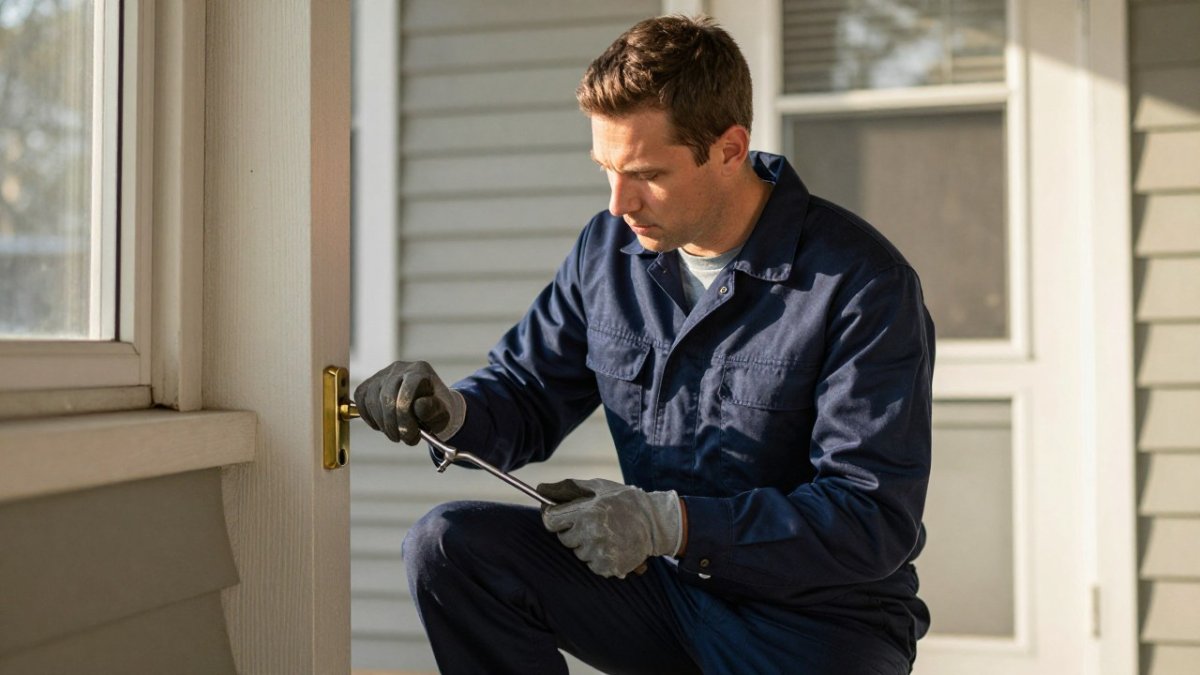
Locks wear, door closers fail, hardware corrodes. These aren't emergencies until they are: a broken closer means a door that won't close, a security risk and a liability.
Lock maintenance prevents most hardware failures. Regular inspection catches wear before it becomes critical, and a locksmith can identify aging hardware, doors needing adjustment, and components to replace proactively.
Common issues include:
- Worn lock cylinders that stick or require excessive force to turn
- Broken door closers that leave doors hanging open
- Damaged strike plates from forced entry attempts or wear
- Corroded hinges on exterior doors exposed to weather
Each is a service call waiting to happen.
American Locksmith CT handles commercial door hardware repair, from simple adjustments to complete replacement, keeping properties secure, tenants safe, and maintenance costs predictable.
Choosing and Onboarding a Locksmith Provider for Your Portfolio
Not all locksmiths are equal. Some are reliable, licensed, and insured; others are one-person operations with no backup.
Start with verification. Ask for proof of licensing and insurance; in most states locksmiths must be licensed, so confirm the license is current.
Check references. Ask for 3-5 property management clients and call them about response time, professionalism, and whether the locksmith showed up when promised.
Discuss pricing structure, where many property managers get surprised.
Establish a service agreement. Once you've chosen a locksmith, formalize the relationship. A simple agreement should specify:
- Response time expectations (e.g., 30 minutes for emergencies)
- Pricing for routine services (rekeying, lock repair, hardware installation)
- Volume discounts if applicable
- Emergency contact procedures
- Documentation and reporting requirements
This removes ambiguity and ensures both parties understand expectations.
Key Control, Budgeting, and Service Agreements
Key control sounds simple until you scale. A 20-unit building can have 40+ keys in circulation once you count spares, vendor keys, and keys held by former tenants. Without a system, a lost key becomes a rekey of every lock it opens.
Build a Key Control System Before You Need One
A workable system has four parts:
- A key log. A spreadsheet or property management software field recording every key: unit or door, key type, holder, issue date, return date. Update it the day a key changes hands, not at month-end.
- Restricted keyways. Restricted keys are cut on a patented blank a hardware store can't duplicate; only the locksmith who owns the keyway can cut more, and only with your authorization. This stops unauthorized copies, the most common way key control breaks down in rentals.
- A master key hierarchy. Decide up front which doors the master opens (unit doors, common areas, mechanical rooms, the manager's office) and which stay on separate keys. A good hierarchy lets you reach any unit with one key while tenant keys stay limited to their own door.
- A lost-key procedure. The response depends on what the key opens. A lost unit key on a restricted keyway is usually a rekey of that unit; a lost master key is portfolio-wide and should trigger a rekey of every lock it opens. Write it down so the decision isn't made under pressure.
What Actually Drives Your Locksmith Budget
Locksmith costs aren't one number. They break into predictable buckets, and knowing the drivers lets you forecast instead of react:
- Turnover rekeys. Driven by annual turnover rate and exterior doors per unit. A unit with one entry door costs less to rekey than one with a front door, back door, and garage entry.
- Emergency and after-hours calls. Driven by lockout frequency and your lockout policy. After-hours calls carry a premium over business-hour rates that varies by market and technician travel distance.
- Hardware replacement. Driven by property age and door traffic. Door closers, strike plates, and exterior cylinders wear on a schedule you can roughly predict after tracking a year of tickets.
- Preventive maintenance. A quarterly or semi-annual walkthrough adjusting closers, lubricating cylinders, and flagging worn hardware. Usually the cheapest line item and the one that prevents the most expensive emergency calls.
- Master key system setup. A one-time design and installation cost, then ongoing rekeys that keep new tenants inside the existing hierarchy.
A common pattern is to track a full year of service tickets, then use that history to build next year's budget. The first year is a guess; the second is a forecast.
What a Service Agreement Should Actually Commit To
A service agreement isn't just a discount; it's a set of commitments on both sides. Before you sign, make sure it addresses:
- Response-time commitments. A stated window for standard calls and a separate window for after-hours emergencies. Get it in writing, not verbal.
- Pricing structure. Whether you're billed per call, per lock, or per hour, and how after-hours and holiday calls are priced.
- Volume terms. If you have recurring work, ask whether rekeys are priced per unit or per lock, and whether there's a portfolio rate.
- Priority status. Whether your calls jump ahead of non-contract customers during peak periods.
- Documentation. What the locksmith provides after each visit: a ticket, photos, key counts, and a record of cylinders changed.
American Locksmith CT works with property managers to build service agreements, so pricing and response expectations match how the properties really operate.
Frequently Asked Questions
What locksmith services do property managers typically need?
Property managers most often need emergency lockout services, rekeying between tenant turnovers, lock repairs, lock replacement, master key system installation and maintenance, and gate lock services. Many also require after-hours availability and rapid response times. The specific mix depends on portfolio size, property age, and local tenant turnover rates. A locksmith familiar with property management can advise which services match your operational needs.
Should a rental property be rekeyed between tenants?
Yes. Rekeying between tenants is a critical security practice. You cannot verify who holds copies of the previous tenant's keys, and former occupants may return to access the property. Rekeying ensures only your current tenant and authorized staff have entry. It also protects against liability if an unauthorized person enters. Budget rekeying as a standard move-out cost, not an optional upgrade.
How can master key systems simplify property management?
A master key system lets you and authorized staff access multiple units with a single key, while each tenant's key opens only their unit. This eliminates carrying dozens of individual keys, speeds emergency access, and reduces lockout calls. Master key systems also integrate with rekeying workflows, when a tenant leaves, you rekey their lock without disrupting the master system. Professional installation ensures security and proper hierarchy.
What should a property manager look for in a locksmith provider?
Prioritize licensed, insured locksmiths with property management experience and 24/7 availability. Verify background checks for technicians who will access your properties. Request transparent pricing and a service agreement that covers response times, volume discounts if you manage multiple units, and liability coverage if damage occurs. Ask for references from other property managers. A provider familiar with local building codes and fire safety requirements is valuable for compliance.